
International & European Law (LL.M.) in Germany
Why Study International & European Law (LL.M.) in Germany?
Germany sits at the legal and economic heart of the European Union, hosting key international tribunals, regulatory bodies, and arbitration centres. Home to the European Central Bank (Frankfurt), the International Tribunal for the Law of the Sea (ITLOS in Hamburg), and premier international arbitration hubs, Germany provides an exceptional framework for an Advanced Master of Laws (LL.M.) in International & European Law (Internationales und Europäisches Recht).

Access to Premier Public Law Faculties:
Choose between top public law faculties such as Humboldt University of Berlin, Heidelberg University, Europa-Institute at Saarland University, University of Hamburg, and LMU Munich or elite private institutions like Bucerius Law School.
High ROI & Affordable Tuition:
Unlike LL.M. degrees in the US or UK costing $50,000–$80,000+, public universities in Germany charge low tuition or nominal semester contributions.
Gateway to Global & EU Legal Practice:
Programs focus heavily on European Union internal market law, international commercial arbitration, human rights law, WTO trade law, and cross-border regulatory compliance.
Strong Career Mobility:
Graduates are recruited by global law firms (Großkanzleien), multinational corporate legal departments, EU institutions, non-governmental organisations, and international arbitration chambers, benefiting from fast-tracked EU Blue Card pathways and starting salaries ranging from €55,000 to €85,000+ per year.
In-Demand Specializations
LL.M. degrees in International & European Law in Germany allow you to focus on specialised public, private, and commercial legal tracks:
European Economic & Single Market Law:
EU competition law, antitrust regulation, state aid rules, and four freedoms of the single market.
International Commercial Arbitration & Dispute Resolution:
Cross-border commercial litigation, investment tribunal arbitration (ICSID/UNCITRAL), and mediation.
International Human Rights & Humanitarian Law:
Public international law, international criminal law (ICC mechanisms), and human rights protection frameworks.
International Trade, WTO & Investment Law:
Bilateral investment treaties (BITs), WTO dispute settlement, customs law, and supply chain compliance.
EU Digital & Intellectual Property Law:
Cross-border IP litigation, GDPR compliance, Artificial Intelligence Act regulation, and digital market antitrust.
Key Admission Prerequisites
First Degree in Law:
A recognised undergraduate law degree (e.g., LL.B., B.A. LLB, or national State Exam / Staatsexamen) equivalent to at least 180–240 ECTS.
Non-Law Graduates:
Select interdisciplinary LL.M. tracks accept graduates in Political Science, International Relations, or Economics, provided they possess relevant legal or regulatory coursework.
Professional Experience:
Many specialised LL.M. programs require at least 1 year of professional work experience as a lawyer, legal intern, paralegal, or compliance officer completed after your first degree.
Language Proficiency:
English-Taught Tracks:
IELTS Academic (6.5 to 7.5) or TOEFL iBT (90 to 100+).
German-Taught / Bilingual Tracks:
TestDaF (TDN 4) or Goethe C1 (vital if you plan to sit for local bar equivalencies or practice before domestic German courts).
Fee Structure for International & European Law (LL.M.)
Let's plan your path to studying International & European Law (LL.M.) in Germany
From shortlisting the right LL.M. programme to preparing a compelling application, our counsellors guide every step of your journey.
Frequently Asked Questions (FAQs)
Yes. Leading German universities offer fully English-taught LL.M. programs, including Saarland University (Europa-Institut), Humboldt University of Berlin, Heidelberg University, University of Hamburg, Institute for Law and Finance (ILF) Frankfurt, and Bucerius Law School.
Entry-level legal advisors, international regulatory consultants, and corporate compliance managers earn average starting salaries ranging from €55,000 to €85,000 per year. International associates joining major global law firms (Großkanzleien like Freshfields, Clifford Chance, or Baker McKenzie) in Frankfurt or Munich can earn €100,000+ per year.
No. To become a licensed attorney (Rechtsanwalt) in Germany, you must pass the traditional 2-tier German State Examination (1. und 2. Juristisches Staatsexamen), which is conducted entirely in German. An LL.M. provides specialised legal training for corporate legal departments, compliance roles, international organisations, arbitration, and legal consulting.
The Europa-Institut at Saarland University is the second-oldest institute of its kind in Europe. Located near the borders of France and Luxembourg, the seat of the European Court of Justice, it is renowned for its specialised LL.M. in European and International Law, offering direct connections to European courts and institutions.
Yes. Non-EU lawyers with an LL.M. work extensively in international law firms, boutique arbitration practices, and global corporate legal divisions as Legal Consultants, Foreign Legal Advisors, or Compliance Specialists. They advise on cross-border transactions, international commercial law, foreign jurisdiction laws, and EU regulatory compliance.
It depends on the university. Many academic LL.M. programs accept candidates directly after an LL.B. degree. However, specialised, professional, or continuing education LL.M. programs (such as the ILF in Frankfurt or Bucerius) require at least 1 year of relevant full-time post-graduate legal experience.
Top recruiters in Germany include:
• Global Law Firms (Großkanzleien): Freshfields Bruckhaus Deringer, Clifford Chance, Linklaters, Allen & Overy, Baker McKenzie, Hogan Lovells, White & Case.
• In-House Corporate Legal & Compliance: Siemens, BMW, Deutsche Bank, Allianz, SAP, BASF, Lufthansa.
• Consulting & Big Four: PwC, EY, KPMG, Deloitte (legal and regulatory advisory branches).
The DAAD (German Academic Exchange Service) offers specific LL.M. scholarships for international law graduates. It covers full or partial tuition fees, a monthly living stipend of €992, travel allowances, and health insurance.
For English-taught LL.M. programs and roles within international law firms, global arbitration, and foreign corporate desks, instruction and work are conducted in English. However, learning German (B2/C1 level) is crucial if you want to expand your job search to domestic corporate legal departments, local consulting firms, or public institutions.
Yes. Non-EU international students can legally work up to 140 full days or 280 half days per calendar year. LL.M. students frequently work 12 to 20 hours per week as part-time paralegals, legal researchers, or compliance assistants in law firms or corporate legal offices, earning €16 to €26/hour.
An LL.M. in Public International Law focuses on state responsibility, human rights, United Nations systems, international humanitarian law, and diplomatic relations. An LL.M. in European Business Law focuses on corporate transactions, EU competition/antitrust law, financial regulation, cross-border mergers and acquisitions (M&A), and commercial trade.
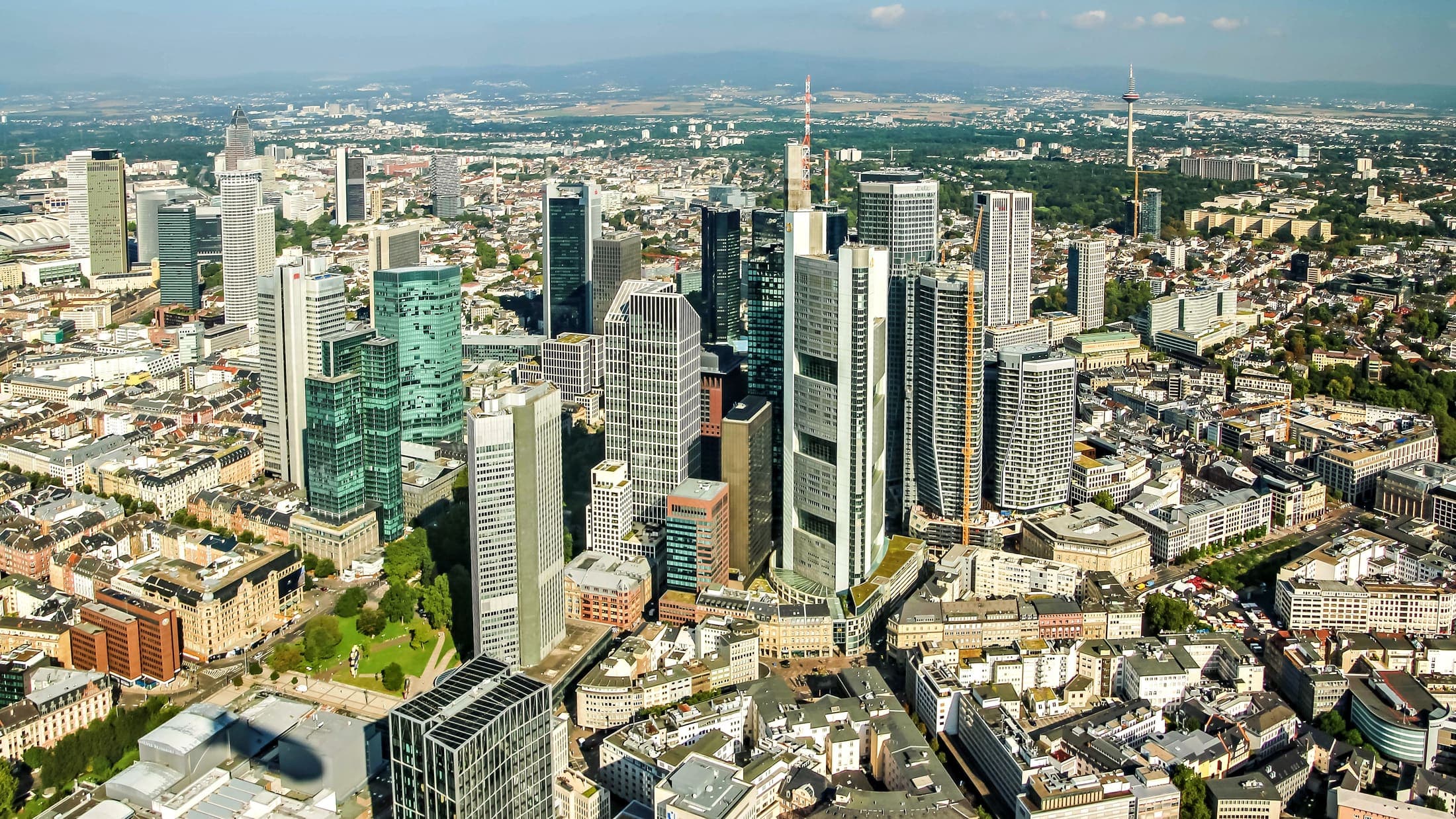
Frankfurt is the financial capital of continental Europe and the seat of the European Central Bank (ECB), European Insurance and Occupational Pensions Authority (EIOPA), and the BaFin (German Financial Supervisory Authority). Programs like the Institute for Law and Finance (ILF) at Goethe University Frankfurt provide direct access to central bankers, regulatory lawyers, and global financial institutions.
German law faculties place high emphasis on international moot court competitions—such as the Philip C. Jessup International Law Moot Court, the Willem C. Vis International Commercial Arbitration Moot, and the Telders Moot Court. Participating gives LL.M. students practical oral advocacy experience and direct exposure to global law firm partners.
Explore Other Fields of Study in Germany
Beyond International & European Law (LL.M.), EduOptions Germany also guides students
into these high-growth fields.
Photo credits: Federal Constitutional Court, Karlsruhe by Eisensafran, CC BY-SA 4.0; Goethe University Frankfurt, Campus Westend by Common-support, CC BY 4.0; Alte Universität, Heidelberg by Avi1111 dr. avishai teicher, CC BY-SA 4.0; Bucerius Law School, Hamburg by Karschti, CC BY 3.0; Frankfurt am Main financial district by Dr. Thomas Liptak, CC BY-SA 4.0. Via Wikimedia Commons. All image credits
