
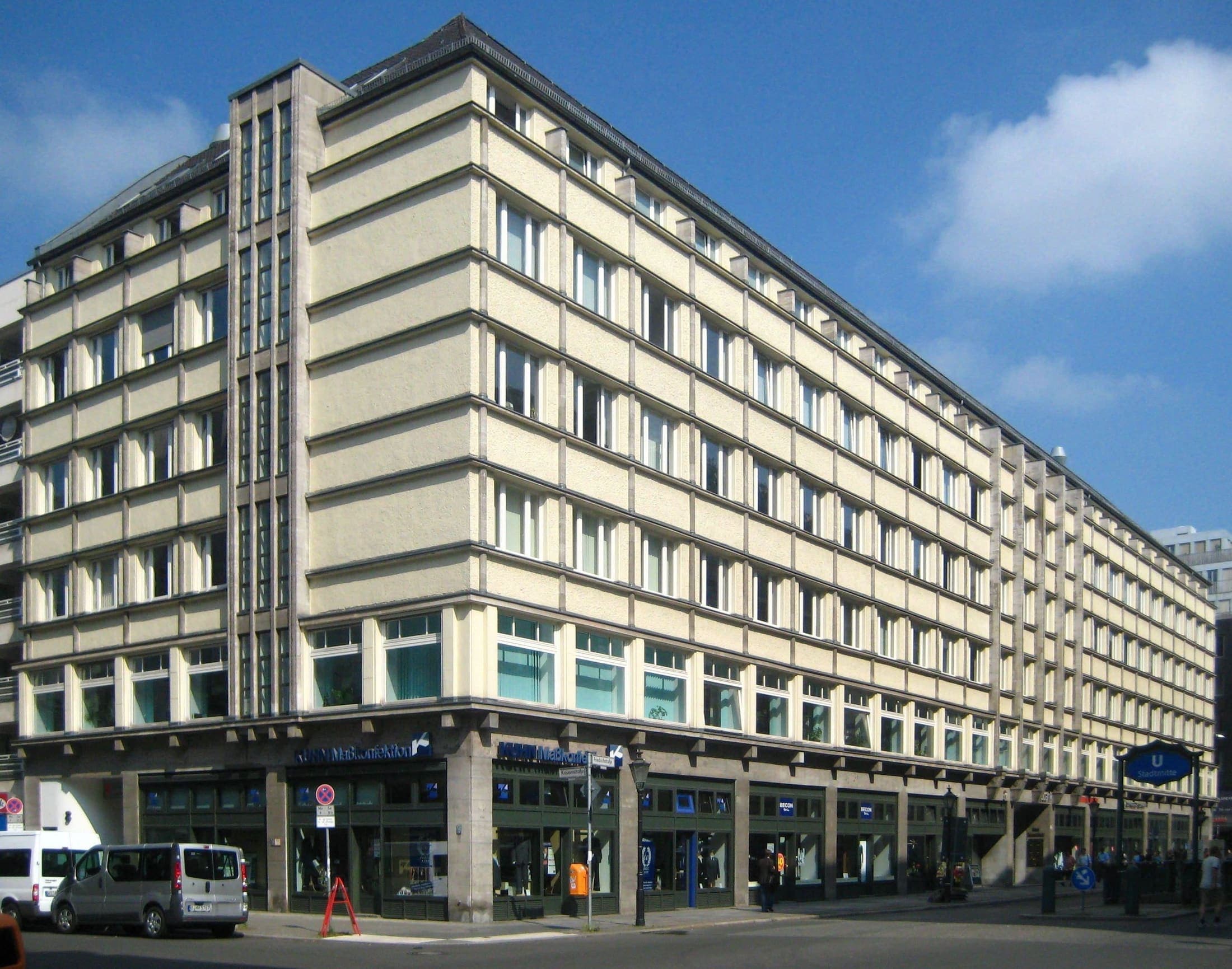
CODE University of Applied Sciences
Quick Snapshot & Key Statistics
| Official Name | CODE University of Applied Sciences |
| Founding Background | Founded in 2017 by Thomas Bachem, Manuel Dolderer, Jonathan Rüth, and 24 internet entrepreneurs |
| Institution Type | State-Recognized Private University of Applied Sciences (Fachhochschule) |
| Core Pedagogy | Curiosity-driven, self-directed, project-based learning (Mastery Learning, Flipped Classroom, Peer Learning) |
| Accreditation & Seals | State recognition by the Berlin Senate Department for Higher Education and Research; German Accreditation Council |
| Campus Location | Kalle Neukölln, Karl-Marx-Straße 101, 12043 Berlin, Germany |
| Medium of Instruction | 100% English across all degree programs |
| Student Body | ~450–500 students representing 60+ nationalities |
| Tuition Payment Models | Direct Pay: ~€1,250 / month (~€45,000 total for 3-year Bachelor) | Income Share Agreement (ISA): €0 upfront tuition during studies |
| Post-Study Work Permit | Fully eligible for Germany's 18-Month Post-Study Work Permit upon graduation |
About CODE University of Applied Sciences
Founded in 2017 in Berlin, CODE University of Applied Sciences is an innovative, state-accredited private university for digital product development. Established by software entrepreneur Thomas Bachem alongside prominent European startup founders, including creators of Trivago, ResearchGate, and Fox & Sheep, CODE was created to replace outdated, lecture-heavy computer science curricula with hands-on, challenge-based education.
CODE operates on a revolutionary academic model: there are no traditional lectures, written exams, or rigid semester schedules. Instead, students from day one form interdisciplinary teams—combining software engineers, digital designers, and product managers—to build real-world digital products. Learning is mentored by industry experts, entrepreneurs, and senior tech leaders through continuous project work, peer review, and competency-based assessments.
Campus Location & Infrastructure
CODE operates out of a high-tech learning environment in central Berlin:
- Address: Kalle Neukölln, Karl-Marx-Straße 101, 12043 Berlin, Germany.
- Campus Setting: Housed within a creative, multi-use innovation hub in Berlin's vibrant Neukölln district, designed specifically to foster collaboration between students, tech startups, and digital agencies.
- Campus Facilities: Open co-working spaces, maker labs, hardware prototyping suites, media production rooms, presentation stages, quiet study pods, and communal tech lounges.
Admission Requirements
CODE selects students based on creative problem-solving, project passion, and teamwork skills rather than high school grade point averages (Numerus Clausus-free).
1. Undergraduate Admission (Bachelor's Degrees — 3 Years / 180 ECTS)
- Secondary School Certificate: High School Diploma, A-Levels, IB Diploma, German Abitur, or foreign secondary leaving mark sheets recognised as a university entrance qualification in Germany (Hochschulzugangsberechtigung).
- Multi-Stage Online Selection Process: Online Application: Written responses and video submissions explaining prior projects, passion for tech/design/business, and motivation. Challenge / Project Task: An interactive online task where applicants demonstrate problem-solving and analytical logic. Admissions Day: An interactive assessment day involving group project challenges, peer collaboration, and an interview with CODE mentors and students.
- No Code/Portfolio Prerequisites: Prior programming or professional design experience is not mandatory; selection focuses on learning aptitude and curiosity.
2. Postgraduate Admission (Master's Degrees — 1 to 2 Years)
- Bachelor's Degree: Completed undergraduate degree (180 ECTS for 2-year track / 240 ECTS for 1-year track) in computer science, design, management, or related fields.
- APS Certificate: Mandatory for applicants holding prior academic degrees from India, China, or Vietnam.
- Admissions Interview & Portfolio / Case Evaluation.
Popular Academic Programs
CODE focuses exclusively on digital product development, offering three interdisciplinary Bachelor's degrees and a Master's track:
Undergraduate Programs (Bachelor of Science / Arts — 3 Years / 180 ECTS)
- B.Sc. in Software Engineering
- B.A. in Digital Design & Innovation (Interaction Design)
- B.A. in Business Management & Entrepreneurship (Product Management)
Postgraduate Programs (Master of Science)
- M.Sc. in Technology & Management
Language Requirements
All degree tracks at CODE are delivered 100% in English. German language proficiency is not required for admission.
English Language Proficiency Cutoffs
| Exam / Qualification | Minimum Required Score |
|---|---|
| IELTS Academic | Overall 6.5 (min. 6.0 in sub-scores) |
| TOEFL iBT | Minimum 80–85 points |
| Duolingo English Test | 110–115 points |
| Cambridge English | B2 First / C1 Advanced (CAE) |
- English Assessment Option: Candidates who lack formal standardised test certificates can be evaluated during the CODE Admissions Day video interviews and challenge assessments.
Fee Structure & Estimated Living Expenses
1. Flexible Payment Models: CODE offers socially responsible payment options to ensure financial background is not a barrier to entry.
| Payment Option | Monthly Installment | Total Program Cost Estimate |
|---|---|---|
| Direct Pay (Bachelor - 3 Years) | ~€1,250 / month | ~€45,000 total (36 Months) |
| Stretch Pay (Bachelor - 6 Years) | ~€650 / month | ~€46,800 total (Spread over study + post-grad years) |
| Income Share Agreement (ISA / UGV) | €0 during studies | Repay a fixed % of income post-graduation above minimum salary |
How the Income Share Agreement (ISA) Works
- Zero Upfront Tuition: Students pay €0 tuition during their 3 years of study.
- Income-Contingent Repayment: After graduation, students repay ~13.2% of their gross income for a fixed term, but only if they earn above the minimum salary threshold (~€27,000 / year).
- Repayment Cap: Total repayments are capped (maximum 1.5x of the funded amount) to protect high earners.
2. Estimated Monthly Living Expenses (Berlin)
Non-EU international students must meet Germany's official Blocked Account (Sperrkonto) requirement:
- Official Blocked Account Amount: €11,904 per year (~€992 per month).
- Average Monthly Budget in Berlin: €1,000 – €1,300 per month.
Let's plan your path to studying at CODE University
From matching your profile to the right program to preparing a compelling application, our counsellors guide every step of your journey.
Frequently Asked Questions (FAQs)
CODE replaces traditional lectures with competency-based mastery learning, flipped classrooms, and peer reviews. Instead of memorising facts for written exams, students work in interdisciplinary teams to build real digital products. Professors act as mentors and advisors, evaluating students on verified competencies demonstrated in their codebase, design artefacts, and product launches.
The Science, Technology & Society (STS) module is an interdisciplinary liberal arts core embedded in all CODE degrees. It challenges engineering, design, and product students to analyse the ethical, societal, environmental, and political impacts of technological innovation, AI deployment, and data privacy.
Unlike many private institutions that restrict financial aid to domestic citizens, CODE's Income Share Agreement (ISA) (managed via CODE.science / Chancen eG) is available to international students, including non-EU nationals. Students pay €0 tuition while studying and repay a fixed percentage of pre-tax income after securing a qualified job.
During the Orientation Semester (1st Semester), new students participate in foundational onboarding projects, explore modules across software engineering, interaction design, and product management, learn agile frameworks (Scrum/Kanban), and build their initial peer team networks before finalising their project tracks.
At the start of each project cycle, students pitch digital product ideas during "Pitch Days." Teams form organically by combining a Software Engineer (handling codebase/architecture), an Interaction Designer (handling UX/UI), and a Product Manager (handling metrics, user research, and strategy).
Rather than following rigid course catalogues, CODE maps student learning against a dynamic Competency Framework. Students select learning modules, workshops, and project goals to unlock specific technical and soft-skill competencies, creating a completely customised degree transcript.
Yes. A large portion of projects developed by CODE students turn into active commercial startups or open-source software tools. CODE's startup ecosystem provides mentorship, angel investor pitch sessions, and workspace to help student founders scale ventures during their studies.
Because technology evolves rapidly, CODE teaches core software engineering principles through modern stacks, including JavaScript/TypeScript, Python, React, Node.js, Rust, Go, GraphQL, cloud infrastructure (AWS/GCP), and machine learning frameworks, driven by the specific demands of active student projects.
CODE faculty members operate as Mentors and Coaches. Instead of lecturing from slides, mentors facilitate interactive workshops, conduct code and design reviews, provide 1-on-1 career path guidance, and help student teams overcome technical bottlenecks.
CODE's flexible, project-driven timetable makes it ideal for part-time tech employment. Over 70% of CODE students work as paid software developers, UX designers, or junior product managers at Berlin startups and tech firms by their 3rd semester.
Code+Design Initiative e.V. is a non-profit organisation founded by CODE's creators. It runs coding camps, digital workshops, and hackathons for teenagers across Germany, with a strong focus on encouraging underrepresented youth and young women to pursue tech careers.
Explore Other Universities in Germany
Photo credits: Friedrichstrasse business district, Berlin by Jörg Zägel, CC BY-SA 3.0; Brandenburg Gate, Berlin by Norbert Nagel, CC BY-SA 3.0. Via Wikimedia Commons. All image credits
