
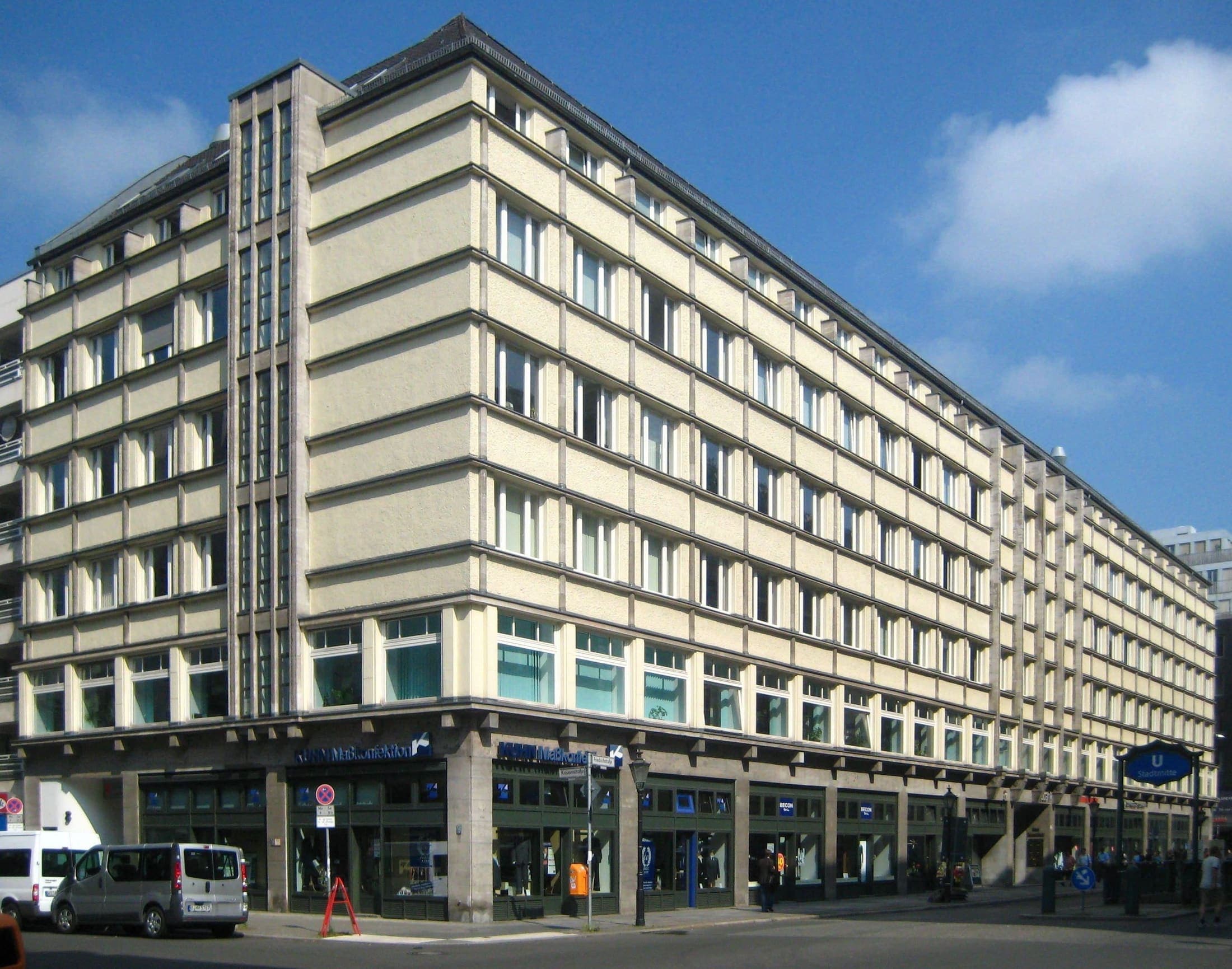
Hertie School
Quick Snapshot & Key Statistics
| Official Name | Hertie School (formerly Hertie School of Governance) |
| Institution Type | Private, Independent Graduate School with full Doctoral Rights |
| Established | 2003 (Founded by the Hertie Foundation) |
| Motto / Identity | Understand today. Shape tomorrow. |
| Accreditation & Seals | Berlin Senate State Recognition, German Accreditation Council, German Council of Science & Humanities (Wissenschaftsrat) |
| Global Alliances | Member of GPPN (Global Public Policy Network), APSIA, and CIVICA (The European University of Social Sciences) |
| Campus Location | Friedrichstraße 180, 10117 Berlin, Germany (Berlin-Mitte District) |
| Instruction Medium | 100% English across all degree programs |
| Student Body | ~800+ students representing 95+ nationalities (~50%+ international) |
| Tuition Fees (Master's) | €9,625 / semester (€19,250 / year; ~€38,500 total over 2 years) |
| Tuition Fees (Exec. MPA) | €38,500 total (1-Year track) | €19,250 / year (2-Year track) |
About the Hertie School
Founded in 2003 in Berlin by the Hertie Foundation, the Hertie School is one of Europe's premier private graduate institutions for public policy, international affairs, and governance. It holds full state recognition and institutional accreditation from the German Council of Science and Humanities (Wissenschaftsrat), granting it the authority to confer both Master's and PhD degrees.
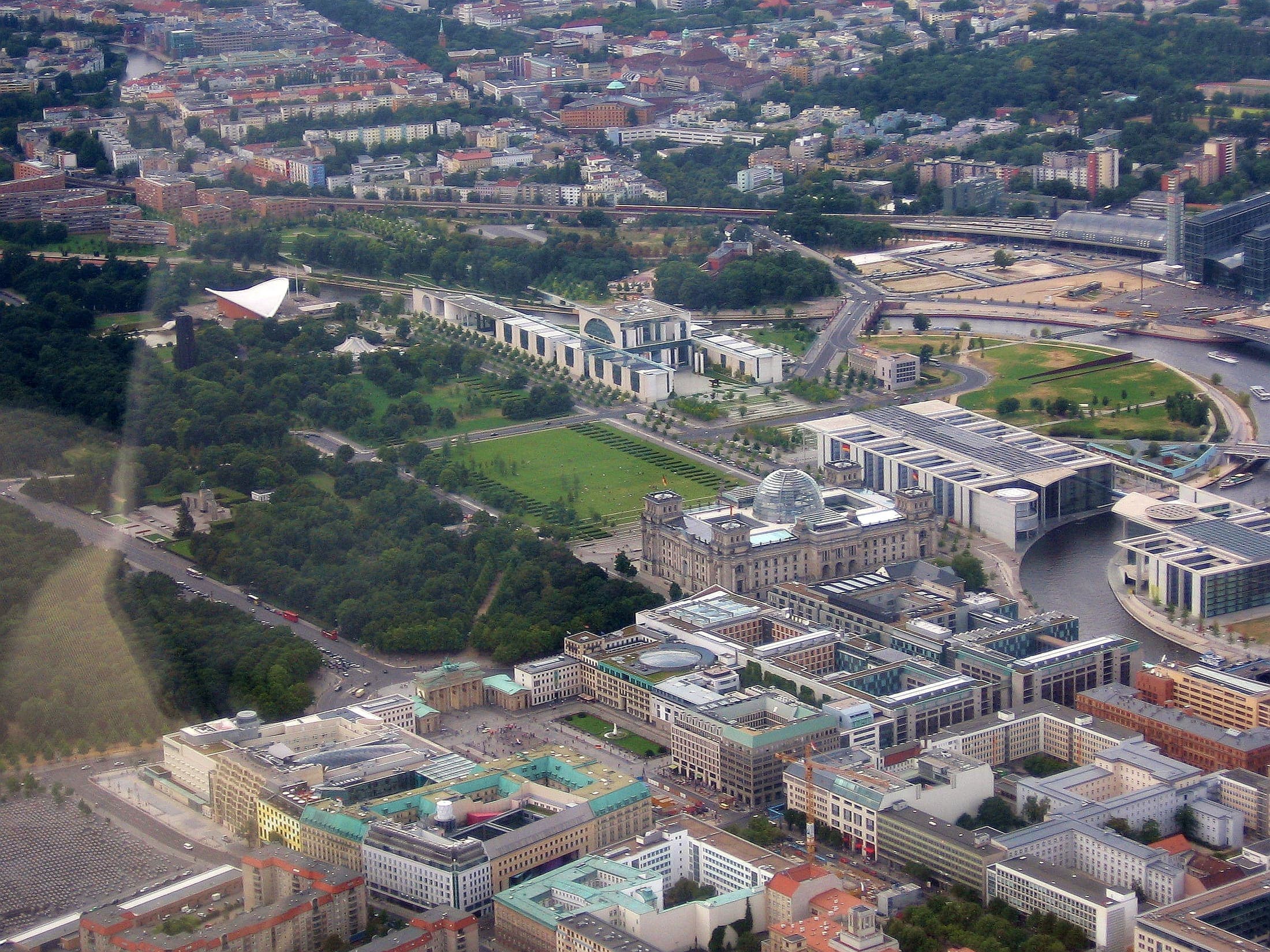
Situated on Friedrichstraße in the heart of Berlin-Mitte—minutes from the German Bundestag, federal ministries, and international embassies—Hertie serves as a professional hub for future leaders in government, diplomacy, international organisations, NGOs, and strategy consultancies. The curriculum combines social science, economics, legal frameworks, and quantitative data analysis with real-world practice.
Campus Location & Facilities
The Hertie School operates out of an urban campus in central Berlin:
- Address: Friedrichstraße 180, 10117 Berlin, Germany.
- Campus Facilities: Features multimedia lecture halls, executive seminar suites, the Data Science Lab, research centre offices, student lounges, and collaborative research hubs.
Admission Requirements
Admissions at the Hertie School evaluate academic excellence, quantitative and analytical logic, personal leadership, and commitment to public service.
1. Master's Degree Programs (MPP, MIA, MDS)
- Undergraduate Degree: Completed Bachelor's degree (180 ECTS minimum or international equivalent) in any discipline (e.g., social sciences, economics, law, data science, humanities) from an accredited institution.
- Academic Transcripts: Mark sheets demonstrating top performance.
- CV & Motivation Letter: Statement of purpose detailing policy interests, leadership potential, and career goals.
- Letters of Recommendation: 2 academic or professional references.
- No GRE/GMAT Mandate: GRE/GMAT scores are optional, though quantitative scores can strengthen an application for the Master of Data Science for Public Policy.
2. Executive Master of Public Administration (Exec. MPA)
- Undergraduate Degree: Recognised Bachelor's degree in any field.
- Professional Work Experience: Minimum 3 years of relevant post-graduation work experience (average cohort has 8–10 years) in public administration, embassies, NGOs, or corporate government affairs.
- Employer Support: Letter of motivation and professional reference.
Popular Academic Programs
1. Master of Public Policy (MPP) — 2 Years / 120 ECTS
- Focus: Policy analysis, economic evaluation, governance, and management.
- Specialisation Concentrations: Policy Analysis or Management & Leadership.
2. Master of International Affairs (MIA) — 2 Years / 120 ECTS
- Focus: Global governance, international security, diplomacy, human rights, and regional integration.
- Specialisation Concentrations: International Security or European & Global Governance.
3. Master of Data Science for Public Policy (MDS) — 2 Years / 120 ECTS
- Focus: Interdisciplinary degree combining algorithmic modelling, machine learning, AI ethics, and data engineering with public policy decision-making.
4. Executive Master of Public Administration (Executive MPA) — 1 to 2 Years
- Focus: Tailored for working mid-career executives in government, NGOs, and corporate affairs. Available in 1-year full-time or 2-year part-time formats.
Language Requirements
All academic instruction at the Hertie School is delivered 100% in English. German language proficiency is not required for admission.
English Language Proficiency Cutoffs
| Exam / Qualification | Minimum Required Score |
|---|---|
| IELTS Academic | Overall 7.0 (min. 6.5 in all sub-scores) |
| TOEFL iBT | Minimum 100 points (min. 25 in writing) |
| Duolingo English Test | 125 – 135 points |
| Cambridge English | C1 Advanced (CAE) / C2 Proficiency |
- English Waiver: Automatically granted to native speakers or candidates who completed a full 3+ year Bachelor's degree taught 100% in English in an English-speaking country.
Fee Structure & Estimated Living Expenses
1. Program Tuition & Administrative Fees
| Program Level | Semester Fee | Total Estimated Course Fee |
|---|---|---|
| Master's Programs (MPP / MIA / MDS) | €9,625 / semester | €38,500 total (4 Semesters) |
| Executive MPA (1-Year Track) | €19,250 / semester | €38,500 total |
| Executive MPA (2-Year Track) | €9,625 / semester | €38,500 total |
Additional Mandatory Fees & Financial Support
- Tuition Deposit: €1,500 (Non-refundable deposit paid upon offer acceptance, credited toward 1st semester tuition).
- Semester Contribution (Semesterbeitrag): ~€290 / semester (Includes administrative fees and the Berlin public transit pass).
- Hertie Financial Aid & Scholarships: Around 50% of all students receive financial aid or merit-based scholarships (covering 25% to 100% of tuition).
2. Estimated Monthly Living Expenses (Berlin)
Non-EU international students must account for living costs backed by Germany's Blocked Account (Sperrkonto) requirement:
- Official Blocked Account Amount: €11,904 per year (~€992 per month).
- Average Monthly Student Budget in Berlin: €1,000 – €1,350 per month.
Let's plan your path to studying at the Hertie School
From matching your profile to the right program to preparing a compelling application, our counsellors guide every step of your journey.
Frequently Asked Questions (FAQs)
Hertie houses five specialised research hubs: the Centre for International Security, Centre for Digital Governance, Centre for Fundamental Rights, Jacques Delors Centre (focused on European policy), and the Centre for Sustainability, alongside its Data Science Lab.
As a founding member of CIVICA – The European University of Social Sciences, Hertie allows its students to take joint courses, participate in cross-border research projects, and attend exchange semesters at partner institutions like Sciences Po (Paris), LSE (London), and Bocconi University (Milan).
Through GPPN, Master's students at Hertie can complete a two-year dual degree. Students spend their first year in Berlin and their second year at a partner school—such as Columbia University SIPA (New York), LSE (London), GraSPP (University of Tokyo), or Lee Kuan Yew School of Public Policy (NUS, Singapore)—earning two distinct degrees.
Master's students at Hertie can choose to take a Professional Year between their second and third semesters. During this structured gap year, students work full-time at international organisations (UN, EU institutions), ministries, think tanks, or consulting firms before returning to complete their thesis.
The Data Science Lab trains public policy students in computational social science, Python/R, geospatial mapping, and machine learning models to analyse policy problems like climate metrics, election integrity, and public healthcare delivery.
Major recruiters include international organisations like United Nations, OECD, European Commission, World Bank, federal ministries, strategy consultancies such as McKinsey, BCG, Roland Berger, Oliver Wyman, think tanks, and global tech platforms (e.g., public policy teams at Google, Meta).
The Jacques Delors Centre at Hertie functions as both an academic research institute and an active policy think tank focused on European integration, financial policy, and EU governance, publishing policy briefs regularly used by Brussels and Berlin policymakers.
Yes. Hertie offers a full-time, 3-to-4-year Doctoral Programme in Governance. Doctoral researchers receive full funding stipends or research positions while conducting research in political science, economics, or public management.
The Hertie Career Development Office provides 1-on-1 policy career coaching, public sector interview simulations, executive salary negotiation workshops, and pairs students with alumni working in global policy roles through the Hertie Mentoring Programme.
The Executive MPA is structured in flexible 2.5-day intensive seminar modules (Thursday through Saturday). This allows working professionals from embassies, ministries, or corporations to fly into Berlin for modules without quitting their full-time jobs.
Future of Europe is a student-led initiative at Hertie that organises debates, policy hackathons, and high-level panels with visiting European ministers, ambassadors, and EU commissioners.
Yes. Hertie offers several competitive full-tuition and partial-tuition scholarships, including the International Security Scholarship, Sustainability Scholarship, Data Science Scholarship, and region-specific grants for applicants from developing nations.
Explore Other Universities in Germany
Photo credits: Friedrichstrasse business district, Berlin by Jörg Zägel, CC BY-SA 3.0; German Chancellery, Berlin (aerial) by Benjamin Janecke, CC BY-SA 3.0. Via Wikimedia Commons. All image credits
