
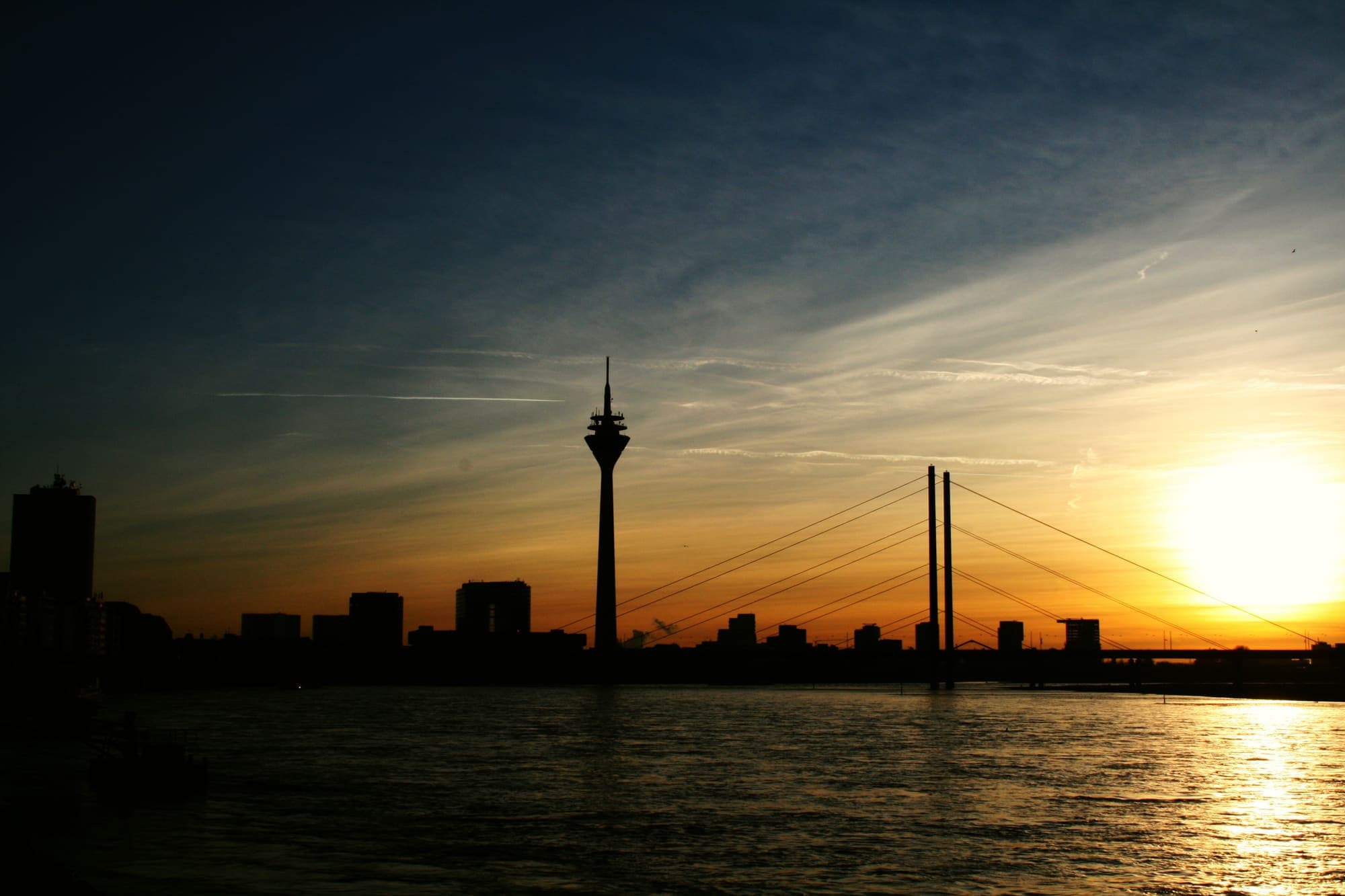
Studienkolleg Düsseldorf
Quick Snapshot & Key Statistics
| Official Name | Studienkolleg Düsseldorf (Private Preparatory College & Language School) |
| Institution Type | Private, State-Approved University Preparatory Institution |
| Location | Grafenberger Allee 87, 40237 Düsseldorf, North Rhine-Westphalia (NRW), Germany |
| Academic Tracks | T-Course (Engineering/Tech), M-Course (Medicine/Bio), W-Course (Business/Econ), G-Course (Humanities), and M+T Combined Course |
| Entrance Exam Policy | No Entrance Exam (Aufnahmebprüfung) — Direct enrollment with guaranteed course seat |
| Testing Centre Credentials | Accredited telc Examination Center (telc B1, B2, C1 Hochschule) & Goethe B2 partner testing center |
| Instruction Medium | German (Intensive A1 through C1 Hochschule prep leading to the Feststellungsprüfung - FSP) |
| Course Tuition Fees | ~€2,998 per semester (~€5,996 total for 1-year preparatory track) |
| Registration Fee | ~€495 (One-time registration & processing fee) |
| Post-Study Work Permit | Fully eligible for Germany's 18-Month Post-Study Work Permit upon university graduation |
About Studienkolleg Düsseldorf
Located in Düsseldorf—the capital city of North Rhine-Westphalia and a major international business hub—Studienkolleg Düsseldorf is a private preparatory college (Studienkolleg) and language centre. It specialises in preparing foreign secondary school graduates academically and linguistically for the official university qualification exam (Feststellungsprüfung / FSP).
Unlike public state-run Studienkollegs, which enforce quota-restricted entrance examinations (Aufnahmetest) with high rejection rates, Studienkolleg Düsseldorf offers direct enrollment without an entrance exam. The college provides small class sizes, specialised STEM/business prep modules (including physics and mathematics preparatory courses), an in-house telc examination centre, and structured guidance toward public and private university admissions across Germany.
Location & Infrastructure
Studienkolleg Düsseldorf operates out of a central urban facility in Düsseldorf:
- Address: Grafenberger Allee 87, 40237 Düsseldorf, North Rhine-Westphalia, Germany.
- Campus Facilities: Features modern digital classrooms, an accredited telc testing suite, student study lounges, Wi-Fi infrastructure, and academic advising offices.
Admission Requirements
Admissions evaluates foreign secondary school credentials and verified language baseline without competitive entry exams.
1. Secondary School Qualification
- High School Diploma: Recognised foreign secondary school leaving certificate (e.g., 12th Grade Mark Sheet/CBSE/ISC/State Board, High School Diploma, IB Diploma, A-Levels, or national exit certificates) that requires a preparatory year for German higher education entry according to the Anabin database.
- No Entrance Exam (Aufnahmetest): Applicants enrol directly into their chosen track without taking a competitive entrance test.
Popular Academic Programs & Preparatory Tracks
Studienkolleg Düsseldorf offers all four standard Studienkolleg subject tracks alongside specialised combined and preparatory modules:
1. Technical & Engineering Track (T-Course)
- Target Degrees: Mechanical Engineering, Computer Science, Electrical Engineering, Civil Engineering, Automotive Tech, Physics, and Applied Mathematics.
- Core Subjects: Advanced Mathematics, Physics, Chemistry, and Academic German.
2. Medical & Biological Track (M-Course)
- Target Degrees: Medicine, Dentistry, Pharmacy, Veterinary Medicine, Biotechnology, Biochemistry, and Biology.
- Core Subjects: Biology, Chemistry, Physics, and Academic German.
3. Business & Economics Track (W-Course)
- Target Degrees: Business Administration (BWL), Economics (VWL), International Management, Finance, Business Informatics, and Logistics.
- Core Subjects: Economics, Business Administration, Mathematics, English, and Academic German.
4. Humanities & Arts Track (G-Course)
- Target Degrees: Humanities, Social Sciences, Political Science, Philosophy, Literature, Law prep, and Communication Studies.
- Core Subjects: German Literature, History, Social Sciences, and Humanities.
5. Combined M+T Course
- Target Degrees: Interdisciplinary STEM fields, Biomedical Engineering, Medical Technology, and Medical Informatics.
- Core Subjects: Mathematics, Physics, Chemistry, Biology, and Academic German.
6. Subject Prep Courses (Maths & Physics Prep)
- Intensive brush-up modules in Foundational Mathematics and Physics designed to bridge high school gaps before formal T-Course or M-Course classes begin.
Language Requirements
All academic track instruction at Studienkolleg Düsseldorf is delivered in German.
German Proficiency Cutoffs & Certification
| Qualification / Exam | Direct Track Entry Requirement | On-Site Testing Option |
|---|---|---|
| telc Deutsch (B1 / B2 / C1) | B1 / B2 Certificate | Official telc Test Centre on campus |
| Goethe-Zertifikat | Goethe B1 / B2 | Goethe B2 exam cooperation on site |
| Internal Assessment | Available for applicants without formal certificates | Placement test administered online/on-site |
- Zero-German Option: Absolute beginners (A1 level) can book a complete package starting with intensive German language courses before transitioning into the T, M, W, or G course.
Fee Structure & Estimated Living Expenses
1. Tuition & Program Fees
| Program / Track | Duration | Semester / Total Fee |
|---|---|---|
| Standard Studienkolleg Track (T, M, W, G, or M+T) | 1 Year (2 Semesters) | ~€2,998 / semester (~€5,996 total) |
| Registration & Processing Fee | One-time | ~€495 |
| Intensive German Language Course (per level A1–C1) | 4 to 8 Weeks | ~€450 – €650 / level |
| Maths / Physics Prep Module | Short Intensive | ~€250 – €400 total |
2. Estimated Monthly Living Expenses (Düsseldorf)
Non-EU international students must meet Germany's official Blocked Account (Sperrkonto) requirement:
- Official Blocked Account Amount: €11,904 per year (~€992 per month).
- Average Monthly Budget in Düsseldorf: €950 – €1,250 per month.
Let's plan your path to studying at Studienkolleg Düsseldorf
From matching your profile to the right preparatory track to preparing a compelling application, our counsellors guide every step of your journey.
Frequently Asked Questions (FAQs)
Public state Studienkollegs use competitive entrance tests to filter down thousands of applicants due to limited state-funded seats. Studienkolleg Düsseldorf operates as a private preparatory college that verifies eligibility directly through certified high school transcripts and language credentials, granting guaranteed seat allocation without an entrance exam.
Yes. Students take the official external Feststellungsprüfung (FSP) supervised by state examination authorities. Passing the FSP yields a university entrance qualification valid for applications to both public and private universities across all 16 German federal states.
The M+T Combined Course merges key subjects from both the Medical (M) and Technical (T) tracks. It is designed for students targeting interdisciplinary fields such as Biomedical Engineering, Medical Informatics, Medical Technology, or Biotechnology, ensuring coverage in both advanced physics/maths and biology/chemistry.
Studienkolleg Düsseldorf is an officially licensed telc examination centre. Enrolled students take standardised telc examinations (telc B1, B2, and telc C1 Hochschule) directly in their familiar campus environment without having to secure external testing slots elsewhere.
Before formal Studienkolleg tracks commence, the college offers dedicated brush-up modules in foundational Mathematics and Physics. These short intensive courses align international high school curricula with German university expectations, strengthening logic and problem-solving skills.
Yes. Absolute beginners can enrol in the college's intensive German language department. Students progress through A1, A2, B1, and B2 levels on site before seamlessly entering their target T, M, W, or G preparatory course.
Around 80% of students who attend classes regularly and complete prep tutorials achieve good grades on the FSP, with a significant portion scoring top marks (1.0–1.5 grade point average).
Applications are accepted on a rolling basis throughout the year. However, non-EU international applicants needing a visa are advised to apply by May 15 / June 30 for the Winter Semester (starts September) and by November 15 / December 15 for the Summer Semester (starts March).
Upon paying the registration deposit, students receive an official admissions bundle containing their Studienkolleg Study Contract, course confirmation, housing certificate, and health insurance orientation guide for presentation at the German Embassy or Consulate.
Under German immigration laws, international students attending a preparatory Studienkolleg hold a student visa that allows part-time work during official vacation periods or restricted hours during terms, provided class attendance remains compliant.
Classes are kept in small cohorts of 15 to 25 students, ensuring interactive teacher-student dialogue, continuous feedback, and focused exam simulations compared to large public university lecture halls.
If an applicant presents an official visa refusal letter from the German Embassy or Consulate, Studienkolleg Düsseldorf refunds paid tuition fees according to contract terms (minus non-refundable administrative processing fees).
Explore Other Universities in Germany
Photo credits: Düsseldorf skyline by QuidoX, CC BY-SA 3.0; Cologne high-rise skyline by G. Friedrich, CC BY 3.0. Via Wikimedia Commons. All image credits
