
Human-Computer Interaction in Germany
Why Study Human-Computer Interaction in Germany?
Human-Computer Interaction (Mensch-Computer-Interaktion / MCI) is the interdisciplinary field at the intersection of computer science, cognitive psychology, design, and artificial intelligence. As digital systems become increasingly complex, Germany's world-leading tech giants (SAP, BMW, Siemens, Bosch, Carl Zeiss) and vibrant startup hubs in Berlin, Munich, and Hamburg are heavily investing in user experience (UX) engineering, multimodal interfaces, and AI-driven human-agent collaboration.

World-Class Interdisciplinary Education:
Choose between tuition-free public research universities or specialised private universities offering 100% English-taught tracks with small cohort sizes.
Pioneering AI-HCI Research Labs:
Train in state-of-the-art usability laboratories equipped with high-precision eye-trackers, EEG brain-computer interfaces (BCIs), VR/AR motion capture rigs, and haptic feedback devices.
Bridge Between Human Factors and Deep Tech:
German curricula don't just teach visual design—they train you in cognitive psychology, usability engineering, spatial computing, natural language interaction, and algorithmic ethics.
High Demand & Excellent Pay:
Classified as a core shortage occupation (Engpassberufe), HCI engineers, UX researchers, and product designers benefit from fast-tracked EU Blue Cards and entry-level salaries ranging from €42,000 to €58,000+ per year.
In-Demand Specializations
HCI degrees in Germany allow you to focus on specialised, high-growth technical and interaction tracks:

AI-Driven & Multimodal Interfaces:
Natural language processing (NLP) interfaces, conversational AI, voice user interfaces (VUIs), and human-robot interaction (HRI).
Extended Reality (AR/VR/MR) & Spatial Computing:
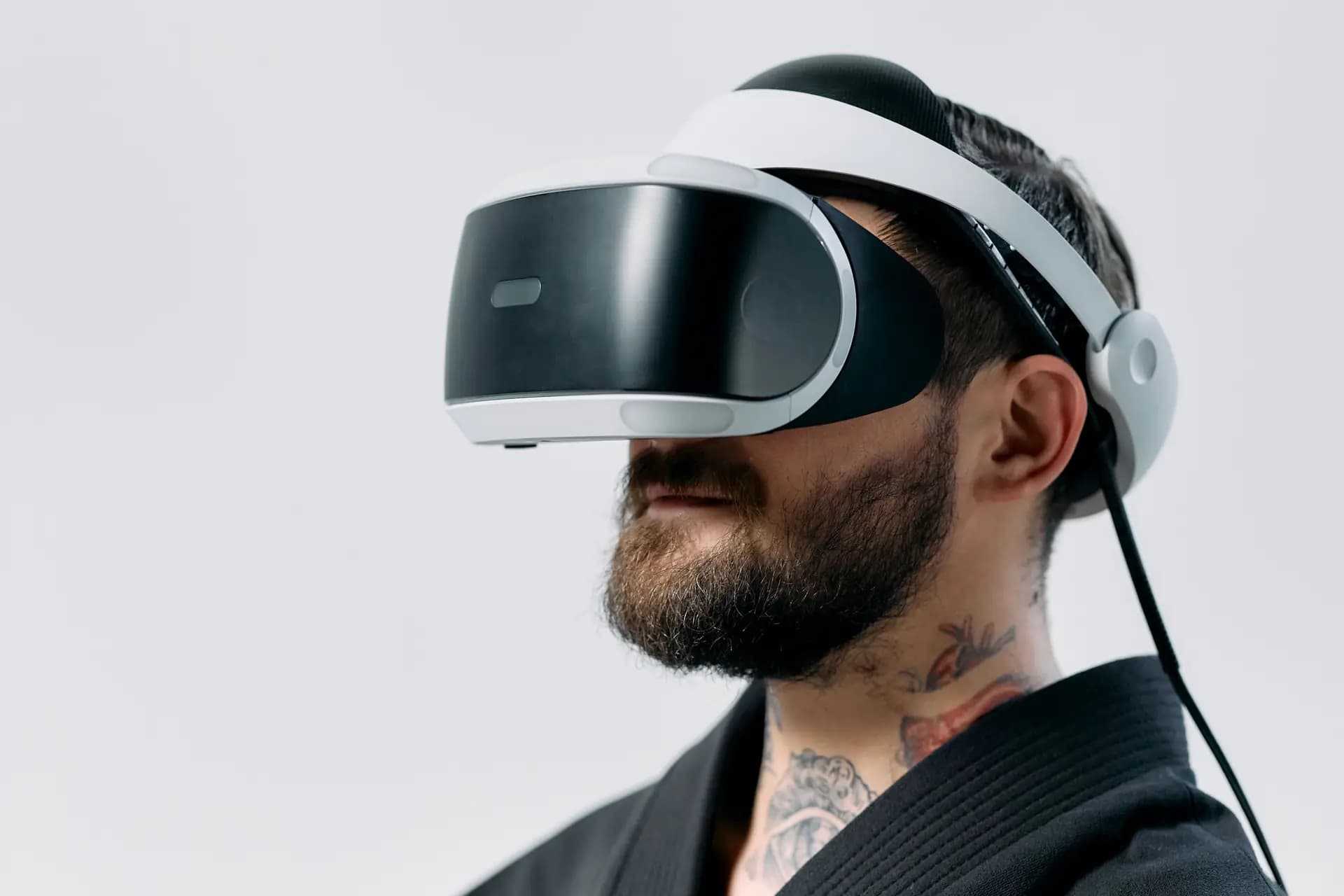
Immersive 3D environments, stereoscopic displays, gesture recognition, and spatial UI architecture for industrial and entertainment applications.
User Research, Usability Engineering & Eye-Tracking:
Quantitative user testing, eye-tracking analytics, cognitive load measurement, and accessibility design (a11y).
Brain-Computer Interfaces (BCI) & Neuro-Design:
Non-invasive neural interfaces, bio-signal analysis (EEG/EMG), and adaptive user interfaces for medical/assistive tech.
Automotive & Industrial UX:
HUD (Heads-Up Display) design, driver monitoring systems, digital cockpit ergonomics, and smart factory human-machine interfaces (HMI).
Key Admission Prerequisites
For Bachelor's Programs (3–4 Years):
School leaving credentials equivalent to the German Abitur (or completion of a 1-year Studienkolleg T-Kurs or W-Kurs foundation track).
For Master's Programs (2 Years):
A recognised 3-year or 4-year Bachelor's degree in Computer Science, HCI, Interaction Design, Cognitive Science, Psychology, or Information Systems.
ECTS Module Alignment:
Public university admission committees rigorously evaluate your transcript for prerequisite credits in programming (Python/Java/C++), higher mathematics/statistics, user-centred design, or cognitive psychology.
Language Proficiency:
English-Taught Programs:
IELTS Academic (6.5+) or TOEFL iBT (88+).
German-Taught Programs:
TestDaF (TDN 4 in all sections) or Goethe-Zertifikat C1.
Tuition Fees
Let's plan your path to studying Human-Computer Interaction in Germany
From shortlisting the right HCI programme to preparing a compelling application, our counsellors guide every step of your journey.
Frequently Asked Questions (FAQs)
Yes. Leading public universities offer fully English-taught M.Sc. programs in HCI, including Bauhaus-Universität Weimar, University of Siegen, University of Würzburg, LMU Munich (Human-Computer Interaction track), and Westfälische Hochschule.
Entry-level UX researchers, HCI engineers, and interaction designers in Germany earn starting salaries ranging from €42,000 to €58,000+. Specialised roles in Automotive HMI (BMW, Porsche), AI User Experience, or Spatial Computing in major hubs like Munich, Berlin, or Hamburg often come with higher starting salaries.
In Germany, an M.Sc. in Human-Computer Interaction is predominantly a technical Computer Science degree integrated with empirical research methods and cognitive psychology. You will write code, build interactive software prototypes, and analyse data alongside studying visual interface design and usability testing.
Requirements vary by university. Research-oriented public universities (like Weimar or Siegen) evaluate applicants strictly on academic transcripts and ECTS credit matching in Computer Science and Psychology. However, design-focused or private universities frequently mandate a design/technical portfolio showcasing past UI/UX projects, interactive software prototypes, or user research case studies.
Yes, provided your transcript includes sufficient credits in programming and computer science principles. If you come from a pure Psychology or Design background lacking foundational programming credits, select universities may offer a conditional admission (mit Auflagen), requiring you to pass 1 or 2 bridge modules in computer science during your first year.
Curricula emphasise industry-standard tools including Figma / Adobe XD, Python / C++ / JavaScript, Unity / Unreal Engine (for AR/VR development), Qt (for automotive HMI), R / SPSS (for user study statistical analysis), and lab hardware like Tobii eye-trackers and EEG bio-sensors.
German HCI curricula heavily integrate Human-AI Interaction (HAI). Students learn how to design intuitive prompt interfaces, evaluate user trust in generative AI models, design explainable AI (XAI) feedback loops, and build conversational agents that comply with the EU AI Act.
Key employers include:
• Automotive & Mobility: BMW, Mercedes-Benz, CARIAD (Volkswagen Group), Porsche, Continental.
• Enterprise Software & Cloud: SAP, Software AG, Google R&D Germany, Amazon Web Services.
• Consumer Tech & E-Commerce: Zalando, Delivery Hero, Siemens Healthineers, Carl Zeiss.
• UX & Strategy Consultancies: McKinsey Design, IDEO, Accenture Song, Frog Design.
Yes. Non-EU international students can legally work up to 140 full days or 280 half days per calendar year. Working 12 to 20 hours per week as a student worker (Werkstudent) as a junior UX designer, usability tester, or frontend developer allows you to earn €15 to €24/hour while gaining direct industry experience.
UX/UI Design focuses primarily on wireframing, visual interface aesthetics, design systems, and user journeys. HCI (Human-Computer Interaction) is a broader, more technical engineering discipline that encompasses software development, cognitive psychology modelling, multimodal sensory input (voice, vision, haptics), and quantitative usability research.
Major HCI hubs include:
• Berlin: Europe's startup capital with thousands of consumer tech apps, scale-ups, and UX agencies.
• Munich: High concentration of automotive HMI, enterprise SaaS, and deep-tech AI research labs.
• Hamburg: E-commerce, digital media agencies, and logistics software platforms.
• Stuttgart & Nuremberg: Industrial human-machine interfaces (HMI), medical technology, and smart automation.
Explore Other Fields of Study in Germany
Beyond Human-Computer Interaction, EduOptions Germany also guides students
into these high-growth fields.
