
POSTGRADUATE OR MASTERS
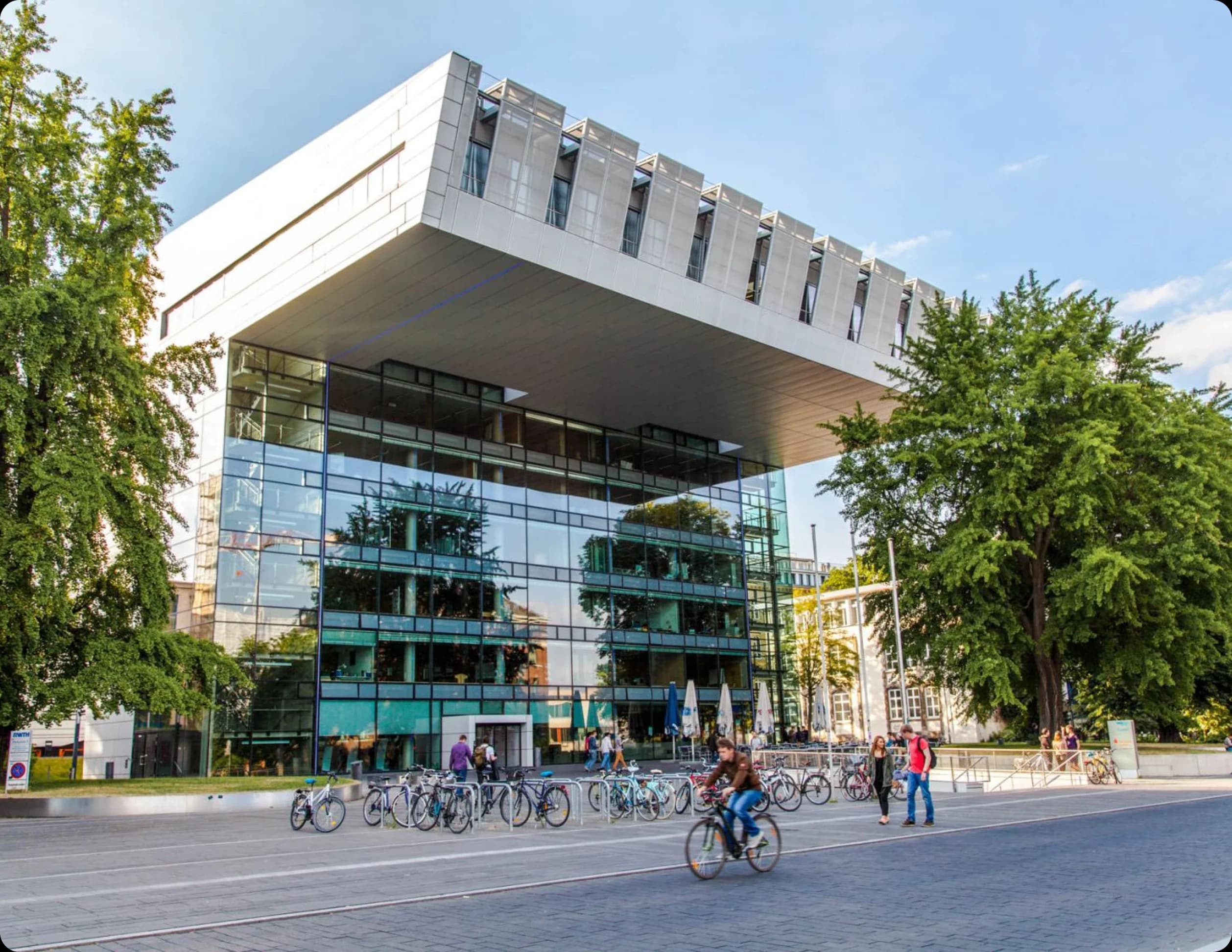
Offered to students who have completed their undergraduate or Bachelor’s degree, a postgraduate or Master’s degree helps students develop valuable relationships and obtain hands-on experience via internships and research.
Like Bachelor’s degree, German universities offer Master’s degree in a variety of subjects such as: technical, engineering, aviation, management, medicine, law, social sciences, arts etc., and can be got from world renowned universities like RWTH Aachen, TU Darmstadt, KIT, TU Berlin amongst other renowned universities in Germany.

German universities encourage long-term higher education for international students by providing more English study opportunities and lower cost of higher education as compared to UK, USA or Australia. Added to which, the strong Germany economy is equipped to employ most of the educated population. While knowledge of German is not necessary to study in Germany, it helps to have working knowledge of the language, in order to appreciate and enhance the education experience. Hence, it is no surprise that Germany is one of Europe’s top Undergraduate study destination.
There are two types of Masters one can pursue in Germany
The 1st category is designed to build on the academic knowledge gained during a related Bachelor's degree.
The 2nd category of programs tends to have a greater focus on professional development, often requiring applicants to have both, an undergraduate degree and some relevant work experience.
GMAT / GRE / GATE or knowledge of German is not compulsory for those completing their Masters in English, it is mandatory for students wishing to take courses in German, so they can fully appreciate the value of the course. However, learning German helps integrate better into German society and helps increase the understanding of the culture.
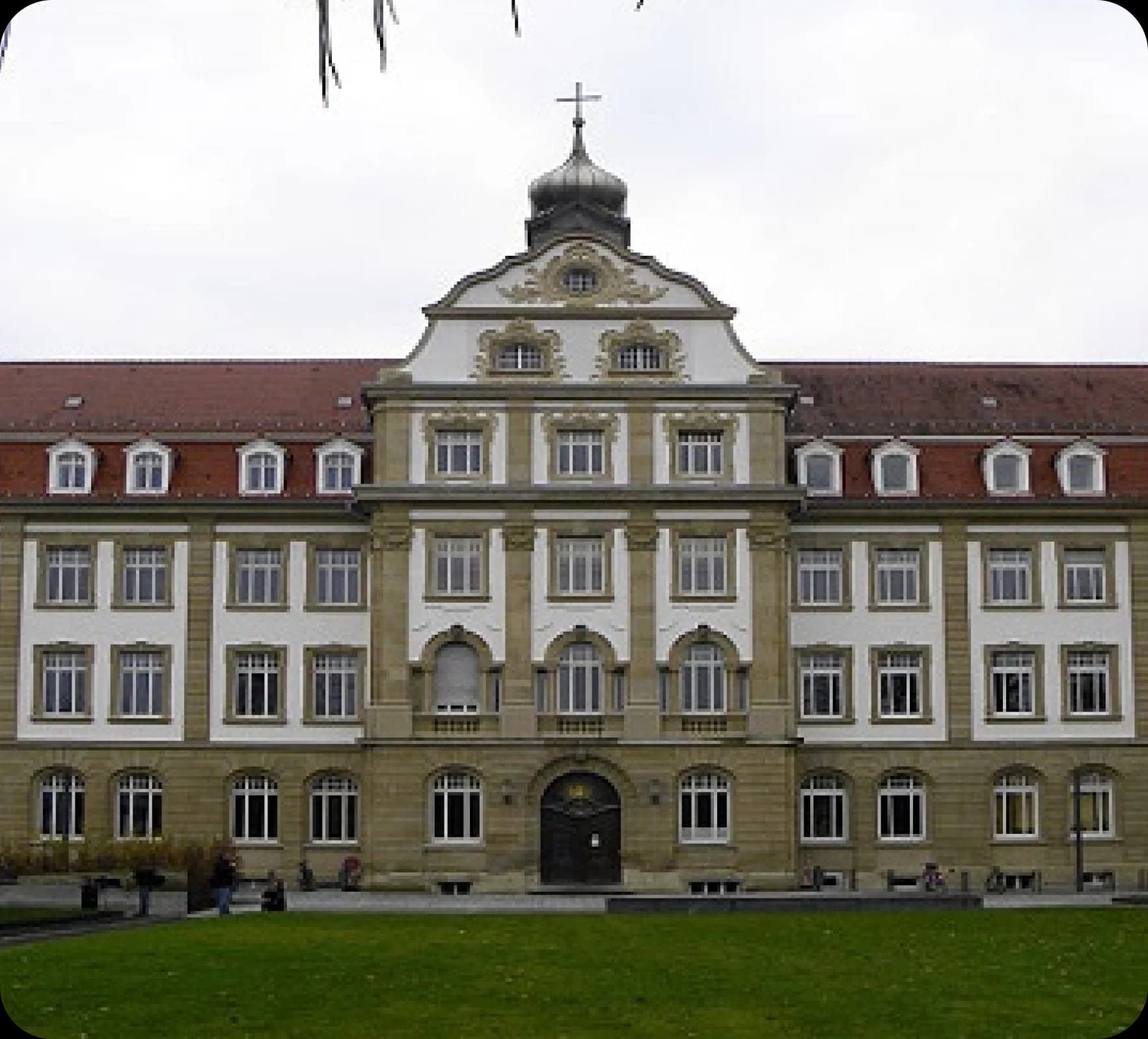

With the increasing amount of courses taught in English it is no wonder that Germany is one of Europe’s top destination to pursue a Master’s degree.

Besides, most Public colleges offer Master’s degrees at a lower tuition fee than their counter-parts in the USA, UK and Australia.
Some of the Benefits of Pursuing a Masters In Germany:

- Excellent stay back options (18 Months) to search for Jobs or continue studies after completion of the Master’s degree.
- After degree, career opportunities are plentiful in Germany.
- On completion students can continue to pursue their MBA/Phd Studies.
- Many educational institutions offer students the chance to do internships in their chosen field where companies like Airbus, Allianz, BMW, Bosch, Daimler, Deutsche Bank, DHL, SAP offer a wealth of opportunities to students interested in finance, marketing, engineering and many more areas.
Students wishing to do their Masters in Germany must have had good grades with few backlogs at their Bachelor Degree.

When to Apply?
Winter Semester: August (course start date)/September/October
Summer Semester: Jan & March / April
Application process must start 6 months prior to course start date.
Contact us to know how we can help you successfully enroll in a Bachelors program of your choice.
Let’s work together to turn your dream of studying in Germany into reality!
Explore our counselling service.

Frequently Asked Questions (FAQs)
Master's admissions at German universities rely on strict academic alignment. Key requirements include:
• Matching Bachelor's Degree: A recognised 3-year or 4-year undergraduate degree from an H+ institution listed on the official German Anabin database.
• Strict Subject Credit Alignment (ECTS): Sufficient credits in core prerequisite subjects (e.g., minimum 30 ECTS in higher mathematics for Computer Science MS).
• Language Proficiency: IELTS (6.5–7.0) or TOEFL (85–100) for English programs; Goethe/TestDaF B2/C1 for German programs.
• APS Certificate: Mandatory academic verification issued by the German Embassy in New Delhi.
• GRE/GMAT: Required by specific high-ranking technical and management institutions (e.g., TU Munich, RWTH Aachen).
Yes. Many German universities accept 3-year Indian Bachelor's degrees, provided the awarding university is rated H+ on the Anabin database and the candidate has accumulated 180 ECTS credits. However, for programs requiring 240 ECTS credits (a 4-year equivalent), applicants with 3-year degrees may need to complete a bridging pre-Master's semester, take additional coursework, or apply to Universities of Applied Sciences and private universities that offer credit-conversion options.
Consecutive Master's: Directly builds upon the subject matter of your undergraduate degree (e.g., B.Tech in Mechanical Engineering to M.Sc in Automotive Engineering). These make up the vast majority of public university programs and are generally tuition-free.
Non-Consecutive / Executive Master's: Focuses on professional development or cross-disciplinary training (e.g., an MBA for engineers). These usually require 1 to 3 years of post-graduation work experience and may charge tuition fees.
Technical & Research Universities (Universitäten / TUs): Focus on theoretical research, scientific methodology, and academic rigour. They grant doctorates (PhDs) and suit students aiming for research, academia, or R&D roles.
Universities of Applied Sciences (Fachhochschulen / UAS): Focus on practical application, industry case studies, mandatory corporate internships, and direct employment readiness. They work closely with local German industry and suit students aiming for immediate corporate employment.
In general, no. Public German Master's programs are strictly consecutive, meaning your prospective Master's major must directly align with your undergraduate coursework. If your undergraduate transcript lacks required prerequisite ECTS credits in the target field, public university portals will reject the application automatically. Students seeking a career pivot can consider specialised private universities or pre-Master's bridging programs that accept non-consecutive profiles.
German universities use the European Credit Transfer and Accumulation System (ECTS). As a general benchmark, 1 ECTS credit equals 25 to 30 hours of total student workload (including classroom lectures, self-study, and exams). A standard full-time academic year in Europe equals 60 ECTS. EduOptions Germany provides credit conversion and mapping services to evaluate how your Indian university marksheets translate into ECTS requirements.
The dMAT (digital Master Assessment Test) is a digital aptitude exam administered by g.a.s.t. that evaluates cognitive skills, logical reasoning, and data interpretation. Taking the dMAT is mandatory for Indian applicants applying for Master's programs in Engineering, Computer Science, Business, and Economics for the Summer 2027 intake and beyond. The dMAT score is integrated directly into your APS Certificate.
Most German public universities do not require GRE or GMAT. However, top-ranked institutions—particularly TU Munich, RWTH Aachen, KIT, Goethe University Frankfurt, and Mannheim Business School—require GRE (e.g., 315+ with high Quantitative scores) or GMAT (600+) for competitive MS in Computer Science, Mechanical Engineering, Data Analytics, and MBA/Management programs.
German universities convert foreign grades into the German grading scale (where 1.0 is Excellent and 4.0 is the minimum pass) using the Modified Bavarian Formula (Bayerische Formel):
N = 1 + 3 × (Nmax - Nd) / (Nmax - Nmin)
Where:
N = Calculated German grade
Nmax = Maximum achievable grade/percentage in your Indian university system
Nmin = Minimum passing grade/percentage in your Indian university system
Nd = Your obtained overall grade/percentage
Winter Semester (October start): Applications open in March/April; deadlines fall between May 1 and July 15.
Summer Semester (April start): Applications open in October/November; deadlines fall between December 1 and January 15.
Note: Because APS verification takes 2 to 4 months, you should begin document preparation 8 to 12 months before the intake deadline.
Upon graduating from an accredited German university, international students receive an 18-month Post-Study Work Visa (Aufenthaltserlaubnis zur Arbeitsplatzsuche). This permit allows you to work unrestricted in any field while seeking a full-time position aligned with your degree.
EduOptions Germany provides end-to-end guidance for Master's aspirants:
• Detailed transcript and ECTS credit mapping to identify eligible public and private universities.
• Guidance for APS certificate filing and dMAT test registration.
• SOP drafting, CV optimisation, and Letter of Recommendation (LOR) review.
• Application submissions via Uni-Assist and direct university portals.
• Blocked Account setup (€11,904), health insurance, and VFS student visa filing.
• Pre-departure orientation and post-arrival settlement support in Germany.
