
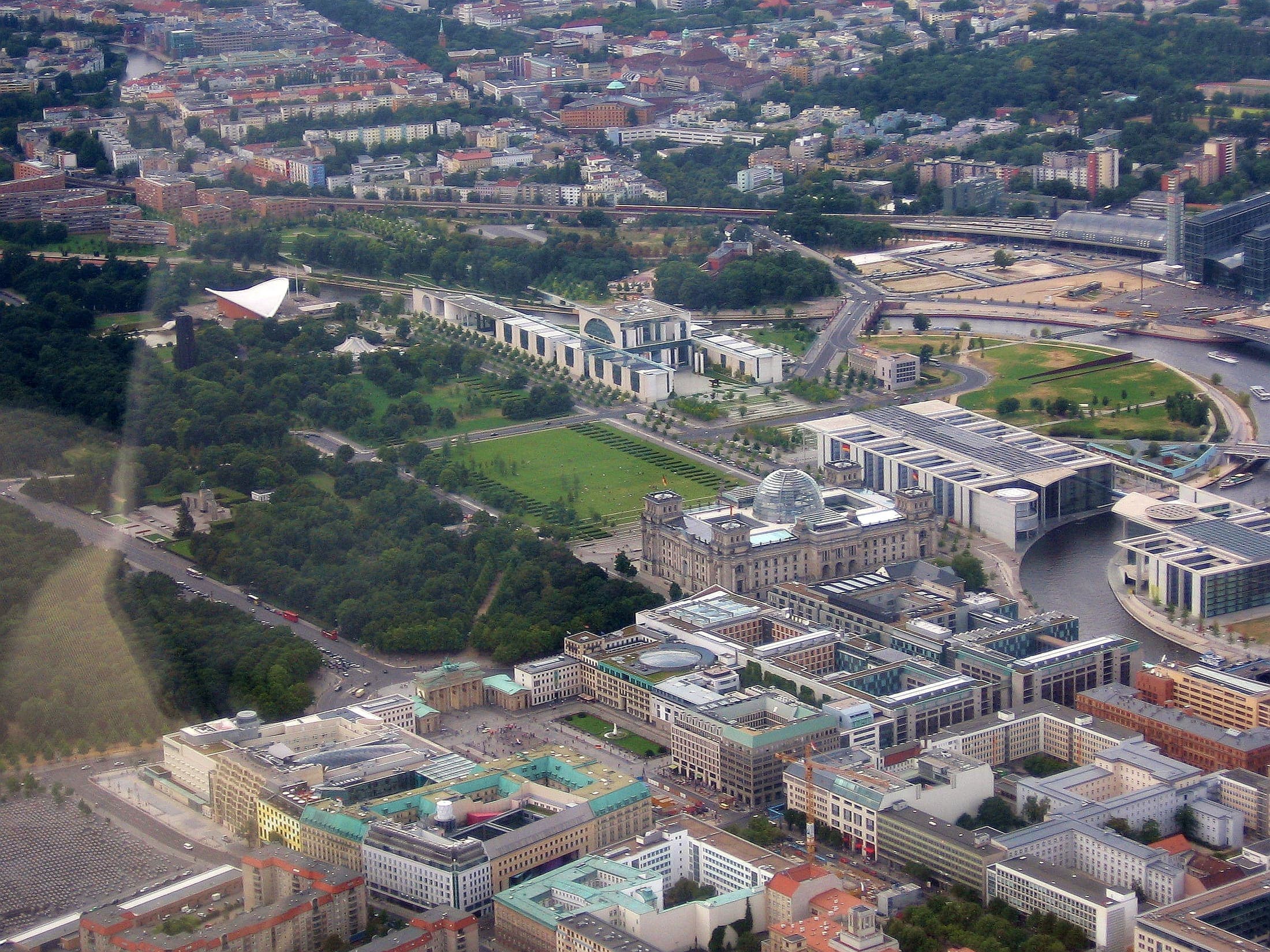
ESCP Business School – Berlin
Quick Snapshot & Key Statistics
| Official Name | ESCP Business School – Berlin Campus (ESCP Europe Wirtschaftshochschule Berlin) |
| Historical Significance | Founded in 1819 — Recognised as the world's first business school |
| Institution Type | Private, State-Recognized Business School (Grande École) with European University Status |
| Accreditation & Seals | Triple Crown Accredited (AACSB, EQUIS, EFMD / AMBA), State-recognised by Berlin Senate |
| European Campus Network | 6 Urban Campuses: Berlin, Paris, London, Madrid, Turin, and Warsaw |
| National & Global Rankings | #1 in Germany / Top 5 Europe (Financial Times Master in Management); Top 10 Executive MBA globally |
| Campus Location | Heubnerweg 8–10, 14059 Berlin, Germany (Charlottenburg District) |
| Medium of Instruction | 100% English (International tracks) with optional German, French, and Spanish modules |
| Student Body | ~10,000+ students across 6 campuses representing 135+ nationalities |
| Tuition Fees (Undergrad) | ~€16,000 – €23,000 / year (BSc in Management - 3 years, 3 countries) |
| Tuition Fees (Postgrad) | ~€22,900 – €26,500 / year (Master in Management / M.Sc. Tracks) |
About ESCP Business School – Berlin
Founded in 1819 in Paris, ESCP Business School is recognised as the world's first business school. It operates as a unified multi-campus European university, holding elite Triple Crown Accreditation (AACSB, EQUIS, EFMD / AMBA)—a distinction shared by fewer than 1% of business schools globally.
The Berlin Campus was established in 1973 and holds full academic recognition as a German state-accredited university. ESCP's core academic philosophy revolves around a multi-campus mobility model: students do not study in just one city, but rotate across at least two or three European campuses (e.g., Berlin, London, Paris, Madrid, Turin, Warsaw) during their degree. Located in a historic parkside estate in Berlin-Charlottenburg, ESCP Berlin specialises in digital transformation, entrepreneurship, international management, and sustainability economics.
Campuses & Multi-Campus European Structure
ESCP operates six urban European campuses, enabling students to live and study in multiple financial hubs:
- Berlin Campus (Charlottenburg): Housed in a historic neo-baroque campus complex in West Berlin (near Schloss Charlottenburg). Serves as ESCP's central European hub for digital business, sustainability research, and corporate relations in Germany.
- Paris Campuses (Montparnasse & République): Flagship French campuses offering deep access to multinational corporate headquarters, venture capital, and luxury management.
- London, Madrid, Turin & Warsaw Campuses: Dedicated city-centre campuses providing specialised finance, energy, family business, and emerging market management modules.
Admission Requirements
Admissions at ESCP Berlin evaluate academic excellence, cross-cultural adaptability, leadership potential, and quantitative aptitude.
1. Undergraduate Program (BSc in Management — 3 Years / 3 Countries)
- Secondary School Certificate: High School Diploma, A-Levels, IB Diploma, German Abitur, or foreign secondary diploma with strong academic marks (particularly in Mathematics).
- Multi-Country Mobility Requirement: Applicants choose a 3-year study track across three different European cities (e.g., Year 1 London/Paris, Year 2 Madrid/Turin/Berlin, Year 3 Berlin/Paris).
- Selection Process: Online application, academic transcripts, personal essay, and a selection interview evaluating motivation and intercultural adaptability.
2. Postgraduate Programs (Master in Management - MiM / M.Sc. Tracks)
- Bachelor's Degree: Completed undergraduate degree (180 ECTS minimum or international equivalent) in any discipline (Business, Economics, STEM, or Humanities) from a recognised university.
- Standardised Testing: GMAT / GRE or TAGE-MAGE score.
- Selection Interview & Video Assessment: Evaluates career goals, analytical thinking, and communication.
3. Master of Business Administration (MBA in International Management)
- Bachelor's Degree: Recognised undergraduate degree in any academic field.
- Professional Work Experience: Minimum 3 years of post-graduation full-time professional work experience.
- GMAT / GRE / Internal Test: GMAT Focus Edition or GRE required.
Popular Academic Programs
Undergraduate Degrees (3 Years / 180 ECTS)
- BSc in Management: Uniquely structured so that students live and study in three different countries over three years. Combines management science with liberal arts, law, computer science, and language learning.
Postgraduate Master's Degrees (M.Sc. / MiM — 1 to 2 Years)
- Master in Management (MiM - Grande École)
- M.Sc. in Strategy and Digital Business
- M.Sc. in Big Data and Business Analytics
- M.Sc. in Sustainability Entrepreneurship and Innovation
Executive & Doctoral Degrees
- MBA in International Management
- Executive MBA (EMBA)
- Ph.D. / Doctoral Programme in Management
Language Requirements
All international degree programs at ESCP Berlin are delivered 100% in English. German language proficiency is not required for admission.
English Language Proficiency Cutoffs
| Exam / Qualification | Undergraduate (BSc) Minimum | Postgraduate (MiM / M.Sc. / MBA) Minimum |
|---|---|---|
| IELTS Academic | Overall 6.5 | Overall 6.5 – 7.0 (min. 6.0 in sub-scores) |
| TOEFL iBT | Minimum 90 points | Minimum 90 – 100 points |
| Cambridge English | B2 First (min. 175 points) | C1 Advanced (CAE) / C2 Proficiency |
| TOEIC | N/A | Minimum 900 points |
- English Waiver: Available if secondary or undergraduate studies were completed 100% in English in an English-speaking country or verified via an official Medium of Instruction (MOI) certificate.
Fee Structure & Estimated Living Expenses
1. Program Tuition Fees
| Degree Program | Duration & Structure | Estimated Annual / Total Tuition Fee |
|---|---|---|
| BSc in Management | 3 Years (3 Countries) | ~€16,000 – €22,500 / year (~€48,000 – €67,500 total) |
| Master in Management (MiM) | 2 Years (120 ECTS) | ~€22,900 / year (EU) | ~€26,500 / year (Non-EU) |
| Specialised M.Sc. Programs | 1 to 1.5 Years | ~€24,500 – €29,500 total course fee |
| MBA in International Management | 1 Year (12 Months) | ~€60,500 total course fee |
Scholarships & Financial Aid
- ESCP Need-Based & Merit Scholarships: Cover 10% to 50% of tuition fees based on academic distinction and financial background.
- CROUS Full Tuition Exemption (EU Students): EU students eligible for higher-level French CROUS grants receive 100% tuition waivers.
- Brain Capital Income Share Agreement: Allows European and eligible international students to study with €0 upfront tuition, repaying via a post-graduation income percentage.
2. Estimated Monthly Living Expenses (Berlin)
- Official Blocked Account Amount: €11,904 per year (~€992 per month).
- Average Monthly Budget in Berlin: €1,000 – €1,350 per month.
Let's plan your path to studying at ESCP Berlin
From matching your profile to the right program to preparing a compelling application, our counsellors guide every step of your journey.
Frequently Asked Questions (FAQs)
Under ESCP's undergraduate model, students do not stay in one city. They complete Year 1 in London, Paris, or Turin; Year 2 in Madrid, Paris, Turin, or Berlin; and Year 3 in Berlin, Paris, or London. Students earn a unified degree while acquiring fluency in multiple European languages.
ESCP Berlin holds official state recognition from the Berlin Senate (Wissenschaftsrat) as well as French Grande École status. Graduates receive degrees officially recognised across both EU legal frameworks, allowing effortless access to civil service exams, doctoral studies, and corporate roles in both nations.
Blue Factory is ESCP's European startup incubator network. Located across Berlin, Paris, and London, it provides student entrepreneurs with seed funding, co-working space, legal advice, and access to an alumni angel investor network (Blue Factory Seeds).
Because MiM students rotate across multiple European campuses, graduates receive a multi-degree package: the French Grade de Master, the German Master of Science (M.Sc.) recognised by the Berlin Senate, and optional national master's degrees from partner campuses (e.g., Spain, Italy, UK).
"Option E" (Entrepreneurship) is one of ESCP Berlin's flagship Master's specialisations. It brings together student teams to launch live ventures, build digital prototypes, and pitch directly to European venture capital firms operating in Berlin.
The Jean-Baptiste Say Institute is ESCP's central research division for entrepreneurship and innovation. Named after Jean-Baptiste Say (ESCP's co-founder and coiner of the term "entrepreneur"), the institute leads European research on effectuation, deep-tech scaling, and corporate intrapreneurship.
ESCP mandates sustainability training across all degree tracks. Every student completes compulsory modules in climate economics, ESG metrics, and social impact, culminating in real-world sustainability consulting briefs for corporate clients.
According to ESCP career statistics, 25% of graduates enter strategy consultancies (McKinsey, BCG, Bain, Roland Berger), 15% enter finance/investment banking, and 11% enter tech/business development roles, with over 98% employed within 3 months of graduation.
The Regenerative Economy Factory is a specialised research hub on the Berlin campus focusing on circular economy architectures, corporate decarbonization strategies, and sustainable supply chain governance in the DACH region.
Yes. Under German student visa regulations, non-EU international students can legally work up to 140 full days (or 280 half days) per calendar year. ESCP students frequently secure paid corporate Werkstudent positions in Berlin startups, consultancies, or tech firms.
While the Master in Management (MiM) requires a standardised test, specialised M.Sc. tracks such as the M.Sc. in Strategy and Digital Business permit GMAT/GRE waivers for candidates demonstrating exceptional undergraduate GPAs, strong quantitative coursework, or relevant professional tech experience.
Active student groups include ESCP Consulting Berlin (student-run consulting firm), ESCP Regatta (annual sailing and networking event), Geopolitics Society, Women in Leadership, and ESCP Cyber & Tech Club.
Yes. Outstanding international applicants entering ESCP's Master in Management program can be nominated by ESCP for the prestigious Eiffel Excellence Scholarship funded by the French Ministry for Europe and Foreign Affairs, which provides a monthly living stipend and travel allowances.
Explore Other Universities in Germany
Photo credits: German Chancellery, Berlin (aerial) by Benjamin Janecke, CC BY-SA 3.0; Friedrichstrasse business district, Berlin by Jörg Zägel, CC BY-SA 3.0. Via Wikimedia Commons. All image credits
