
Kühne Logistics University (KLU)
Quick Snapshot & Key Statistics
| Official Name | Kühne Logistics University |
| Funding Body | Backed by the non-profit Kühne Foundation (Klaus-Michael Kühne / Kühne Nagel) |
| Established | 2010 (Hamburg, Germany) |
| Location | Großer Grasbrook 17, 20457 Hamburg (HafenCity District) |
| Accreditation & Seals | AACSB Accredited, FIBAA Premium Seals, German Council of Science and Humanities (Wissenschaftsrat) |
| Doctoral Rights | Holds the rare right to award PhD degrees (Promotionsrecht) as a private German university |
| Medium of Instruction | 100% English across all degree levels |
| Student Body | Highly international (~50%+ international students from 60+ countries) |
| Class Size | Small cohort model (Average 25–30 students per class) |
| Tuition Fees (B.Sc.) | ~€7,300 / semester (~€14,600 / year) |
| Tuition Fees (M.Sc.) | ~€8,200 / semester (~€16,400 / year) |
| Tuition Fees (MBA) | ~€16,000 – €18,000 / year (~€24,000–€32,000 total course fee) |
| Post-Study Work Permit | Fully eligible for Germany's 18-Month Post-Study Work Permit |
About Kühne Logistics University (KLU)
Founded in 2010 with substantial endowment from the Kühne Foundation, Kühne Logistics University (KLU) is an independent, state-recognised private university located in Hamburg's waterfront HafenCity district. KLU is globally recognised as an elite hub for Logistics, Supply Chain Management, Business Analytics, and Sustainable Operations Management.
Unlike conventional business schools, KLU holds AACSB accreditation and the rare right to award PhD degrees. Its degree programs hold multiple FIBAA Premium Seals awarded to fewer than 20 business programs in Europe. Supported by close corporate ties to global logistics conglomerates, e.g., Kühne Nagel, Hapag-Lloyd, Lufthansa Cargo, DHL, KLU provides direct recruitment pathways, corporate research projects, and global supply chain operations training.
Campus Location & Facilities
KLU operates out of an architectural waterfront campus in Hamburg:
- Campus Address: Großer Grasbrook 17, 20457 Hamburg, Germany (HafenCity District).
- Facilities: Waterfront outdoor terraces, modern lecture halls, digital analytics labs, high-speed study rooms, library, and student lounges overlooking the Hamburg harbour.
Admission Requirements
1. Undergraduate (B.Sc. Business Administration) Requirements
- Secondary School Leaving Certificate: High School Diploma, A-Levels, IB Diploma, or equivalent university entrance qualification (Abitur or 12th Grade Mark Sheet).
- Academic Transcripts: Transcripts covering the final 2–3 secondary school years.
- Statement of Purpose (SOP): 1-page motivation letter answering career objectives and program fit.
- Curriculum Vitae (CV) & Copy of Passport.
- KLU Online Selection Interview: Video/online interview with an admissions officer evaluating analytical thinking, communication skills, and motivation.
2. Postgraduate (M.Sc.) Requirements
- Bachelor's Degree: Completed undergraduate degree (180 ECTS minimum) in Business Administration, Economics, Supply Chain, Engineering, or a related discipline from a recognised university.
- Academic Transcripts & Degree Certificates.
- APS Certificate: Mandatory for applicants holding degrees from India, China, or Vietnam.
- CV & Statement of Purpose.
- Online Interview: Selection interview with a program coordinator.
- GMAT / GRE: Recommended for quantitative/analytics tracks, but can be waived based on prior academic GPA.
3. Master of Business Administration (MBA) Requirements
- Bachelor's Degree: Undergraduate degree in any academic discipline.
- Work Experience: Minimum 2 to 3 years of post-graduation professional work experience.
- Online Selection Interview.
Popular Academic Programs
Undergraduate Programs (B.Sc. — 3 Years / 180 ECTS)
- B.Sc. Business Administration: Features specialisations in Global Logistics & Supply Chain Management, Sustainable Management, or Digital Management & Data Science.
Postgraduate Programs (M.Sc. & MBA — 1.5 to 2 Years)
- M.Sc. Global Logistics and Supply Chain Management (Flagship program ranked among the top supply chain degrees in Europe)
- M.Sc. International Management
- M.Sc. Business Analytics and Data Science
- M.Sc. Sustainable Management and Operations
- MBA Leadership and Supply Chain Management
Language Requirements
All degree tracks at KLU are delivered 100% in English. German language proficiency is not required for admission.
English Language Proficiency Cutoffs
| Exam / Qualification | Undergraduate (B.Sc.) Minimum | Master's (M.Sc. & MBA) Minimum |
|---|---|---|
| IELTS Academic | Overall 6.5 (no band below 6.0) | Overall 6.5 (no band below 6.0) |
| TOEFL iBT | Minimum 90 points | Minimum 90 points |
| Duolingo English Test | 115 points | 120 points |
| Cambridge Certificate | C1 Advanced (CAE) | C1 Advanced (CAE) / CPE |
- English Waiver: Applicants who completed their secondary education or Bachelor's degree 100% in English in an English-speaking country (or present an official Medium of Instruction [MOI] certificate) can request an English test waiver.
Fee Structure & Estimated Living Expenses
1. Program Tuition Fees
| Program Level | Semester Fee | Total Estimated Course Fee |
|---|---|---|
| Bachelor of Science (B.Sc.) | ~€7,300 / semester | ~€43,800 total (6 Semesters) |
| Master of Science (M.Sc.) | ~€8,200 / semester | ~€24,600 – €32,800 total (3–4 Semesters) |
| MBA Leadership & Supply Chain | ~€8,000 – €9,000 / term | ~€24,000 – €32,000 total |
Mandatory Fees & Scholarships
- Application Fee: €50 (non-refundable).
- KLU Merit Scholarships: Partial scholarships covering 10% to 50% of tuition are awarded based on academic excellence and background.
- Brain Capital Income Share Agreement: Allows eligible students to study with zero upfront tuition and pay back a percentage of income post-graduation.
2. Estimated Monthly Living Expenses (Hamburg)
Non-EU international students must provide proof of funds via a German Blocked Account (Sperrkonto):
- Official Blocked Account Amount: €11,904 per year (~€992 per month).
- Average Monthly Student Budget in Hamburg: €1,100 – €1,400 per month.
Let's plan your path to studying at KLU
From matching your profile to the right program to preparing a compelling application, our counsellors guide every step of your journey.
Frequently Asked Questions (FAQs)
KLU is heavily endowed by the non-profit Kühne Foundation established by Klaus-Michael Kühne, executive majority owner of Kühne Nagel. The foundation's financial backing allows KLU to maintain low student-to-faculty ratios, invest in world-class supply chain research centres, and provide generous merit scholarships without depending entirely on tuition revenue.
Most private universities of applied sciences in Germany are restricted from awarding PhD degrees. KLU was granted official institutional re-accreditation with doctoral degree-granting rights (Promotionsrecht) by the German Council of Science and Humanities (Wissenschaftsrat) due to its high research output, published faculty papers, and academic rigour in logistics and management science.
FIBAA awards its rare Premium Seal only to degree programs that significantly exceed standard national accreditation quality criteria. Both of KLU's Master's programs (Global Logistics & Supply Chain Management and International Management) and its B.Sc. in Business Administration hold FIBAA Premium Seals, placing them in the top tier of business curricula in Europe.
Instead of pure classroom theory, KLU Master's programs integrate real-world corporate consulting projects. Teams of students work directly with corporate logistics partners, e.g., Lufthansa Cargo, Hapag-Lloyd, or Airbus, to solve operational bottlenecks, optimise supply chain routes, or evaluate sustainable aviation fuels, presenting strategies directly to corporate directors.
All full-time B.Sc. students complete a mandatory semester abroad during their 5th semester. KLU maintains bilateral exchange agreements with over 60 premier global partner universities, including US, UK, Asian, and European business schools, allowing students to study abroad while paying regular KLU tuition.
Students in KLU's Business Analytics & Data Science and Supply Chain tracks receive hands-on training in industry-standard software frameworks, including Python, R, SAP S/4HANA, Tableau, Anylogic (supply chain simulation software), and SQL database architectures.
KLU partners with the Brain Capital Education Fund. Eligible European and international students can finance up to 100% of their tuition through an Income Share Agreement (ISA). Under this model, students pay zero tuition upfront during their studies and repay a fixed percentage of their income only after securing a job that meets a minimum income threshold.
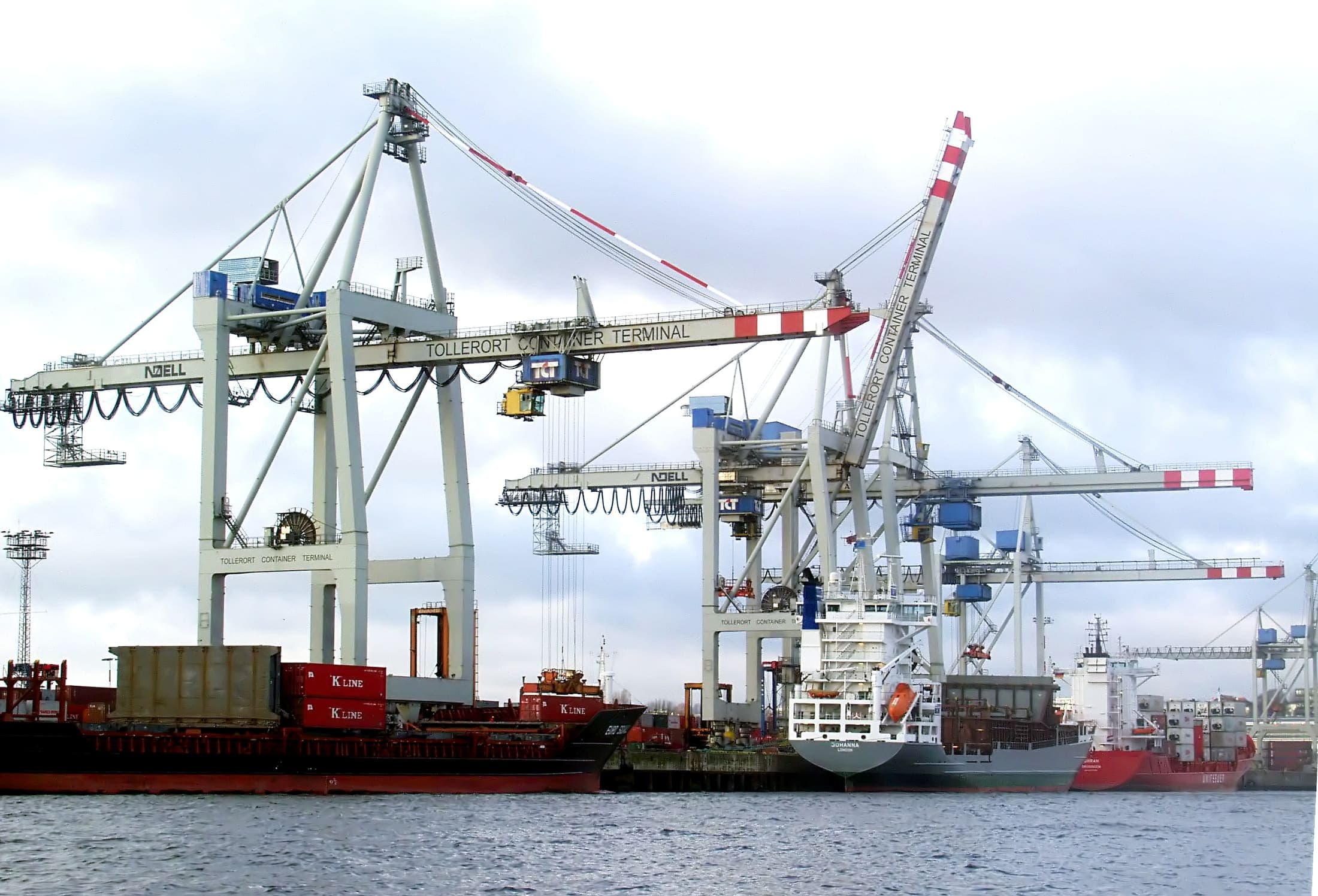
KLU's campus is situated directly inside HafenCity Hamburg—Europe's largest urban regeneration project adjacent to the Port of Hamburg (Europe's third-largest container port). This proximity gives students direct access to global shipping lines, freight terminals, trade houses, and maritime logistics firms for Werkstudent positions and thesis projects.
KLU houses specialised global research initiatives, including the Centre for Sustainable Logistics and Supply Chains (CSLS) and the Centre for Supply Chain Operations and Digitalisation. These centres lead research in maritime decarbonization, humanitarian logistics, and automated warehouse robotics.
KLU works closely with global aid organisations such as the United Nations World Food Programme, Red Cross, and Médecins Sans Frontières through its humanitarian logistics research group. Students learn how to design disaster-response supply chains, manage emergency medical relief, and optimise food distribution in crisis zones.
KLU operates an internal startup incubator ecosystem offering mentorship, seed funding access, and workspace for logistics tech (LogTech) and digital business ventures. Being located near Hamburg's startup ecosystem allows student founders to pitch directly to maritime and logistics venture capital funds.
KLU hosts active student-run initiatives including KLU Consult (a student-run management consulting group), the KLU Supply Chain Club, KLU Green Team (sustainability projects), and the KLU Sailing Team, which competes in regional maritime regattas along the Elbe River.
KLU's dedicated Career Services Centre organises the annual KLU Career Day, customised company pitch sessions, mock interview coaching, and access to an exclusive corporate portal. Over 90% of KLU graduates secure full-time positions or launch businesses within 3 to 6 months of graduation.
To help incoming international students navigate Hamburg's tight housing market, KLU holds dedicated quota allocations in private student residence halls such as Studierendenwerk Hamburg and private providers like SMARTMENTS and Unnest, located within a short transit distance to the HafenCity campus.
Through its system accreditation under the European Credit Transfer and Accumulation System (ECTS), KLU's examination board conducts official equivalency audits. Incoming transfer students can submit course syllabi and transcripts from accredited universities to receive credit waivers for equivalent business, economics, or logistics modules.
Explore Other Universities in Germany
Photo credits: Container terminal, Port of Hamburg by Raimond Spekking, CC BY-SA 4.0; Container cranes, Port of Hamburg by Matti Blume, CC BY-SA 4.0. Via Wikimedia Commons. All image credits
