
SRH University – Campus Heidelberg
Quick Snapshot & Key Statistics
| Official Campus Name | SRH Hochschule Heidelberg (SRH University Heidelberg) |
| Campus Address | Ludwig-Guttmann-Straße 6, 69123 Heidelberg, Baden-Württemberg, Germany |
| Founding & History | Founded in 1969; one of Germany's oldest, largest, and most prestigious private universities |
| Institutional Identity | Pioneer of The CORE Principle (Competence Oriented Research and Education) |
| Accreditation & Seals | Institutional Accreditation by Wissenschaftsrat, FIBAA System Accredited, AAQ, German Accreditation Council |
| Teaching Pedagogy | 5-Week Project Block System with continuous, practical assessment |
| Medium of Instruction | 100% English across all international degree tracks (with optional German modules) |
| Student Body | ~3,400+ students representing over 85+ countries on a self-contained campus park |
| Tuition Fees (Undergrad) | ~€4,200 – €5,200 / semester (~€8,400 – €10,400 / year) |
| Tuition Fees (Postgrad) | ~€5,400 – €6,800 / semester (~€16,200 – €24,500 total) | ~€18,000 – €22,000 total (MBA) |
About the Heidelberg Campus
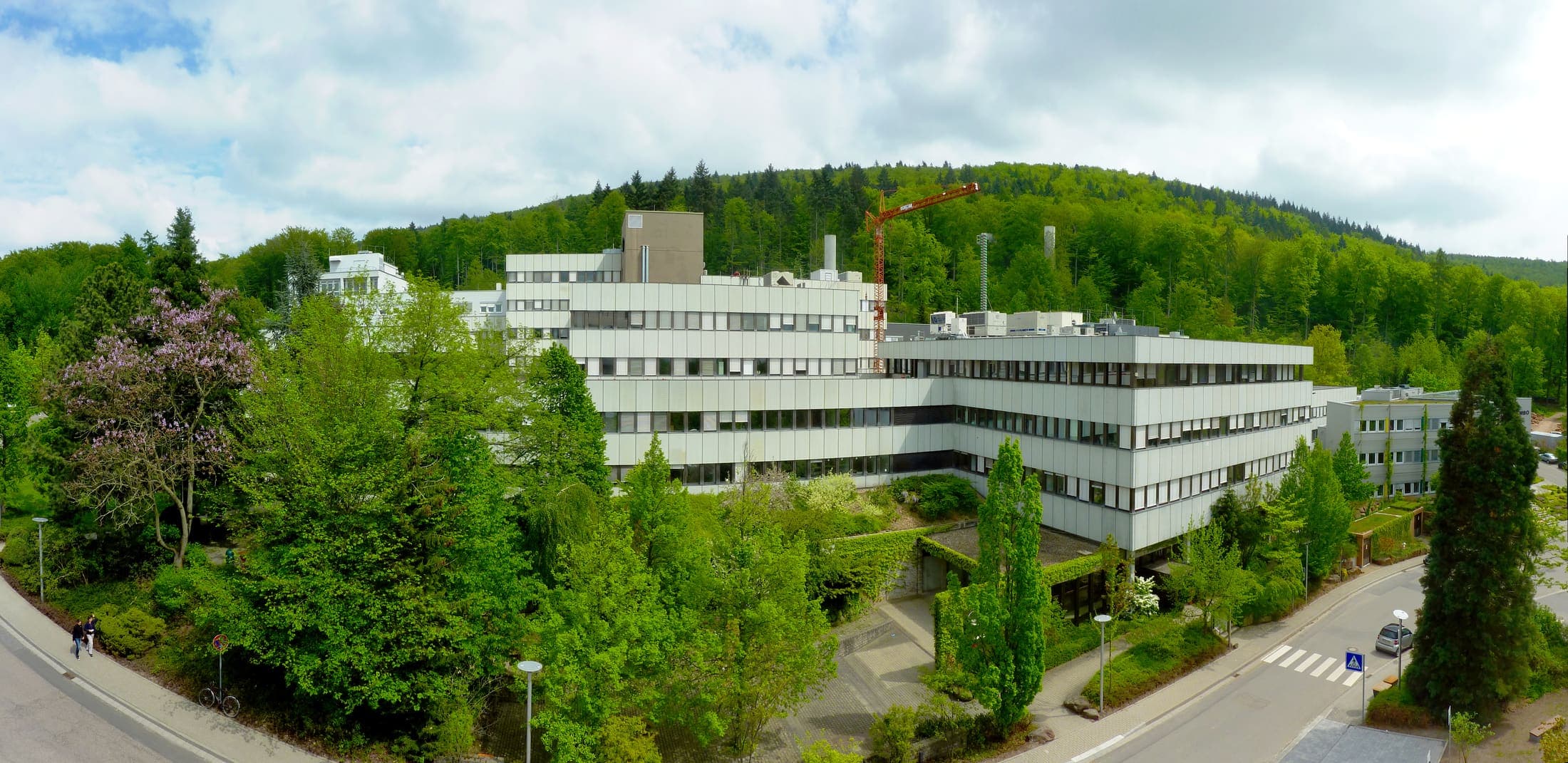
SRH University Heidelberg is the flagship and founding campus of the non-profit SRH Educational Foundation (Stiftung). Established in 1969, it is one of Germany's oldest and largest private higher education institutions. The university operates on a dedicated 10-hectare green campus park in Heidelberg's Wieblingen district, featuring university buildings, science labs, sports suites, student apartments, and research centres.
SRH Heidelberg pioneered The CORE Principle (Competence Oriented Research and Education), an educational architecture that replaces traditional semester-long lectures and multi-exam periods with interactive 5-week learning blocks. All tuition revenues are directly reinvested into cutting-edge lab facilities, virtual engineering setups, creative design studios, and student support hubs.
On-Campus Schools & Faculties
The Heidelberg campus brings together six specialised schools working across engineering, business, social sciences, healthcare, and law:
- School of Engineering and Architecture: Focuses on civil engineering, architecture, industrial engineering, smart building technologies, and water management.
- School of Information, Media and Design: Houses computer science, artificial intelligence, software engineering, game design, and digital media labs.
- School of Business: Features international business administration, strategic management, digital marketing, business analytics, and global trade tracks.
- School of Applied Psychology: Focuses on business psychology, clinical psychology, health psychology, and organisational coaching.
- School of Social and Behavioural Sciences: Covers social work, music therapy, dance movement therapy, and inclusive education.
- School of Therapeutic Sciences: Focuses on physiotherapy, occupational therapy, speech therapy, and sports science.
Admission Requirements
Admissions evaluates academic qualifications, English proficiency, program-specific prerequisites, and candidate motivation.
1. Undergraduate Requirements (Bachelor's Degrees)
- Secondary School Certificate: High School Diploma, A-Levels, IB Diploma, German Abitur, or foreign 12th Grade Mark Sheets recognised as a German university entrance qualification (Hochschulzugangsberechtigung).
- Academic Threshold: Minimum aggregate passing grade equivalent to a German GPA cutoff (~3.0 / 4.0 or ~70%+ in core subjects).
- Application Documents: Certified high school mark sheets, updated CV, passport copy, and a Statement of Purpose / Motivation Letter (300–500 words).
2. Postgraduate Requirements (Master's & MBA Degrees)
- Bachelor's Degree: Completed undergraduate degree (180 ECTS for 2-year tracks / 210 ECTS for 1.5-year tracks) in a relevant discipline from an accredited university.
- Work Experience (For MBA Programs Only): Minimum 1 to 2 years of post-graduation full-time professional work experience.
- Standardised Testing: GMAT or GRE scores are NOT required.
- APS Certificate: Mandatory for international applicants holding prior university credentials from India, China, or Vietnam.
- Application Documents: University transcripts, degree certificates, CV, Motivation Letter, and professional/academic recommendation letters.
Popular Academic Programs
Undergraduate Courses (Bachelor's Degrees — 3 to 3.5 Years)
1. Computer Science, AI & IT (School of Information, Media and Design)
- B.Sc. Applied Computer Science
- B.Sc. Applied Data Science and Artificial Intelligence
- B.A. Game Development & Interactive Media
2. Engineering & Architecture (School of Engineering and Architecture)
- B.Eng. International Business and Engineering
- B.A. Architecture
3. Business, Psychology & Health (School of Business & School of Psychology)
- B.A. International Business
- B.Sc. Business Psychology
Postgraduate Courses (Master's & MBA — 1.5 to 2 Years)
1. Technology, Data & Engineering (School of Information & Engineering)
- M.Sc. Applied Data Science and Artificial Intelligence
- M.Eng. International Business and Engineering
- M.Eng. Water Technology
2. Business, Executive Management & Architecture
- M.A. International Management & Leadership
- MBA in International Management / Healthcare
- M.A. Architecture – High Performance Building
Language Requirements
All international degree programs at SRH Heidelberg are delivered 100% in English. German language proficiency is not required for admission.
English Language Proficiency Cutoffs
| Exam / Qualification | Minimum Required Cutoff |
|---|---|
| IELTS Academic / Indicator | Overall 6.5 (min. 6.0 in sub-scores) |
| TOEFL iBT / Home Edition | Minimum 87 points |
| Duolingo Certificate | 110 – 115 points |
| Pearson English Test Academic (PTE-A) | 59 points |
| Cambridge English | B2 First (Grade A/B) / CAE (Grade A, B, or C) / CPE |
| TOEIC | 785 points |
Fee Structure & Estimated Living Expenses
1. Program Tuition Fees
| Degree Level | Standard Duration | Estimated Semester Fee | Total Estimated Program Fee |
|---|---|---|---|
| Bachelor's Degrees (B.A. / B.Sc. / B.Eng.) | 3 to 3.5 Years | ~€4,200 – €5,200 / semester | ~€25,200 – €35,000 total |
| Master of Science / Arts / Eng (M.Sc. / M.A. / M.Eng.) | 1.5 to 2 Years | ~€5,400 – €6,800 / semester | ~€16,200 – €24,500 total |
| MBA Programs | 1.5 Years (90 ECTS) | ~€6,000 – €7,300 / semester | ~€18,000 – €22,000 total |
(One-time non-EU enrollment deposit: €750).
2. Estimated Monthly Living Expenses in Heidelberg
Non-EU international students must meet Germany's official Blocked Account (Sperrkonto) requirement:
- Official Blocked Account Amount: €11,904 per year (~€992 per month).
- Average Monthly Budget in Heidelberg: €950 – €1,250 per month.
Let's plan your path to studying at SRH Heidelberg
From matching your profile to the right school and program to preparing a compelling application, our counsellors guide every step of your journey.
Frequently Asked Questions (FAQs)
Under the CORE Principle (Competence Oriented Research and Education), traditional semester-long lectures are replaced with 5-week project blocks. You focus on only 1 or 2 subjects per block, working in small team cohorts on real-world practical briefs. Every 5-week block finishes with a practical competency evaluation (e.g., project pitch, engineering prototype, or case defence) rather than high-stress end-of-semester exam periods.
The School of Information provides high-performance computing labs equipped with GPU server clusters for training deep learning models, cloud architecture setups (AWS/Azure), VR development kits, and dedicated robotics testing suites.
Students complete hands-on project blocks in automated manufacturing, CAD/CAM modelling, and smart factory management. Modules integrate real-world industrial case studies in collaboration with regional automotive, engineering, and tech firms in the Rhine-Neckar industrial hub.
The M.Eng. Water Technology track covers industrial wastewater treatment, desalination, hydraulic modelling, and sustainable resource management. Students conduct applied laboratory testing on campus and work on municipal and industrial water engineering briefs.
Applicants holding a 4-year (210 ECTS) Bachelor's degree enter the 1.5-year (90 ECTS) Fast-Track Master's, completing core modules and their thesis in 18 months. Applicants holding a 3-year (180 ECTS) Bachelor's enter the 2-year (120 ECTS) Standard Track, which includes an additional practical internship or international study block.
The interview is a 20- to 30-minute online video session with an academic program manager. It assesses four primary areas: your program motivation (why this degree and why SRH), academic alignment (connecting prior studies or projects to the curriculum), long-term career vision, and your readiness to thrive in a self-directed, 5-week block learning model.
Yes. International applicants whose prior Bachelor's degree lacks specific academic or quantitative credit requirements for direct Master's entry can enrol in a 1-semester Pre-Master's Track through SRH International College. It provides foundational credits in quantitative methods, academic writing, and business statistics.
The program merges psychological methodology with business economics. Core modules cover consumer behaviour, personnel selection, personnel development, agile team coaching, market research analytics, and corporate communication.
Yes. Because all SRH University locations operate under a unified ECTS framework and the CORE Principle, enrolled students can apply to complete specific 5-week project blocks or spend an exchange term at the SRH Berlin Campus or SRH Dresden Campus without losing academic credits.
SRH Heidelberg maintains bilateral exchange partnerships with over 100 partner universities worldwide. Participating students can spend an exchange semester abroad or complete double-degree programs with partner institutions across Europe, the Americas, or Asia.
Instead of taking 5 to 7 written exams during a single exam week at the end of a semester, you are evaluated continuously at the end of each 5-week block. Assessments vary depending on the subject and include software prototypes, engineering case defences, business pitch presentations, research reports, or oral exams.
Yes. Although all degree courses are delivered 100% in English, SRH Heidelberg provides complimentary German language courses (ranging from beginner A1 to advanced B2 levels) integrated into the weekly timetable to assist international students with local internships and daily life.
The on-campus Career Development Centre pairs students with personal career coaches. Services include individual CV and LinkedIn profile audits tailored to European corporate standards, case interview preparation workshops, direct corporate job fairs, and access to SRH's regional employer database in the Rhine-Neckar industrial hub.
Explore Other Universities in Germany
Photo credits: European Molecular Biology Laboratory (EMBL), Heidelberg by Magnus Manske, CC BY-SA 3.0; Mannheim Palace, University of Mannheim by Stefanie Eichler, CC BY-SA 3.0. Via Wikimedia Commons. All image credits
