
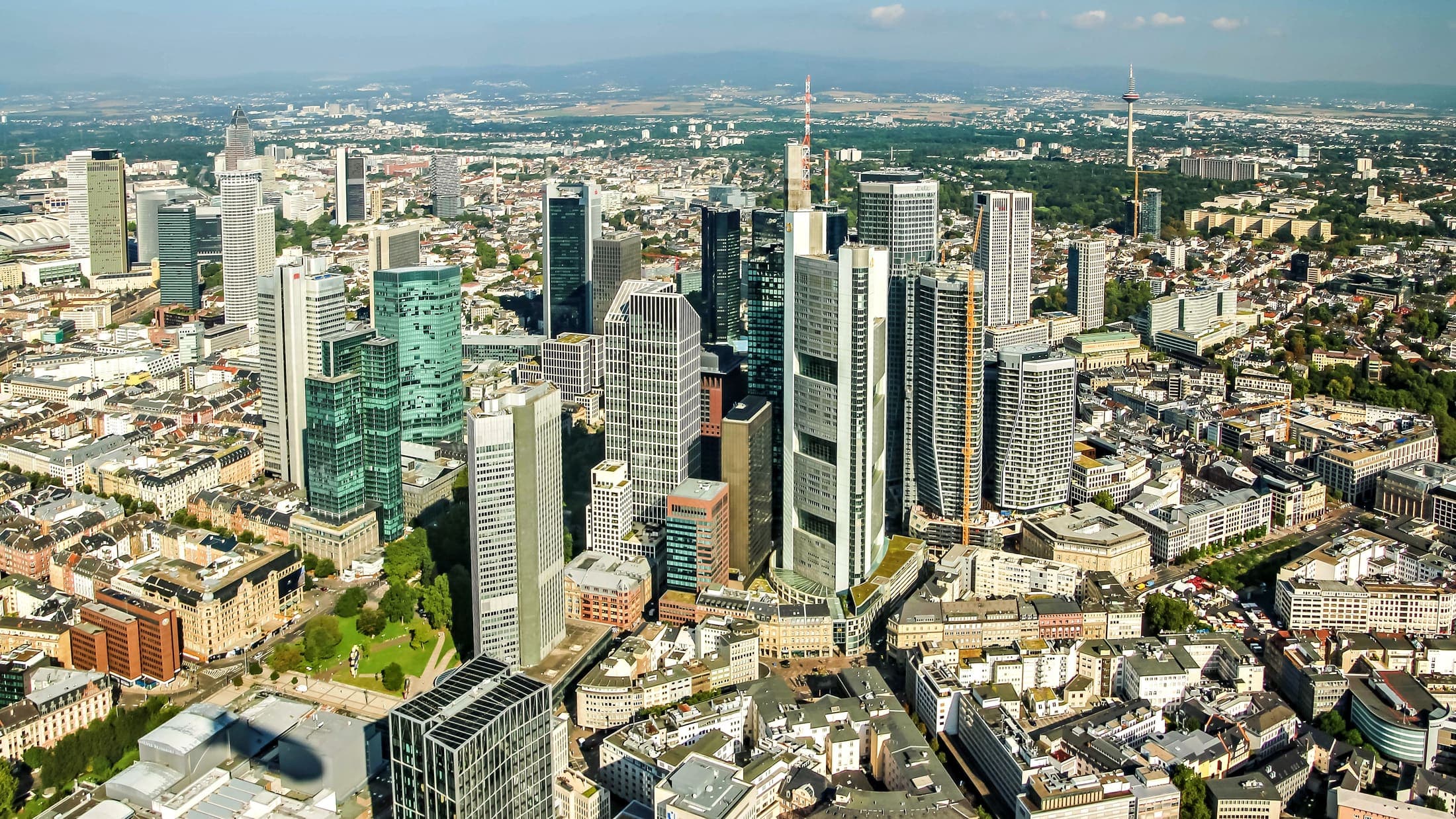
Frankfurt University of Applied Sciences (FRA-UAS)
Quick Snapshot & Key Statistics
| Official Name | Frankfurt University of Applied Sciences (FRA-UAS / formerly Fachhochschule Frankfurt am Main) |
| Institution Type | Public University of Applied Sciences (Hochschule für Angewandte Wissenschaften) |
| Established | 1971 (Rooted in predecessor technical colleges dating back to 1828) |
| Total Enrollment | ~15,200 Students (~22% International Students from 100+ nations) |
| Academic Faculties | 4 Primary Faculties | Over 70 Degree Programs |
| Main Location | Nibelungenplatz, Frankfurt am Main, Hesse (Hessen), Germany |
| Tuition Fees (Non-EU) | €0 / semester (100% Tuition-Free for regular Bachelor's & Master's programs under Hessian state law) |
| Tuition Fees (EU/EEA) | €0 / semester (Tuition-Free) |
| Semester Contribution | ~€386 to €390 per semester (Includes Studierendenwerk contribution & Deutschlandticket transit pass) |
About Frankfurt University of Applied Sciences
Located at Nibelungenplatz in the heart of Germany's financial and transportation capital, Frankfurt University of Applied Sciences (FRA-UAS) is an urban, practice-driven research institution. The university specialises in Engineering, Computer Science, Global Logistics, Business Law, Architecture, and Social Work.
FRA-UAS leverages its location in the Rhine-Main metropolitan area—home to Europe's largest financial district, Frankfurt Airport (Fraport), and the DE-CIX internet exchange—to embed corporate projects, mandatory industry internships (Praxissemester), and company-partnered theses directly into the academic curriculum.
Why Choose FRA-UAS?
- Strong focus on practical and industry-oriented education
- 4 faculties and over 70 degree programmes
- Excellent collaborations with companies and public organisations
- Affordable public university education
- Modern laboratories and research facilities
- Several English-taught Master's programmes
- Strong international exchange opportunities
- Excellent graduate employability
- Located in Germany's financial capital
Campus Location
FRA-UAS operates as a compact, single-site urban campus centred at Nibelungenplatz in the Nordend/Nordend-Ost district of Frankfurt am Main:
- Building 1 & Building 2 (Central Complex): Administration, Central Library (Bibliothek), Student Services
- Building 4 & Building 8 (STEM & IT Hub): Computer Science, Electrical & Mechanical Engineering, High-Integrity Systems Labs
- Building 3 & Building 9 (Design & Urban Hub): Architecture, Civil Engineering, Geomatics, Urban Agglomerations
- Building 7 & BCN Tower (Business & Social Hub): Business Administration, Law, Social Work, Health Sciences
Popular and Unique Degree Programs
Frankfurt University of Applied Sciences is structured into 4 main academic faculties: Faculty 1 covers Architecture, Civil Engineering, and Geomatics; Faculty 2 houses Computer Science and Engineering; Faculty 3 is the School of Business and Law; and Faculty 4 focuses on Social Work and Health. Offering over 70 degree programs.
Top English-Taught Master's Programs
- M.Sc. High Integrity Systems (HIS): Highly competitive computer science Master's focusing on mission-critical software, distributed systems, embedded systems, and software safety/security.
- M.Sc. Global Logistics: Specialised management degree leveraging Frankfurt's role as Europe's central air, rail, and freight logistics hub.
- M.Eng. Information Technology: Applied engineering track covering communications technology, signal processing, and enterprise IT networks.
- M.Sc. Urban Agglomerations: Interdisciplinary international program focusing on sustainable urban development, infrastructure planning, and smart megacities.
- M.Eng. Renewable Energy: Advanced engineering degree covering solar, wind, grid integration, and sustainable energy storage technologies.
- M.Sc. Advanced Architecture: Studio-based Master's focusing on digital design, sustainable building technology, and urban contexts.
Top German-Taught Degree Programs
- B.Sc. / M.Sc. General Computer Science (Informatik): Broad software development, data science, and systems engineering track.
- B.A. International Business Administration: Practice-oriented business degree featuring foreign language tracks and an exchange semester.
- B.Eng. Mechanical Engineering / Electrical Engineering: Hands-on engineering programs featuring CAD prototyping labs and automation suites.
- B.A. Real Estate and Facility Management / B.Eng. Civil Engineering: High-demand construction and property management qualifications tied to Frankfurt's real estate sector.
- B.A. Social Work (Soziale Arbeit): One of the largest professional training hubs for social work practitioners in the state of Hesse.
Fee Structure
Under Hessian higher education legislation, FRA-UAS charges €0 tuition fees for standard Bachelor's and Master's programs for all students regardless of country of origin.
Bachelor's Programmes
- Tuition Fee: No tuition fees
- Semester Contribution: Approximately €386 per semester
Master's Programmes
- Tuition Fee: No tuition fees
- Semester Contribution: Approximately €386 per semester
Mandatory Administrative & Living Costs
- Semester Contribution (Semesterbeitrag): ~€386.78 per semester (includes the nationwide Deutschlandticket Semester for transit).
- Blocked Account (Sperrkonto) for Visa: Non-EU international students must deposit €11,904 per year into an official Blocked Account.
- Monthly Living Costs in Frankfurt am Main: Frankfurt is a major financial centre. On average, students budget between €1,000 and €1,250 per month.
Research & Industry Partnerships
Frankfurt University of Applied Sciences collaborates with leading companies and organisations, including:
- Deutsche Bank
- Commerzbank
- European Central Bank (ECB)
- Deutsche Börse
- Lufthansa
- Deutsche Bahn
- SAP
- Siemens
- Fraport AG
- IBM
These partnerships provide students with internships, applied research projects, company collaborations, and excellent career opportunities.
Let's plan your path to studying at FRA-UAS
From matching your profile to the right faculty to preparing a compelling application, our counsellors guide every step of your journey.
Frequently Asked Questions (FAQs)
Unlike broad computer science degrees, High Integrity Systems (HIS) focuses specifically on safety-critical, mission-critical, and fault-tolerant software architectures where system failures are catastrophic (e.g., aviation avionics, autonomous vehicles, railway signalling, medical devices, and financial transaction engines). The curriculum combines formal verification methods, real-time operating systems, cybersecurity, and distributed fault tolerance.
Frankfurt University of Applied Sciences is known for its practical education, applied research, and strong industry connections in engineering, business, computer science, logistics, and information technology.
Frankfurt is Europe's central banking hub and a major logistics and tech node. Enrolled students can work up to 20 hours per week during term time (and full-time during breaks) as Werkstudenten. Given the proximity to the European Central Bank (ECB), Deutsche Bank, Fraport (Frankfurt Airport), Deutsche Börse, and local tech firms, software engineering, logistics, finance, and data science working-student positions typically pay €16 to €23+ per hour and serve as a main entry point to graduate hiring.
Applicants with secondary school or university degrees earned outside Germany must apply through uni-assist. Depending on the degree program, applicants either submit a direct application via uni-assist or request a Preliminary Documentation (Vorprüfungsdokumentation - VPD). Once the VPD is issued by uni-assist confirming entrance eligibility, the final application is submitted through FRA-UAS's internal portal (hisinone).
The semester fee (~€386.78) includes the Deutschlandticket Semester. This grants enrolled students unlimited regional public transit access across all of Germany, including Frankfurt's RMV network trams, buses, U-Bahn, and regional S-Bahn lines connecting Nibelungenplatz to the main train station and airport.
The M.Sc. Global Logistics curriculum incorporates direct case studies, industry site visits, and applied research with Frankfurt Airport (Fraport, Europe's largest air cargo hub), local inland ports along the Main/Rhine rivers, and major freight integrators. The coursework focuses on global supply chain design, intermodal freight logistics, customs management, and sustainable transport analytics.
Standard 7-semester Bachelor's programs at FRA-UAS mandate a full 20-week practical internship semester (Praxissemester) during the 5th or 6th semester. Students work full-time within a commercial firm, gaining industrial experience, receiving a monthly intern stipend, and earning 30 ECTS credits toward graduation.
Students have access to modern laboratories, libraries, computer centres, maker spaces, sports facilities, language courses, career services, and international student support.
Dormitories are operated independently by Studierendenwerk Frankfurt am Main. Rents range from €350 to €550 per month. Because demand in Frankfurt is high, incoming international students should submit their online housing application through the Studierendenwerk portal immediately upon receiving their admission offer or uni-assist confirmation.
Yes. The Language Centre (Sprachenzentrum) at FRA-UAS offers intensive German language courses before the start of the semester, as well as semester-long evening German modules (A1 to C1 levels) tailored for technical and business terminology.
Yes. Over 75% of STEM and business students at FRA-UAS write their final thesis (Bachelorarbeit / Masterarbeit) in direct collaboration with an industrial partner, bank, tech consultancy, or research centre. This provides access to corporate datasets, internal equipment, an academic co-supervisor, and a monthly thesis stipend.
While Goethe University Frankfurt is a traditional research university focused heavily on theoretical computer science, mathematical proofs, and academic research pathways, FRA-UAS focuses on applied software engineering, hands-on lab work, smaller class sizes, mandatory industrial internships, and direct corporate projects led by professors who have at least five years of professional industry experience.
The BCN Tower is a prominent high-rise building located adjacent to the main campus at Nibelungenplatz. FRA-UAS rents multiple floors within the tower to house modern lecture halls, seminar rooms, research offices, and specialised facilities for the Faculty of Business and Law and the Faculty of Social Work and Health.
Choose Frankfurt University of Applied Sciences if you want a practical, career-oriented education with affordable tuition, strong industry partnerships, and excellent employment opportunities. Its location in Germany's financial capital and emphasis on real-world learning make it an excellent choice for international students seeking successful global careers.
For English-taught Master's programs (e.g., High Integrity Systems, Global Logistics): Winter Semester (starts October): Application period via uni-assist typically runs from April 15 to September 15 (applying by June/July is recommended for non-EU visa processing). Summer Semester (starts April): Application period via uni-assist typically runs from October 15 to March 15.
Explore Other Universities in Germany
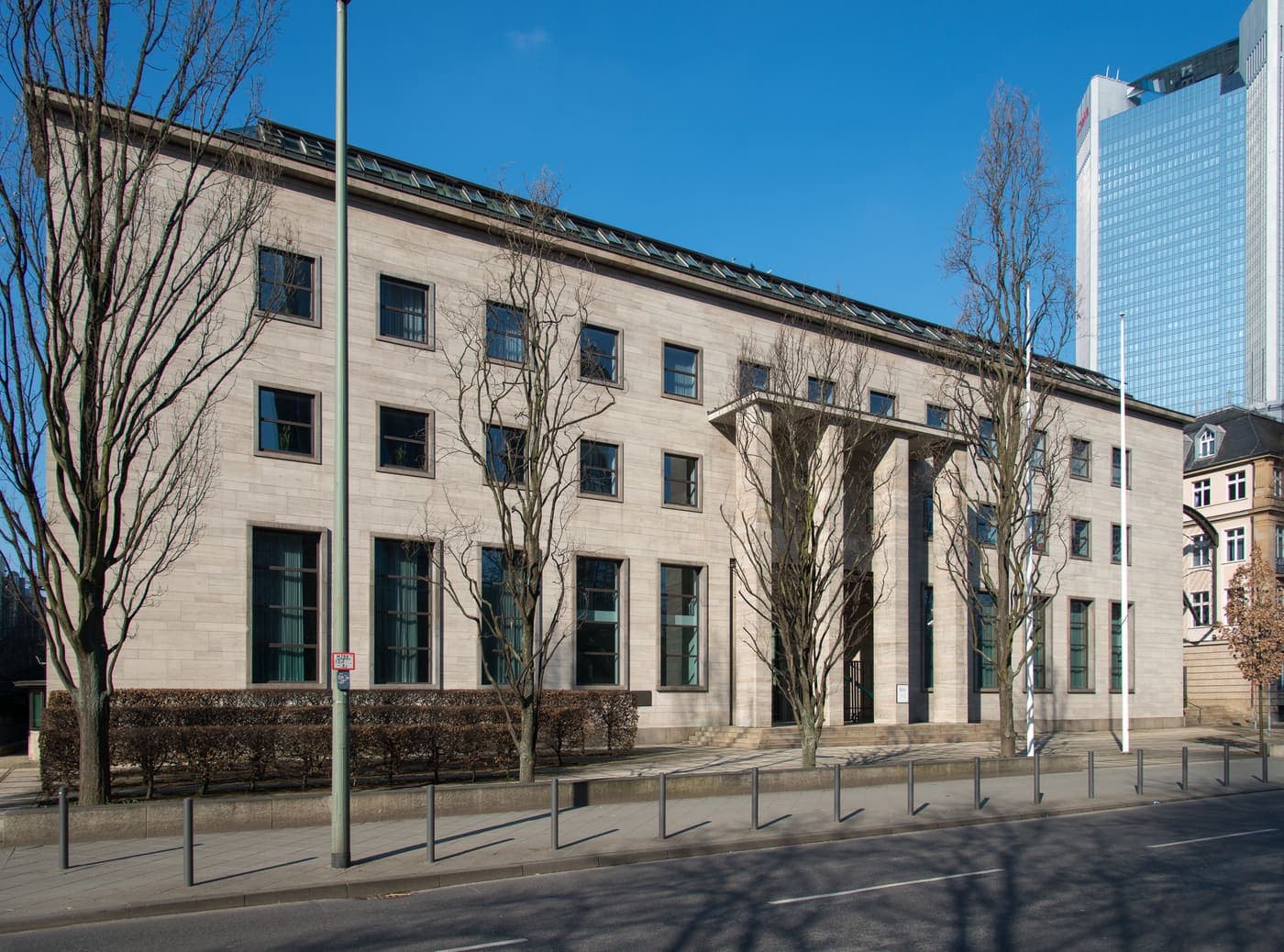
Photo credits: Frankfurt am Main financial district by Dr. Thomas Liptak, CC BY-SA 4.0; Frankfurt banking district by Epizentrum, CC BY 3.0. Via Wikimedia Commons. All image credits
