
Goethe University Frankfurt (Johann Wolfgang Goethe-Universität)
Quick Snapshot & Key Statistics
| Official Name | Johann Wolfgang Goethe-Universität Frankfurt am Main (Goethe University Frankfurt) |
| Institution Type | Public Comprehensive Research University / "Citizens' University" (Bürgeruniversität) |
| Established | 1914 (Founded and funded by wealthy citizens of Frankfurt) |
| Motto | Wahrheit und Recht ("Truth and Justice") |
| Total Enrollment | ~42,000–45,000+ Students (~16% International Students from 135+ nations) |
| Academic Faculties | 16 Faculties (Fachbereiche) | Over 200 Degree Programs |
| Nobel Laureates | Associated with 20 Nobel Laureates (e.g., Max von Laue, Paul Ehrlich, Max Born, Otto Stern) |
| Institutional Affiliations | German U15, European University Association (EUA), GU Guild, Rhine-Main Universities (RMU) |
| Main Location | Frankfurt am Main, Hesse (Hessen), Germany |
| Global Rankings | Ranked Top 150–200 Worldwide (QS/ARWU) | Top 12 in Germany |
| Tuition Fees (Regular Degrees) | €0 / year (100% Tuition-Free for all EU & non-EU international students) |
| Semester Contribution | ~€380 to €406 per semester (Includes administrative fees & nationwide Deutschlandticket) |
About Goethe University Frankfurt
Founded in 1914 as a unique "Citizens' University" (Bürgeruniversität)—financed entirely by Frankfurt's wealthy civic patrons rather than the Prussian monarchy—Goethe University Frankfurt (Goethe-Universität Frankfurt am Main) is one of Germany's premier research institutions. Renamed in 1932 to honour Frankfurt's most celebrated native son, author and polymath Johann Wolfgang von Goethe, the university is globally famous as the birthplace of the Frankfurt School of Critical Theory pioneered by Theodor Adorno and Max Horkheimer.
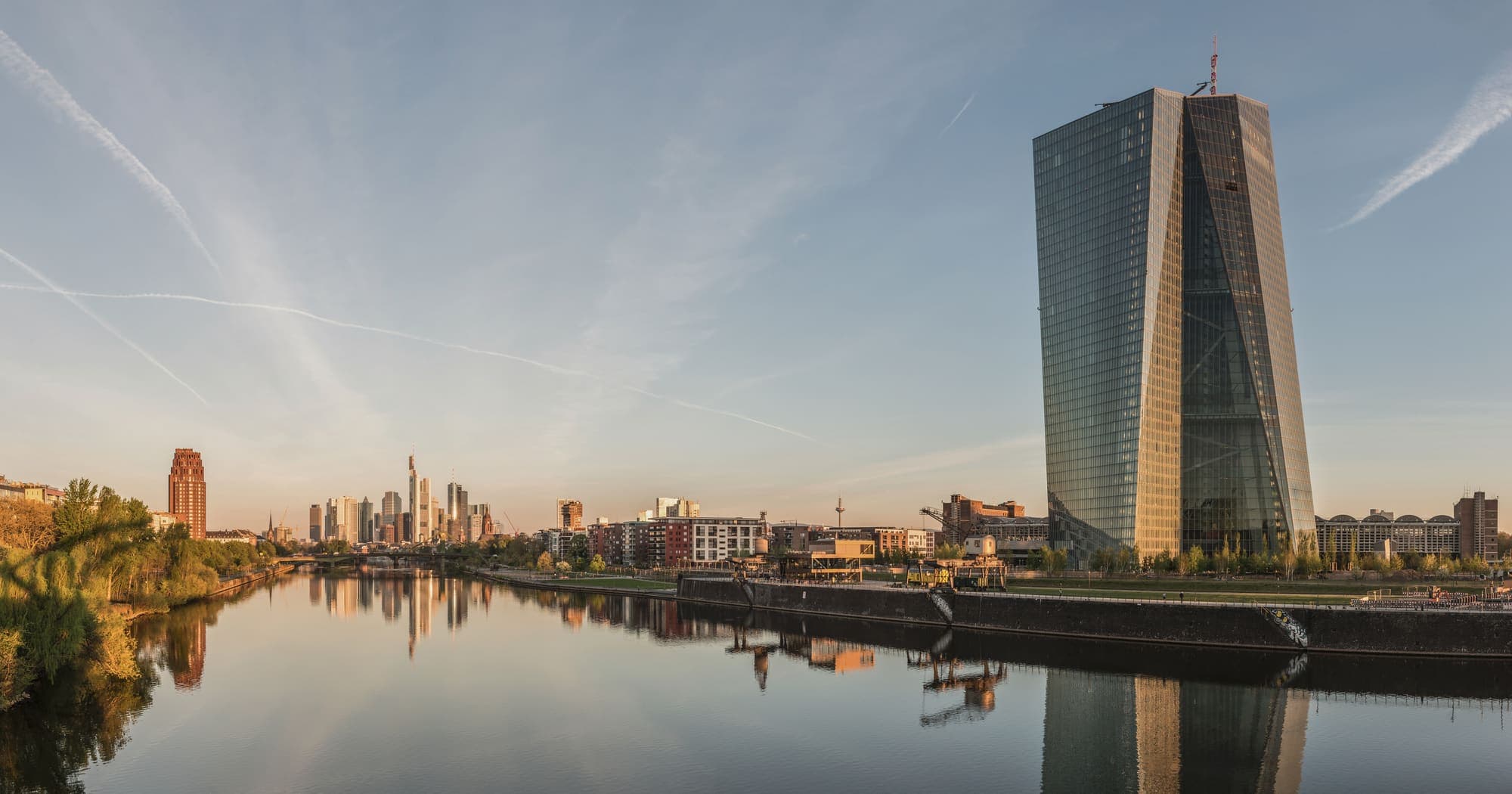
Situated in Frankfurt am Main—the financial centre of Continental Europe—Goethe University serves as a research anchor for money, banking, and international monetary law through its world-famous House of Finance. The university operates within the Rhine-Main Universities (RMU) strategic alliance alongside TU Darmstadt and Johannes Gutenberg University Mainz. It maintains scientific partnerships with the Senckenberg Nature Research Society, Frankfurt Institute for Advanced Studies (FIAS), and three local Max Planck Institutes (Biophysics, Brain Research, and Legal History).
Why Choose Goethe University Frankfurt?
- One of Germany's leading public research universities
- Excellent reputation in finance, economics, and business
- Strong research in computer science and natural sciences
- Affordable public university education
- Modern campuses and research facilities
- Numerous English-taught Master's programmes
- Excellent internship opportunities
- Strong collaborations with banks and multinational companies
- International student community
- Outstanding graduate employability
Location & Campus Structure of Goethe University Frankfurt
Goethe University operates as a multi-campus urban university integrated across four primary neighbourhood hubs in Frankfurt am Main:
- Campus Westend (Main Academic Campus): Centred around the historic IG Farben Building (Poelzig Building) and park grounds. Houses University Administration, the House of Finance, and the Faculties of Economics & Business Administration, Law, Social Sciences, Educational Sciences, Theology, and Humanities.
- Campus Riedberg (Science City): A modern STEM research hill located in northern Frankfurt. Houses the Faculties of Physics, Biochemistry, Chemistry, Pharmacy, Biological Sciences, Geosciences, the Science Garden (Wissenschaftsgarten), and FIAS.
- Campus Niederrad (Medical Campus): Located along the Main River, housing the Faculty of Medicine, preclinical research suites, and the University Hospital Frankfurt (Universitätsklinikum Frankfurt).
- Campus Bockenheim: The university's historic 1914 founding location, gradually transitioning humanities departments to Westend while housing the central Johann Christian Senckenberg University Library.
Popular & Unique Degree Programs
Goethe University offers over 200 study programs across 16 academic faculties (Fachbereiche):
Top English-Taught Programs (International Favourites)
- M.Sc. Money, Macro and Finance (MMF): Elite economics track hosted at the House of Finance, providing analytical training for central banks (ECB, Bundesbank) and financial institutions.
- M.Sc. Quantitative Finance: High-level mathematical finance, risk management, derivative pricing, and financial econometrics.
- LL.M. Finance / LL.M. International Banking: Hosted by the Institute for Law and Finance (ILF), bridging international corporate banking law and financial regulation.
- M.Sc. Interdisciplinary Neuroscience: Interfaculty program bridging cellular neurobiology, cognitive neuroscience, and computational neural modelling.
- M.Sc. Computer Science: Focuses on algorithm theory, machine learning, distributed systems, cybersecurity, and data science.
- M.Sc. International Management / Physical Biology: Cutting-edge specialised tracks across business analytics and biophysics.
Top German-Taught Degree Programs
- Human Medicine & Dentistry (Staatsexamen): Highly competitive clinical training operated at the University Hospital Frankfurt (Universitätsklinikum Frankfurt).
- Law (Rechtswissenschaft - Staatsexamen): One of Germany's flagship law faculties, renowned for banking law, commercial law, and legal philosophy.
- B.Sc. / M.Sc. Business Administration (Betriebswirtschaftslehre - BWL): Consistently ranked among Germany's top business faculties, benefiting from direct Frankfurt corporate recruiting.
- B.A. / M.A. Philosophy & Social Sciences: Alma mater of the Frankfurt School of Critical Theory (Horkheimer, Adorno, Habermas).
- B.Sc. / M.Sc. Biochemistry & Pharmacy: World-class pharmaceutical research working alongside local chemical/pharma networks (Sanofi, Höchst).
Language Requirements (English & German)
Language requirements depend on the primary medium of instruction for your chosen program at Goethe University.
German Language Requirements (German-Taught Programs)
For degree programs taught in German, including standard Bachelor's degrees and State Examination programs like Medicine, Dentistry, and Law, non-native applicants must prove C1 CEFR German proficiency:
- DSH: DSH-2 or DSH-3.
- TestDaF: Minimum level of 4x4 (TDN 4 in all 4 examination sections).
- telc: telc Deutsch C1 Hochschule.
- Goethe-Zertifikat: Goethe-Zertifikat C2.
English Language Requirements (English-Taught Programs)
For international Bachelor's and Master's degree programs taught in English, applicants must submit proof of B2 or C1 CEFR English proficiency:
| IELTS Academic | Overall 6.5 or 7.0 (program-dependent) |
| TOEFL iBT | 87 to 100 points or higher |
| Cambridge English | C1 Advanced (CAE) or C2 Proficiency (CPE) |
| PTE Academic | 62 to 65 points or higher |
Fee Structure at Goethe University Frankfurt
As a public research university in the state of Hesse (Hessen), Goethe University Frankfurt does NOT charge tuition fees for standard Bachelor's, Master's, or Doctoral degree programs for any student, regardless of citizenship.
Bachelor's Programmes
- Tuition Fee: No tuition fees
- Semester Contribution: Approximately €380–€406 per semester
Master's Programmes
- Tuition Fee: No tuition fees
- Semester Contribution: Approximately €380–€406 per semester
Mandatory Administrative & Living Costs at Goethe University Frankfurt
- Semester Contribution (Semesterbeitrag): ~€380 to €406 per semester (paid twice a year for re-registration).
- Blocked Account (Sperrkonto) for Visa: Non-EU international students must deposit €11,904 per year into an official Blocked Account to draw €992 per month for living costs.
- Monthly Living Costs in Frankfurt: Frankfurt is an energetic financial centre. On average, students spend between €950 and €1,300 per month.
Research & Industry Partnerships
Goethe University Frankfurt collaborates with leading organisations and companies, including:
- European Central Bank (ECB)
- Deutsche Bundesbank
- Deutsche Bank
- Commerzbank
- KfW Bank
- Deutsche Börse
- Max Planck Society
- Merck
- Sanofi
- Fraunhofer Society
These partnerships provide students with research opportunities, internships, networking events, and excellent graduate employment prospects.
Let's plan your path to studying at Goethe University Frankfurt
From matching your profile to the right faculty to preparing a compelling application, our counsellors guide every step of your journey.
Frequently Asked Questions (FAQs)
Unlike most German universities established by princes or church decrees, Goethe University was founded in 1914 by wealthy merchants, industrialists, and civic foundations in Frankfurt. This civic tradition fostered an independent academic culture strongly linked to social engagement, private foundation support, and industrial application.
The House of Finance is a world-class academic centre at Campus Westend bringing together several interdisciplinary research and teaching institutes in finance, monetary economics, and financial law. It houses the Centre for Financial Studies (CFS), the Institute for Law and Finance (ILF), and the Leibniz Institute SAFE.
SAFE (Sustainable Architecture for Finance in Europe) is an independent research institute located within the House of Finance at Goethe University. It conducts interdisciplinary research on European financial markets, regulatory frameworks, and systemic risks, serving as a primary advisor to EU policymakers and central bankers.
The ILF is an academic foundation established within Goethe University in 2002. Supported by international banks and top global law firms, it offers specialised post-graduate LL.M. programs in Finance and Banking Law, training legal professionals for the international financial sector.
The Frankfurt School refers to the influential circle of neo-Marxist social theorists and philosophers associated with Goethe University's Institut für Sozialforschung (Institute for Social Research), founded in the 1920s. Led by Max Horkheimer, Theodor Adorno, Erich Fromm, Herbert Marcuse, and later Jürgen Habermas, it pioneered modern Critical Theory in sociology and philosophy.
Frankfurt combines world-class education with excellent career opportunities, an international community, modern infrastructure, and one of Europe's largest financial districts.
The Cardio-Pulmonary Institute (CPI) is a Cluster of Excellence operated jointly by Goethe University Frankfurt, Justus Liebig University Giessen, and the Max Planck Institute for Heart and Lung Research. It researches molecular mechanisms governing heart and lung diseases to develop precision therapies.
SCALE (Subcellular Architecture of Life) is an advanced Cluster of Excellence research alliance at Goethe University focusing on structural biology and cellular architecture. It utilises cryo-electron microscopy and light-sheet microscopy to map spatial subcellular organisation in real time.
Located on Campus Riedberg, FIAS is an independent theoretical research institute where scientists apply mathematical modelling, theoretical physics, computer science, and neuroscience to model complex self-organising natural systems.
RMU is a strategic alliance between Goethe University Frankfurt, TU Darmstadt, and Johannes Gutenberg University Mainz. Located within 30 minutes of each other, RMU allows enrolled students to cross-register for modules, access all three library networks, and participate in joint degree tracks across federal state lines.
The Faculty of Economics and Business Administration is among the university's strongest faculties, with an excellent reputation in finance, economics, banking, and management.
GRADE is the university-wide umbrella organisation for doctoral candidates and postdocs at Goethe University. It provides interdisciplinary skill training, research funding advice, career mentoring, and networking platforms across all 16 faculties.
Explore Other Universities in Germany
Photo credits: European Central Bank & Frankfurt skyline by DXR, CC BY-SA 4.0; Frankfurt Stock Exchange (Börse) by Zairon, CC0. Via Wikimedia Commons. All image credits
