
Economics in Germany
Why Study Economics in Germany?
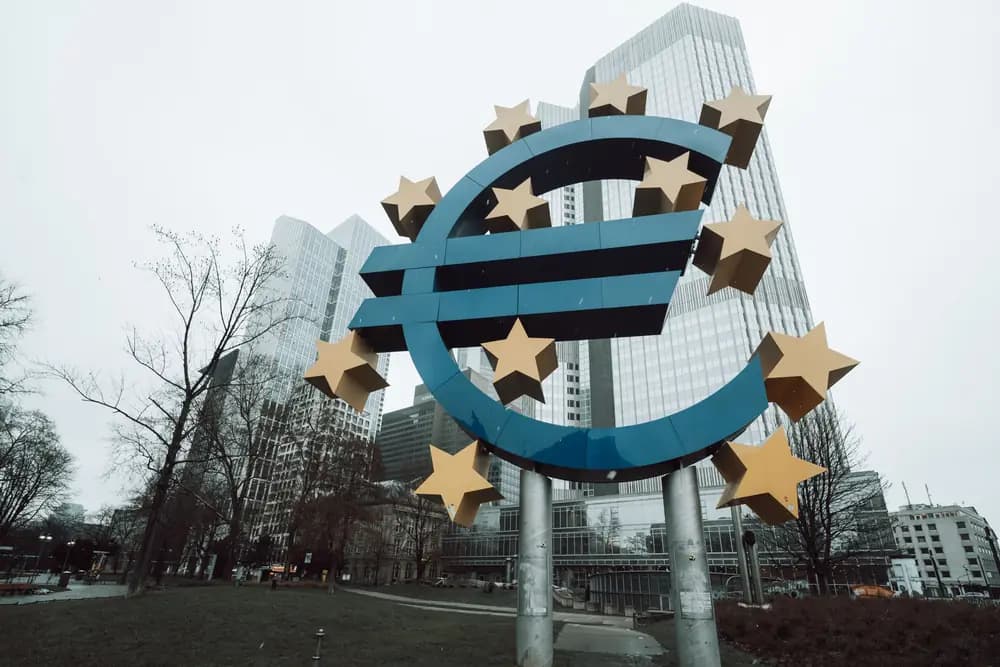
Germany is the economic powerhouse of Europe and the third-largest economy in the world. Serving as the institutional seat of the European Central Bank (ECB), the Deutsche Bundesbank, the Frankfurt Stock Exchange, and world-renowned economic think tanks (ifo Institute, DIW Berlin, ZEW Mannheim, Kiel Institute for the World Economy), Germany offers an ideal analytical foundation for studying Economics (Volkswirtschaftslehre / VWL).
World-Class Academic Reputation:
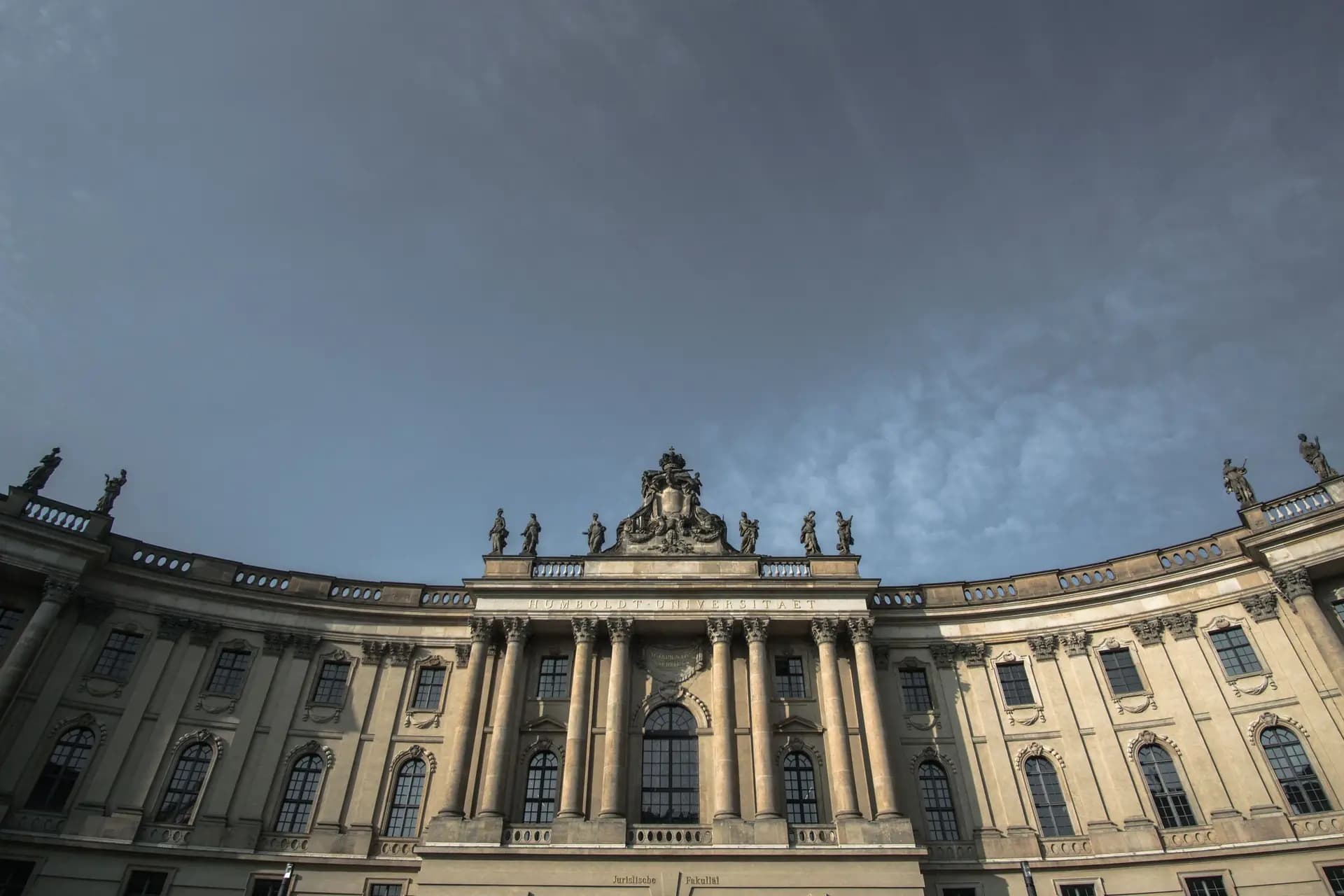
German universities—such as University of Bonn, LMU Munich, University of Mannheim, Goethe University Frankfurt, and Humboldt University of Berlin—consistently rank among the top institutions globally for econometric modelling, microeconomics, and macroeconomic policy.
Policy & Industry Integration:
Study at the centre of European fiscal policy, international trade regulations, and monetary strategy, with direct exposure to policy advisory boards (Sachverständigenrat) and international institutions.
Emphasis on Empirical & Computational Economics:
German economics degrees place heavy emphasis on quantitative rigour, continuous-time econometrics, game theory, machine learning in economics, and statistical software (Python, R, Stata, Julia).
Strong Career Mobility & Earnings:
Economics graduates are highly sought after by central banks, economic consultancies, multinational corporations, and international organisations (IMF, World Bank, OECD), earning competitive starting salaries ranging from €52,000 to €75,000+ per year.
In-Demand Specializations
Economics degrees in Germany allow you to specialise in key analytical and policy-oriented fields:
Econometrics & Quantitative Economics:
Statistical modelling, time-series analysis, causal inference, microeconometrics, and big data applications in economics.
Macroeconomics & Monetary Economics:
Central banking theory, monetary policy transmission, inflation dynamics, financial market stability, and international macroeconomics.
Microeconomics, Game Theory & Industrial Organisation:
Mechanism design, behavioural economics, market structure analysis, competition policy, and auction theory.
International Trade & Global Economic Policy:
Global supply chain economics, tariff policy, exchange rate dynamics, multi-country trade agreements, and development economics.
Public Economics & Environmental/Energy Economics:
Carbon pricing mechanics, public finance, tax policy modelling, green transition economics, and social welfare analysis.
Key Admission Prerequisites
For Bachelor's Programs (3–3.5 Years):
High school leaving credentials equivalent to the German Abitur (or completion of a 1-year Studienkolleg W-Kurs business/economics foundation track).
For Master's Programs (1.5–2 Years):
A recognised 3-year or 4-year Bachelor's degree in Economics, Quantitative Economics, Mathematics, Statistics, or Business Administration with a heavy quantitative focus.
ECTS Module Alignment:
Public university admission committees strictly evaluate your transcript for prerequisite credits in higher calculus, linear algebra, statistics, microeconomics, and macroeconomics. Deficits in quantitative math or theoretical economics are the primary cause of admission rejection.

Language Proficiency:
English-Taught Programs:
IELTS Academic (6.5 to 7.0+) or TOEFL iBT (88 to 100+).
German Skills:
While instruction is in English, intermediate German (B1/B2 level) drastically improves internship and hiring prospects across German ministries, research institutes, and corporate firms.
Tuition Fees
Let's plan your path to studying Economics in Germany
From shortlisting the right economics department to preparing a compelling application, our counsellors guide every step of your journey.
Frequently Asked Questions (FAQs)
Yes. Germany offers world-renowned fully English-taught M.Sc. programs in Economics at top public institutions, including University of Bonn, LMU Munich, University of Mannheim, Goethe University Frankfurt (GSEFM), Humboldt University of Berlin, and University of Cologne.
Entry-level economic analysts, econometricians, and policy consultants earn starting salaries ranging from €52,000 to €75,000+ per year. Roles in quantitative risk analysis, strategy consulting (McKinsey, BCG), or investment research in Frankfurt or Munich often offer starting packages exceeding €75,000 per year.
Economics (Volkswirtschaftslehre / VWL) focuses on macro-level and micro-level societal economic systems, econometrics, market equilibria, monetary policy, public finance, and game theory. Business Administration (Betriebswirtschaftslehre / BWL) focuses on firm-level operations, management, corporate finance, marketing, and accounting.
Requirements vary by university. Highly research-oriented economics departments—such as the University of Bonn, University of Mannheim, and Goethe University Frankfurt (GSEFM)—either require or strongly recommend non-EU applicants to submit a competitive GRE score (especially with a 160+ Quantitative score). Other public universities evaluate applications purely on transcript ECTS alignment.
Yes. German economics faculties value applicants with strong quantitative STEM backgrounds (Mathematics, Physics, Statistics, Data Science). As long as your transcript demonstrates advanced calculus and linear algebra, many universities grant admission, occasionally requiring 1 or 2 bridging modules in intermediate micro/macroeconomics.
Programs heavily emphasise empirical computing tools, including R, Python (for data scraping and machine learning in economics), Stata (for micro econometric modelling), MATLAB / Julia (for dynamic stochastic general equilibrium - DSGE models), SQL, and EViews.
Top employers include:
• Central Banks & Public Institutions: European Central Bank (ECB), Deutsche Bundesbank, Federal Ministry for Economic Affairs (BMWK), German Federal Bank.
• Economic Research Institutes: ifo Institute (Munich), ZEW (Mannheim), DIW (Berlin), Kiel Institute (IfW).
• International Organisations: OECD, World Bank, International Monetary Fund (IMF), European Investment Bank (EIB).
• Consulting & Financial Firms: Big Four, McKinsey, BCG, Deutsche Bank, Allianz, Munich Re.
The University of Bonn is home to the Bonn Graduate School of Economics (BGSE) and the Hausdorff Centre for Mathematics. It has produced Nobel Laureates (such as Reinhard Selten in Game Theory) and consistently ranks as Germany's #1 economics department for research output, game theory, and microeconomic theory.
Yes. Non-EU international students can legally work up to 140 full days or 280 half days per calendar year. Working 12 to 20 hours per week as a student worker (Werkstudent) at research institutes (like DIW or ZEW), economic consultancies, or banks allows you to earn €15 to €24/hour while gaining valuable research experience.
Germany features a unique ecosystem of leading economic research institutes (ifo, ZEW, DIW, RWI, IfW). Master's students frequently work at these institutes as paid research assistants (HiWi), gain access to unique microdata sets, and co-author their Master's thesis with senior economists.
Yes. Many German universities offer modern interdisciplinary tracks—such as M.Sc. Data Science for Economics, M.Sc. Climate and Environmental Economics, and M.Sc. Computational Economics—to meet growing demand for climate policy modelling and data-driven economic forecasting.
Explore Other Fields of Study in Germany
Beyond Economics, EduOptions Germany also guides students
into these high-growth fields.
