
Civil & Structural Engineering in Germany
Why Study Civil & Structural Engineering in Germany?
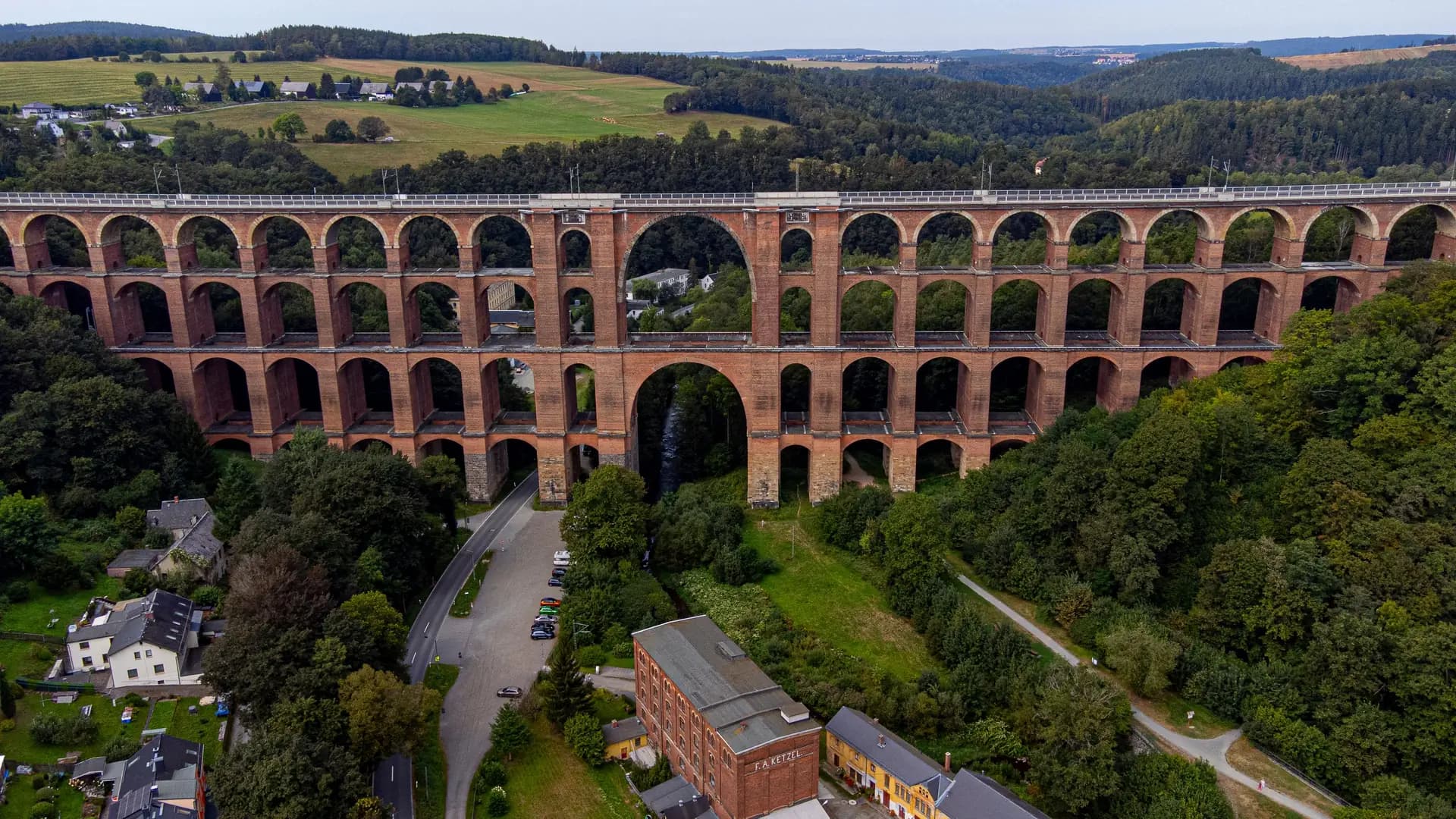
Germany is home to some of the world's most advanced infrastructure projects, pioneering sustainable building designs, high-speed transport networks, and iconic mega-structures. Home to global construction and engineering leaders such as HOCHTIEF, Bilfinger, Züblin, Max Bögl, and Drees & Sommer, studying Civil & Structural Engineering (Bauingenieurwesen) in Germany provides direct exposure to modern structural mechanics, Building Information Modelling (BIM), and resilient infrastructure engineering.
World-Class Education Options:
Choose between tuition-free public technical universities or specialised private institutions offering 100% English-taught tracks and smaller cohort sizes.
Focus on Sustainability & Smart Infrastructure:
German curricula heavily emphasise green building design, timber hybrid structures, climate-resilient coastal engineering, and carbon-neutral concrete technology.
Hands-On R&D Facilities:
Gain practical experience in large-scale structural testing halls, geotechnical centrifuges, wind tunnel laboratories, and digital fabrication research centres.
High Demand & Excellent Pay:
As part of Germany's official shortage occupations (Engpassberufe), civil and structural engineers enjoy streamlined EU Blue Card pathways and average starting salaries ranging from €43,000 to €60,000+ per year.
In-Demand Specializations
Civil & Structural Engineering degrees in Germany allow you to focus on high-growth technical and environmental tracks:
Structural Analysis & Computational Mechanics:
Advanced Finite Element Modelling (FEM), structural dynamics, earthquake engineering, and non-linear material mechanics.
Building Information Modelling (BIM) & Digital Construction:
4D/5D BIM workflows, automated structural design, parametric modelling, and digital twin management for infrastructure projects.
Geotechnical Engineering & Foundation Design:
Soil mechanics, deep foundation design, tunnelling, slope stability analysis, and underground construction engineering.
Sustainable Construction Materials & Green Structures:
Circular building principles, ultra-high-performance concrete (UHPC), engineered mass timber, and life-cycle carbon assessment.
Transportation Systems & Infrastructure Management:
Bridge engineering, highway systems, railway track dynamics, and urban transport infrastructure resilience.
Key Admission Prerequisites
For Bachelor's Programs (3–4 Years):
School leaving credentials equivalent to the German Abitur (or completion of a 1-year Studienkolleg T-Kurs foundation track).
For Master's Programs (2 Years):
A recognised 3-year or 4-year Bachelor's degree in Civil Engineering, Structural Engineering, or Architecture/Building Engineering.
ECTS Module Alignment:
Public university admission committees strictly verify underlying coursework in higher calculus, structural mechanics, statics/dynamics, fluid mechanics, geotechnics, and structural design (concrete/steel).
Language Proficiency:
English-Taught Programs:
IELTS Academic (6.5+) or TOEFL iBT (80+).
German-Taught Programs:
TestDaF (TDN 4 in all sections) or Goethe-Zertifikat C1.
Tuition Fees
Let's plan your path to studying Civil & Structural Engineering in Germany
From shortlisting the right civil engineering programme to preparing a compelling application, our counsellors guide every step of your journey.
Frequently Asked Questions (FAQs)
Yes. Leading public universities offer fully English-taught Master's programs in this field, such as TU Dresden (M.Sc. Advanced Computational and Civil Engineering Structural Studies - ACCESS), Bauhaus-Universität Weimar (M.Sc. Natural Hazards and Risks in Structural Engineering), and the University of Duisburg-Essen.
Entry-level civil and structural engineers in Germany earn starting salaries ranging from €45,000 to €60,000+ per year. Salaries vary based on location, company size, and specialised focus (e.g., structural analysis, tunnelling, or project management often command higher starting offers).
BIM is a central pillar of modern German construction engineering. Most universities integrate 4D/5D BIM software tools (such as Revit, Allplan, and Navisworks) directly into structural design coursework, teaching computational design, openBIM standards, and automated quantity surveying.
While prior exposure to Eurocodes (e.g., Eurocode 2 for concrete, Eurocode 3 for steel) is helpful, it is rarely a strict prerequisite for admission. Universities cover Eurocode design principles thoroughly during structural design modules in the first two semesters.
Graduates are actively recruited by major international construction firms and design consultancies like HOCHTIEF, Züblin, Max Bögl, STRABAG, Drees & Sommer, Arup, and Obermeyer, as well as public infrastructure authorities such as Deutsche Bahn and the Autobahn GmbH.
Yes. Most German Civil and Structural Master's programs offer modular specialisation tracks where you can focus heavily on Geotechnical Engineering & Tunnelling, Structural Dynamics & Seismic Design, or Bridge & Infrastructure Design.
Most consecutive M.Sc. programs evaluate candidates purely based on academic credits and GPA. However, some public programs may require a pre-study practical training (Baustellenpraktikum) of 6 to 12 weeks on a construction site, which can sometimes be completed during the first year of study.
While your classes and exams will be in English, learning basic conversational German (B1 to B2 level) is strongly recommended. On-site construction coordination, communication with local authorities, and most structural design internships (Werkstudent) require conversational German fluency.
Yes. International students can legally work up to 140 full days or 280 half days per calendar year. Working 12 to 20 hours per week as a student worker (Werkstudent) at engineering design offices or construction management firms allows you to earn €14–€22/hour while building relevant local experience.
German public universities evaluate transcripts module-by-module against strict ECTS credit criteria. Admission committees verify that your Indian Bachelor's degree contains sufficient higher mathematics, fluid mechanics, structural analysis, concrete/steel design, and soil mechanics credits. If minor gaps exist, universities may grant conditional admission with 1–2 bridging modules.
Explore Other Fields of Study in Germany
Beyond Civil & Structural Engineering, EduOptions Germany also guides students
into these high-growth fields.
