
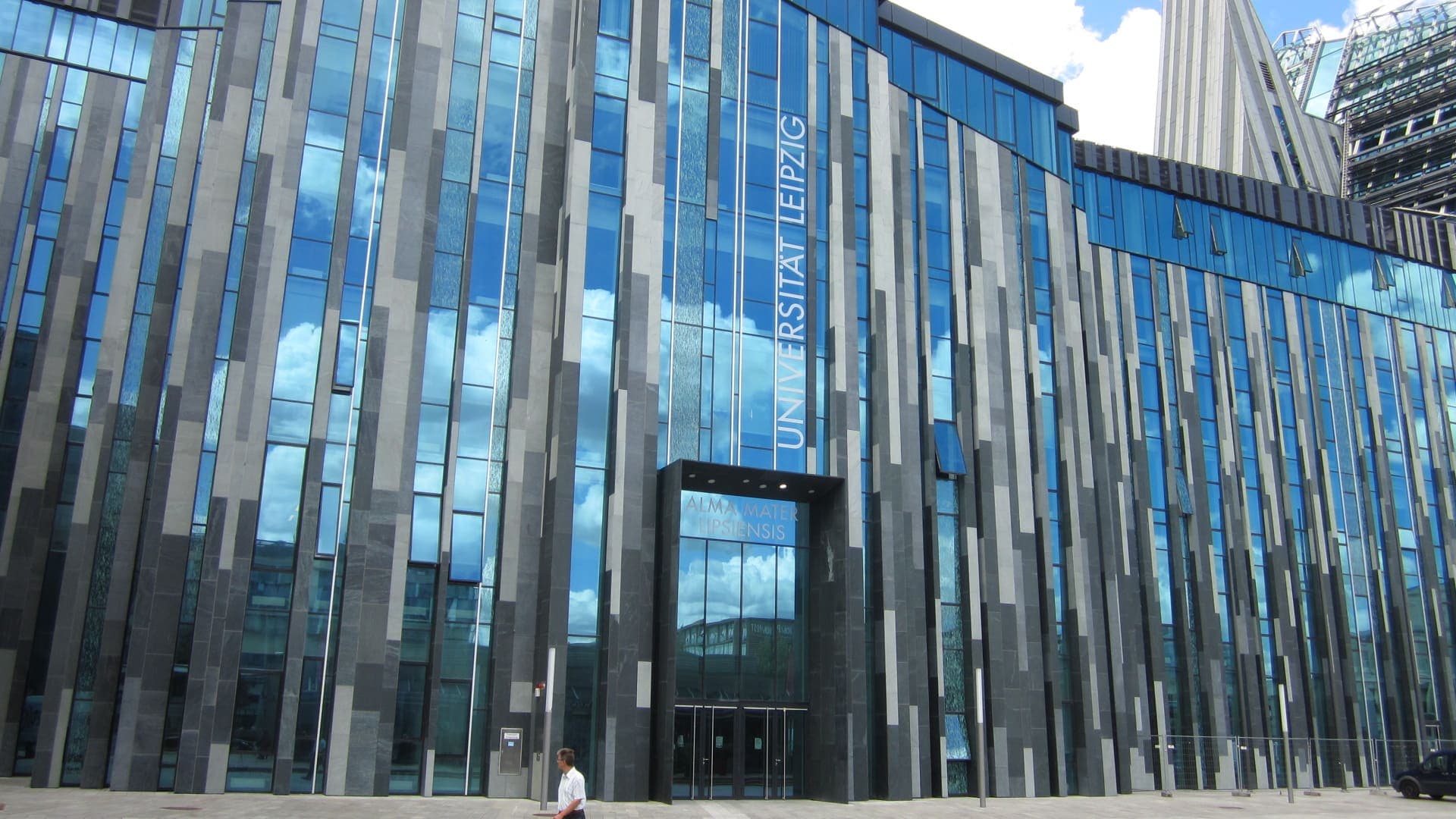
Leipzig University (Universität Leipzig)
Quick Snapshot & Key Statistics
| Official Name | Universität Leipzig (Leipzig University) |
| Institution Type | Public Comprehensive Research University |
| Established | 1409 (Second-oldest university in Germany with continuous existence) |
| Motto | Aus Tradition Grenzen überschreiten ("A tradition of crossing boundaries") |
| Total Enrollment | ~31,000+ Students (~12% International Students from 130+ nations) |
| Academic Faculties | 14 Faculties | Over 150 Degree Programs |
| Notable Historical Figures | Johann Wolfgang von Goethe, Gottfried Wilhelm Leibniz, Angela Merkel, Werner Heisenberg, Friedrich Nietzsche |
| Institutional Affiliations | German U15, Arqus European University Alliance, Coimbra Group |
| Main Location | Leipzig, Free State of Saxony (Sachsen), Germany |
| Global Rankings | Top 200–250 Worldwide (THE) | Top 15–20 in Germany |
| Tuition Fees (Regular Degrees) | €0 / year (100% Tuition-Free for all EU & non-EU international students) |
| Semester Contribution | ~€332 per semester (Includes administrative fees & nationwide public transit pass) |
About Leipzig University
Founded in 1409, Leipzig University (Universität Leipzig) is one of the world's oldest academic institutions and Germany's second-oldest continuously operating university. Famous for its pivotal historical roles during the European Enlightenment, the birth of modern psychology (founded here by Wilhelm Wundt in 1879), and the peaceful revolution of 1989, Leipzig University stands as a modern research powerhouse.
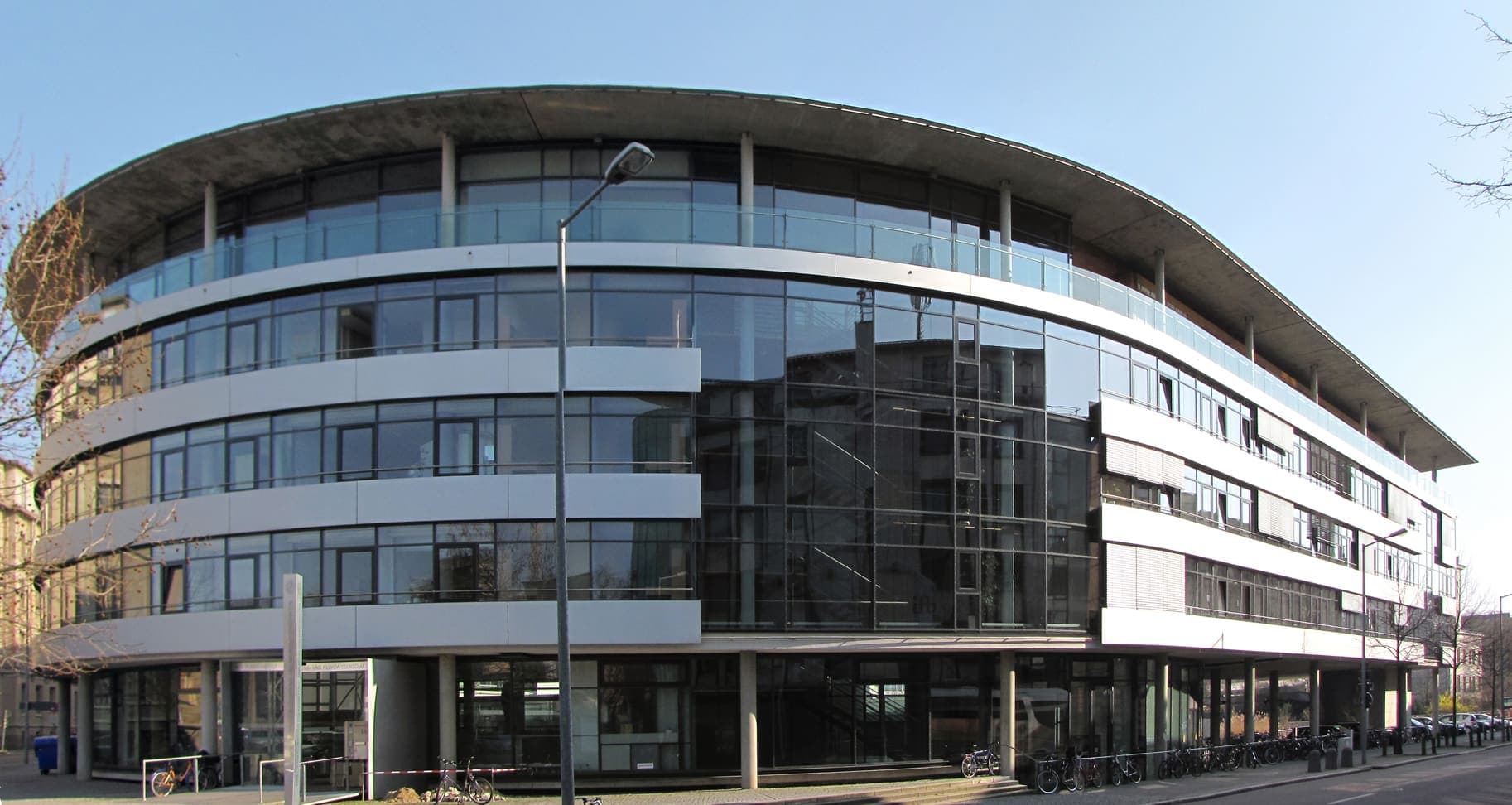
Located in the vibrant cultural and economic hub of Leipzig, Saxony, the university operates an integrated urban campus anchored at the historic Augustusplatz. Leipzig University collaborates closely with non-university scientific centres across the Leipzig research region, including 3 Max Planck Institutes (Evolutionary Anthropology, Human Cognitive and Brain Sciences, Mathematics in the Sciences), 2 Fraunhofer Institutes (IZI and IMW), the Helmholtz Centre for Environmental Research (UFZ), and the Leibniz Institute for Tropospheric Research (TROPOS).
Why Choose Leipzig University?
- One of Germany's oldest universities
- More than 600 years of academic excellence
- 14 faculties offering diverse study options
- Strong international reputation
- Excellent research facilities
- Affordable public university education
- Numerous English-taught Master's programmes
- Strong industry and research collaborations
- Excellent graduate employability
- Vibrant student life in an affordable city
Location & Campus Structure of Leipzig University
Leipzig University is integrated directly into the urban layout of Leipzig, Saxony, organised across several specialized campus hubs:
- Campus Augustusplatz (Central Campus): Located in the heart of downtown Leipzig. Features the futuristic Augusteum and Paulinum (Assembly Hall and University Church), housing the Faculties of Law, Economics & Management, History, Philosophy, and the Albertina Central Library.
- STEM & Science Campus (Johannisallee / Linnéstraße): Houses Chemistry, Mineralogy, Physics, Earth Sciences, Life Sciences, and the Botanical Garden (Botanischer Garten).
- Medical Campus (Liebigstraße): Houses the Faculty of Medicine, the University Hospital Leipzig (Universitätsklinikum Leipzig), and specialised clinical research institutes.
- Jahnallee Campus: Dedicated facilities for Sports Science, Educational Sciences, and athletic testing laboratories.
Popular & Unique Degree Programs
Leipzig University is organized into 14 main academic faculties—including the Faculty of Theology, Faculty of Law, Faculty of History, Art and Area Studies, Faculty of Philology, Faculty of Education, Faculty of Social Sciences and Philosophy, Faculty of Economics and Management, Faculty of Sports Science, Faculty of Medicine, Faculty of Mathematics and Computer Science, Faculty of Life Sciences, Faculty of Chemistry and Mineralogy, Faculty of Physics and Earth Sciences, and Faculty of Veterinary Medicine—which collectively offer over 150 degree programs spanning Bachelor's, Master's, Doctoral, and State Examination (Staatsexamen) qualifications.
Top English-Taught Master's Programs (International Favourites)
- M.Sc. Data Science: Advanced machine learning, big data analytics, statistical modelling, and scalable database systems.
- M.Sc. Integrative Biodiversity Sciences: Research degree closely integrated with iDiv (German Centre for Integrative Biodiversity Research).
- M.A. Global Studies: Interdisciplinary European program offered within the Erasmus Mundus consortium (partnered with LSE, Vienna, and Roskilde).
- M.Sc. Structural Chemistry and Spectroscopy: Research-focused physical chemistry and molecular structure analysis.
- M.Sc. Early Childhood Research: Interdisciplinary cognitive development research hosted by the Faculty of Education and Max Planck Institute (MPI CBS).
- M.Sc. Physics / Mathematical Physics: Quantum field theory, solid-state physics, and computational physics.
Top German-Taught Degree Programs
- Human Medicine & Dentistry (Staatsexamen): Highly competitive clinical training operated at the University Hospital Leipzig (Universitätsklinikum Leipzig).
- Veterinary Medicine (Tiermedizin - Staatsexamen): One of only five veterinary medicine faculties in all of Germany.
- Law (Rechtswissenschaft - Staatsexamen): Historic law faculty housed at Campus Augustusplatz.
- B.Sc. / M.Sc. Psychology: Highly sought-after program building on the historical legacy of Wilhelm Wundt's original experimental psychology laboratory.
- B.Sc. / M.Sc. Computer Science (Informatik): Software engineering, bioinformatics, cybersecurity, and artificial intelligence.
Language Requirements (English & German)
Language prerequisites depend on the primary medium of instruction for your chosen degree program at Leipzig University.
German Language Requirements (German-Taught Programs)
For degree programs taught in German, including standard Bachelor's degrees and State Examination programs like Medicine, Dentistry, Law, and Teacher Training, non-native applicants must prove C1 CEFR German proficiency:
- DSH: DSH-2 or DSH-3.
- TestDaF: Minimum level of 4x4 (TDN 4 in all 4 examination sections).
- telc: telc Deutsch C1 Hochschule.
- Goethe-Zertifikat: Goethe-Zertifikat C2 (or C1 with high subscores).
English Language Requirements (English-Taught Programs)
For international Master's degree programs taught in English, applicants must submit proof of B2 or C1 CEFR English proficiency:
| IELTS Academic | Overall 6.5 or 7.0 (program-dependent) |
| TOEFL iBT | 88 to 100 points or higher |
| Cambridge English | C1 Advanced (CAE) or C2 Proficiency (CPE) |
| PTE Academic | 65 points or higher |
Fee Structure at Leipzig University
As a public research university in the Free State of Saxony (Sachsen), Leipzig University does NOT charge tuition fees for standard Bachelor's, Master's, or Doctoral degree programs for any student, regardless of citizenship.
Bachelor's Programmes
- Tuition Fee: No tuition fees
- Semester Contribution: Approximately €332 per semester
Master's Programmes
- Tuition Fee: No tuition fees
- Semester Contribution: Approximately €332 per semester
Mandatory Administrative & Living Costs at Leipzig University
- Semester Contribution (Semesterbeitrag): ~€332 per semester (paid twice annually for re-registration).
- Blocked Account (Sperrkonto) for Visa: Non-EU international students must deposit €11,904 per year into an official Blocked Account to draw €992 per month for living costs.
- Monthly Living Costs in Leipzig: Leipzig is one of the most affordable major cities in Germany. On average, students spend between €800 and €1,000 per month.
Research & Industry Partnerships
Leipzig University collaborates with:
- Max Planck Society
- Fraunhofer Society
- Leibniz Association
- Helmholtz Association
- BMW Group
- Porsche
- DHL
- Amazon
- University Hospital Leipzig
- Leipzig Bio City
These partnerships provide students with internships, research opportunities, innovation projects, and excellent graduate employment prospects.
Let's plan your path to studying at Leipzig University
From matching your profile to the right faculty to preparing a compelling application, our counsellors guide every step of your journey.
Frequently Asked Questions (FAQs)
Leipzig is a rapidly growing economic hub in Eastern Germany, home to major corporate operations for DHL, Porsche, BMW, Amazon, Beiersdorf, and biotech networks. Enrolled students can work up to 20 hours per week during term time as Werkstudent under German labour laws. IT, logistics, business, and research assistant roles pay competitive wages (€15 to €22+ per hour) and frequently lead directly to post-graduate employment.
iDiv is an internationally renowned biodiversity research centre operated jointly by Leipzig University, Martin Luther University Halle-Wittenberg, Friedrich Schiller University Jena, and the Helmholtz Centre for Environmental Research (UFZ). It conducts global ecological research on ecosystem dynamics and species loss.
Leipzig hosts three world-leading Max Planck Institutes: MPI for Evolutionary Anthropology (where Nobel laureate Svante Pääbo sequenced the Neanderthal genome), MPI for Human Cognitive and Brain Sciences, and MPI for Mathematics in the Sciences. University researchers co-staff laboratories and offer joint doctoral programs (IMPRS) with these institutes.
Arqus is an official European University alliance co-led by Leipzig University alongside institutions like Granada, Graz, Padua, Lyon, and Vilnius. It offers shared virtual courses, joint master's initiatives, and seamless academic mobility across member countries.
The Bibliotheca Albertina is the main branch of the Leipzig University Library (Universitätsbibliothek Leipzig). Built in 1891, it holds over 5 million volumes, historic manuscripts (such as the Papyrus Ebers), and state-of-the-art digital learning zones.
Leipzig University hosts one of Germany's five veterinary medicine faculties. It operates specialised veterinary teaching hospitals, animal pathology laboratories, and diagnostic clinics serving eastern Germany.
AlmaWeb is the central online campus management platform at Leipzig University. Students use AlmaWeb to register for modules, sign up for semester examinations, download official enrollment certificates, and review academic transcripts.
The Universitätsklinikum Leipzig is a top-tier tertiary care hospital complex with over 1,400 beds. It provides clinical training for medical and dental students while leading translational research in oncology, cardiovascular disease, and metabolic disorders.
ScaDS.AI (Centre for Scalable Data Analytics and Artificial Intelligence) is one of Germany's national AI competence centres, operated jointly by Leipzig University and TU Dresden to research big data, foundational machine learning, and high-performance computing.
Studentenwerk Leipzig manages over 5,000 dormitory beds across 15 student residence halls in Leipzig. Dorm rents range from €280 to €450 per month, including all utilities. Incoming international students are advised to apply for housing immediately upon receiving admission.
Yes. The university provides excellent opportunities for undergraduate, postgraduate, and doctoral research through its internationally recognised research institutes and collaborative projects.
Its combination of over six centuries of academic tradition, strong research output, affordable education, and location in one of Germany's fastest-growing cities makes Leipzig University a unique study destination.
Explore Other Universities in Germany
Photo credits: Max Planck Institute for Human Cognitive and Brain Sciences, Leipzig by Dirk Goldhahn, CC BY-SA 3.0. Via Wikimedia Commons. All image credits
