
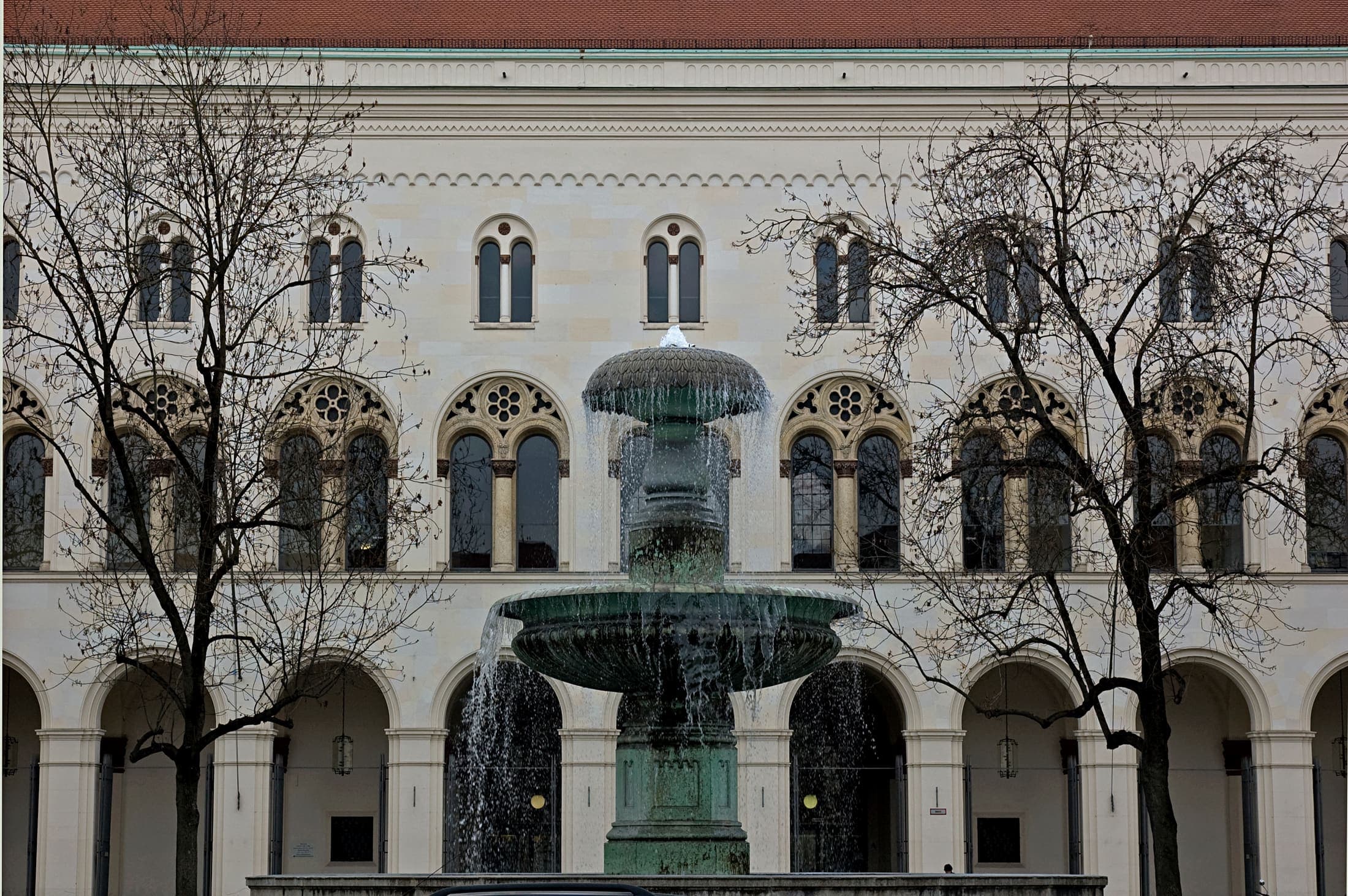
Ludwig-Maximilians-Universität München (LMU Munich)
Quick Snapshot & Key Statistics
| Institution Type | Public Classical Research University / University of Excellence (Exzellenzuniversität) |
| Established | 1472 (Founded in Ingolstadt, relocated to Munich in 1826) |
| Total Enrollment | ~52,000+ Students (~18% International Students) |
| Academic Faculties | 18 Faculties | Over 200 Degree Programs |
| Nobel Laureates | Associated with 50 Nobel Laureates (e.g., Max Planck, Werner Heisenberg, Wilhelm Röntgen) |
| Main Location | Munich (Geschwister-Scholl-Platz / City Center, Großhadern, Martinsried), Bavaria |
| Global Ranking | Consistently ranked in the Top 40–60 Worldwide and #2 in Germany (QS / THE) |
| Tuition Fees (All Students) | €0 / year (100% Tuition-Free for both EU and non-EU international students) |
| Semester Fee | ~€150 per semester (Basic Studierendenwerk contribution) |
About Ludwig-Maximilians-Universität München (LMU)
Founded in 1472, Ludwig-Maximilians-Universität München (LMU Munich) is one of Europe's oldest, largest, and most prestigious comprehensive research universities. Designated as a University of Excellence under Germany's national Excellence Strategy, LMU is renowned for its academic heritage in the Humanities, Social Sciences, Natural Sciences, Medicine, Law, and Economics.
Unlike technical universities, LMU is a classical Volluniversität (comprehensive university). Its historical main building is located right in the heart of Munich at Geschwister-Scholl-Platz, with state-of-the-art high-tech research centres for Medicine, Life Sciences, and Biotechnology situated at the Biocenter Martinsried and Großhadern campuses.
Why Choose LMU Munich?
- One of Germany's highest-ranked universities
- Member of Germany's Universities of Excellence
- Over 550 years of academic excellence
- Home to more than 40 Nobel Prize laureates
- World-renowned research facilities
- Strong international reputation
- Affordable education at a public university
- Wide range of academic disciplines
- Excellent graduate employability
- Located in Germany's innovation and business hub
Location
Ludwig Maximilian University of Munich (LMU Munich) is located in Munich, Bavaria, Germany, one of Europe's leading cities for education, research, innovation, and business.
- City Center Campus (Geschwister-Scholl-Platz): Located along Leopoldstraße and Ludwigstraße. Houses the historic main building, the University Library (UB), Law, Economics, Philosophy, History, and Social Sciences.
- HighTechCampus Großhadern / Martinsried: A major biomedical research hub in southwestern Munich housing the Faculty of Medicine, the University Hospital (Klinikum der Universität München), the Gene Centre, and the Faculties of Chemistry and Pharmacy.
- Maxvorstadt Precinct: Houses Physics, Mathematics, Earth Sciences, and Information Technology facilities intertwined with Munich's museum quarter (Kunstareal).
- Englischer Garten Campus (Oettingenstraße): Situated near the English Garden, hosting Computer Science, Business Administration (BWL), and Media Informatics.
Popular Courses at LMU Munich
LMU Munich offers over 200 degree programs across 18 faculties:
Top English-Taught Programs (International Favourites)
- M.Sc. Data Science: Interdisciplinary program merging machine learning, statistics, data analytics, and computational mathematics.
- M.Sc. Neurosciences: Offered through the Graduate School of Systemic Neurosciences (GSN), focusing on cellular, systems, and computational neuroscience.
- M.Sc. Astrophysics: Premier research program operated in close collaboration with local Max Planck Institutes.
- M.Sc. Theoretical and Mathematical Physics: Joint elite Master's program operated together with TU Munich.
- M.Sc. Epidemiology: Advanced quantitative health data, biostatistics, and public health track.
- M.A. Logic and Philosophy of Science: World-leading program hosted at the Munich Centre for Mathematical Philosophy (MCMP).
Top German-Taught Degree Programs
- Human Medicine & Dentistry (Staatsexamen): Highly competitive, world-renowned clinical training at the LMU University Hospital (Klinikum der Universität München).
- Law (Rechtswissenschaft - Staatsexamen): Ranked among the absolute top law faculties in Germany.
- B.Sc. / M.Sc. Psychology: Consistently features high admission cutoffs (Numerus Clausus - NC).
- B.A. / M.A. Business Administration (BWL) & Economics (VWL): Top-rated business school producing leading financial and economic researchers.
- B.Sc. / M.Sc. Biochemistry & Molecular Cell Biology: Based at the high-tech Martinsried life science research campus.
Language Requirements (English & German)
Admission prerequisites depend on the primary medium of instruction for your degree program.
German Language Requirements (German-Taught Programs)
Because almost all undergraduate (Bachelor's) and State Examination (Staatsexamen) programs are taught in German, non-native applicants must prove C1/C2 CEFR German proficiency:
- TestDaF: Minimum of 4x4 (TDN 4 in all 4 examination sections).
- DSH: DSH-2 or DSH-3.
- telc: telc Deutsch C1 Hochschule.
- Goethe-Zertifikat: Goethe-Zertifikat C2.
English Language Requirements (English-Taught Programs)
LMU offers over 27 international Master's degree programs taught 100% in English. Applicants must submit proof of B2 or C1 CEFR English proficiency:
| IELTS Academic | Overall 6.5 or 7.0 (program-dependent) |
| TOEFL iBT | 80 to 100 points or higher |
| Cambridge English | C1 Advanced (CAE) or C2 Proficiency (CPE) |
| PTE Academic | 65 points or higher |
Fee Structure at LMU Munich
Unlike TUM or universities in Baden-Württemberg, LMU Munich does NOT charge tuition fees for international non-EU students.
Bachelor's Programmes
- Tuition Fee: No tuition fees
- Semester Fee: Approximately €85–€150
Master's Programmes
- Tuition Fee: No tuition fees
- Semester Fee: Approximately €85–€150
Mandatory Administrative & Living Costs in Munich
- Semester Fee: ~€150 per semester.
- Blocked Account (Sperrkonto) for Visa: Non-EU international students must deposit €11,904 per year into an official Blocked Account to draw €992 per month for living costs.
- Living Expenses in Munich: Munich is one of Germany's most expensive cities; students should budget between €1,100 and €1,450 per month (covering student housing/WG: €500–€800, public health insurance: ~€140/month, food, and transit).
Research & Industry Partnership
Ludwig-Maximilians-Universität München (LMU Munich) collaborates with leading organisations and companies, including:
- Max Planck Society
- Helmholtz Association
- Fraunhofer Society
- Siemens
- BMW Group
- Allianz
- Roche
- Microsoft
- University Hospital Munich (LMU Klinikum)
These partnerships provide students with research opportunities, internships, innovation projects, and outstanding graduate employment prospects.
Let's plan your path to studying at LMU Munich
From matching your profile to the right faculty to preparing a compelling application, our counsellors guide every step of your journey.
Frequently Asked Questions (FAQs)
Ludwig-Maximilians-Universität München (LMU Munich) is renowned for its academic excellence, Nobel Prize-winning research, and outstanding programmes in medicine, science, humanities, and social sciences.
LMU Munich is a classical comprehensive university that excels in Medicine, Law, Humanities, Natural Sciences, and Social Sciences, and remains tuition-free for non-EU students. TUM is a technical university focusing on Engineering, Computer Science, and Technology Management, and charges non-EU students tuition fees ranging from €2,000 to €6,000 per semester.
Almost all Bachelor's degree programs and State Examinations at LMU Munich are taught in German. English-taught options at LMU are predominantly available at the Master's degree level (over 27 programs).
The LMU Munich School of Management is the Faculty of Business Administration at LMU. It is consistently ranked among the top business faculties in Germany for accounting, finance, marketing, strategy, and innovation management.
International applicants holding non-German educational credentials must apply through the International Office (Referat für Internationale Angelegenheiten) at LMU. Many degree programs also require a preliminary document evaluation via uni-assist (VPD) or a direct department-level aptitude application before formal enrolment.
The LMU Klinikum is one of the largest and most prestigious university hospital complexes in Europe, operating across two major sites: Großhadern (high-tech medical campus) and Innenstadt (historic city-centre medical precinct). It provides clinical education and advanced medical research in oncology, neurology, and cardiovascular systems.
Numerus Clausus (NC) means admission is grade-restricted due to high demand exceeding available seats (e.g., in Psychology, Medicine, Pharmacy, or Law). Seats are allocated strictly based on top high school / Bachelor's GPA.
LMU works in close structural partnership with several nearby Max Planck Institutes (including Quantum Optics, Astrophysics, Extraterrestrial Physics, Biochemistry, and Neurobiology). Many LMU professors hold joint appointments at Max Planck Institutes, providing students with advanced research laboratory access.
Student accommodation is managed independently by Studierendenwerk München Oberbayern. Dorm room rents range from €350 to €600 per month. Because housing in Munich is competitive, incoming international students should apply for dormitories on the Studierendenwerk online portal immediately upon receiving admission.
Yes. LMU offers German language courses through its Language Centre (Sprachenzentrum) and partner organisation DKFA (Deutschkurse für Ausländer), covering levels from A1 to C1, as well as academic writing and DSH/TestDaF preparation.
Yes. Non-EU international students enrolled at LMU can legally work up to 140 full days or 280 half days per calendar year. Working as a student worker (Werkstudent) or academic research assistant (HiWi) in Munich pays between €14 and €22 per hour.
Yes. International students can apply for national merit scholarships like the Deutschlandstipendium (€300/month), DAAD Scholarships, or state completion grants (Stipendieninitiative Bayern) during their advanced semesters.
For the Winter Semester (October start), applications generally close on July 15. For the Summer Semester (April start), applications close on January 15. (Selected Master's programs may have earlier deadlines in May or June)
Explore Other Universities in Germany
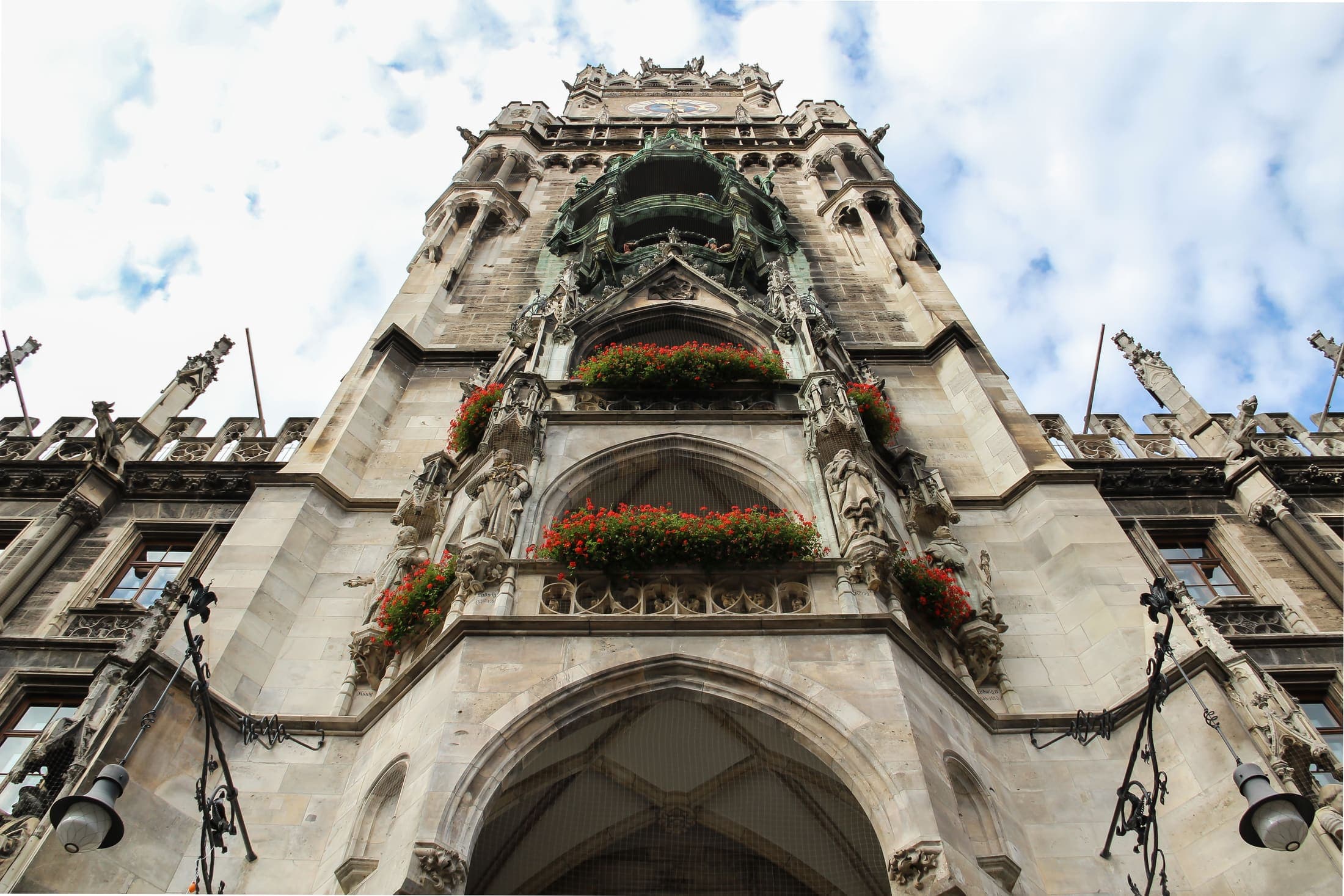
Photo credits: Munich New Town Hall, Marienplatz by Dietmar Rabich, CC BY-SA 4.0. Via Wikimedia Commons. All image credits
