
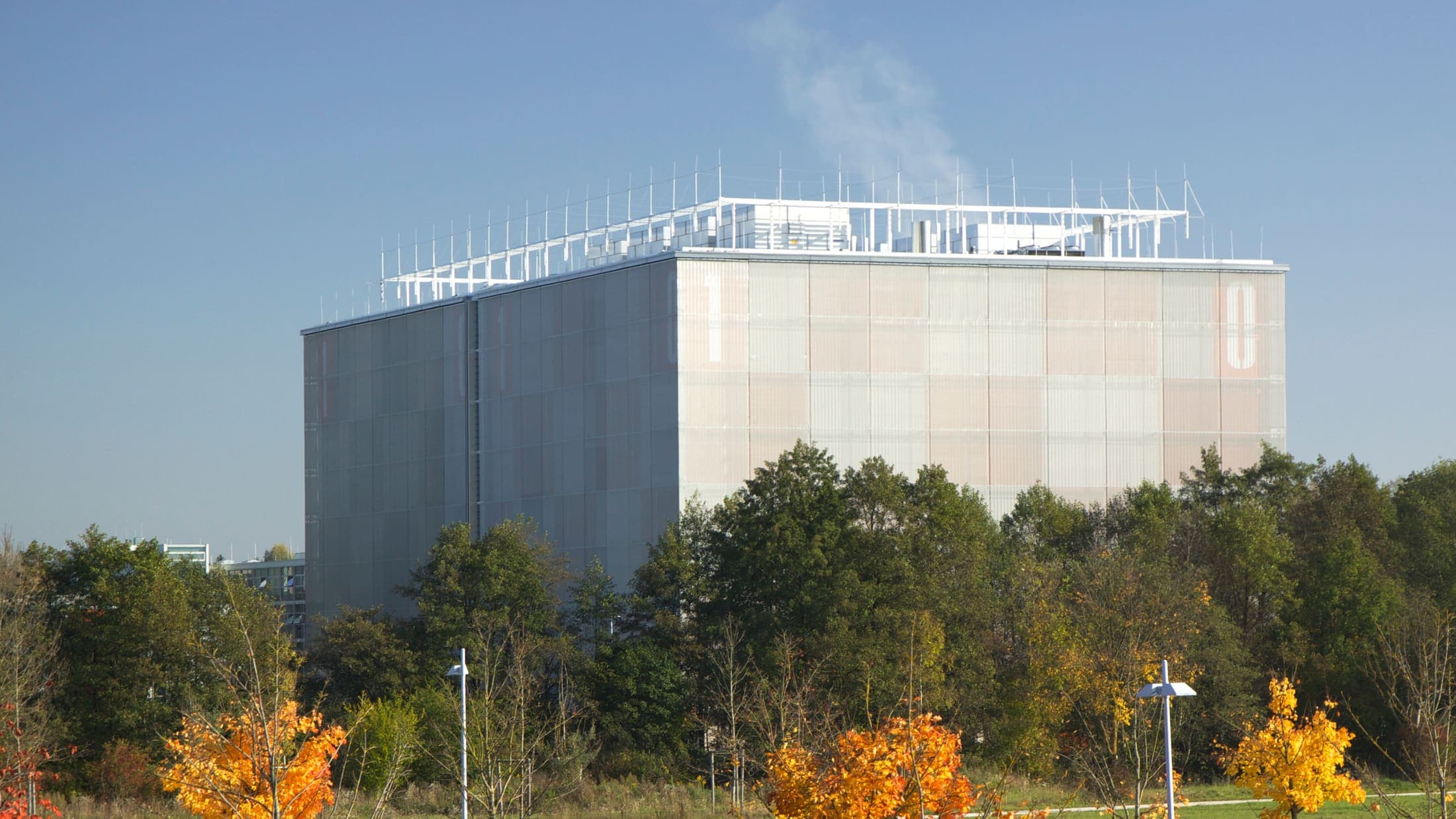
Technical University of Munich (TUM)
Quick Snapshot & Key Statistics
| Institution Type | Public Research University / University of Excellence (Exzellenzuniversität) |
| Established | 1868 |
| Motto | The Entrepreneurial University |
| Total Enrollment | ~52,000+ Students (~42% International Students) |
| Academic Faculties | 8 Schools / Schools of Engineering, Natural Sciences, Management, Computation, etc. |
| Main Campus Locations | Munich (Downtown), Garching, Weihenstephan (Freising), Heilbronn, Straubing |
| Overseas Campus | TUM Asia in Singapore |
| Global Ranking | Consistently Ranked #1 University in Germany (Top 30–50 Worldwide) |
| Tuition Fees (Non-EU) | €2,000–€3,000 / semester (Bachelor's) | €4,000–€6,000 / semester (Master's) |
| Tuition Fees (EU/EEA) | €0 / year (100% Tuition-Free for EU/EEA nationals) |
| Semester Fee | ~€150 per semester |
About Technical University of Munich (TUM)
Founded in 1868, the Technical University of Munich (TUM) (Technische Universität München) is Germany's premier technical institution and an officially designated University of Excellence. TUM is globally renowned for its pioneering research, strong entrepreneurial spirit, and close collaboration with multinational tech giants.
The university features modern research hubs across Bavaria—including its main historical campus in downtown Munich, high-tech engineering labs in Garching, life sciences facilities in Weihenstephan, technology management hubs in Heilbronn, and renewable resources institutes in Straubing.
The Technical University of Munich (TUM) is a member of Germany's prestigious Universities of Excellence and has consistently maintained this status through the German Excellence Strategy. It is also closely connected with leading global companies such as BMW, Siemens, Audi, Allianz, Airbus, Google, Microsoft, and SAP, providing students with exceptional internship, research, and career opportunities.
Why Choose TUM?
- One of Germany's highest-ranked universities
- Member of Germany's Universities of Excellence
- World-renowned research and innovation
- Strong industry partnerships with global companies
- Modern laboratories and research centres
- Excellent internship and placement opportunities
- International campus with students from over 140 countries
- Wide range of English-taught Master's programmes
- Strong focus on entrepreneurship and startups
- Outstanding graduate employability worldwide
Location
The Technical University of Munich (TUM) has multiple campuses across Bavaria, Germany.
Main Campuses:
- Munich City Centre Campus (Maxvorstadt): Historic core campus housing the School of Engineering and Design (Architecture, Civil Engineering), School of Medicine and Health, and the TUM School of Management.
- Garching High-Tech Campus: One of Europe's largest science hubs, located north of Munich. Houses Computer Science, Mechanical Engineering, Electrical & Computer Engineering, Mathematics, Physics, and Chemistry.
- Weihenstephan Campus (Freising): Dedicated to life sciences, nutrition, environmental planning, agricultural engineering, and brewing technology.
- Heilbronn & Straubing Campuses: Specialised regional campuses focusing on digital transformation, technology management, and bioeconomy.
Munich is one of Europe's leading technology, finance, and innovation hubs, offering outstanding career opportunities with multinational companies, startups, and research institutions.
Popular Courses at TUM
TUM is organised into 8 comprehensive academic schools: TUM School of Computation, Information and Technology (CIT) (Computer Science, Math, Electrical Engineering); TUM School of Engineering and Design (ED) (Mechanical, Aerospace, Civil, Architecture, Materials); TUM School of Natural Sciences (NAT) (Physics, Chemistry); TUM School of Life Sciences (LS) (Biomedicine, Agriculture, Food Technology); TUM School of Management (MGT) (Technology Management, Business Administration); TUM School of Medicine and Health (MH) (Clinical Medicine, Sports Science, Public Health); TUM School of Social Sciences and Technology (SST) (Education, Governance, Science Studies); and TUM School of Transformation and Sustainability (Straubing). TUM offers over 175 study programs across its specialised schools:
Top English-Taught Programs (International Favourites)
- M.Sc. Computer Science (Informatik): TUM's premier software engineering, algorithm, and systems program.
- M.Sc. Robotics, Cognition, Intelligence: Interdisciplinary degree merging AI, mechanical engineering, and computational perception.
- M.Sc. Data Engineering and Analytics: Focuses on big data architectures, machine learning pipelines, and distributed processing.
- M.Sc. Management and Technology (TUM-BWL): Unique program combining technical engineering specialisation with corporate management.
- M.Sc. Aerospace Engineering: World-renowned flight mechanics, propulsion systems, and satellite tech degree.
- B.Sc. Management & Technology (Heilbronn / Munich Campus): English-taught undergraduate management program.
Top German-Taught Degree Programs
- B.Sc. / M.Sc. Mechanical Engineering (Maschinenwesen): Germany's benchmark mechanical engineering curriculum.
- B.Sc. / M.Sc. Electrical and Computer Engineering: Covers microelectronics, power grids, and telecommunications.
- B.Sc. / M.Sc. Architecture: Combines sustainable building, computational design, and urban planning.
- B.Sc. / M.Sc. Civil Engineering (Bauingenieurwesen): Structural engineering, transportation, and environmental technology.
Language Requirements (English & German)
Language prerequisites depend on the language of instruction for your specific program at TUM.
German Language Requirements (German-Taught Programs)
For programs taught in German, non-native applicants must prove C1 CEFR German proficiency:
- TestDaF: Minimum of 4x4 (TDN 4 in all 4 examination sections).
- DSH: DSH-2 or DSH-3.
- telc: telc Deutsch C1 Hochschule.
- Goethe-Zertifikat: Goethe-Zertifikat C1 or C2.
English Language Requirements (English-Taught Programs)
For internationally oriented Bachelor's and Master's programs taught in English, applicants must submit proof of B2 or C1 CEFR English proficiency:
| IELTS Academic | Overall 6.5 or 7.0 (program-dependent) |
| TOEFL iBT | 88 to 100 points or higher |
| Cambridge English | C1 Advanced (CAE) or C2 Proficiency (CPE) |
| PTE Academic | 65 points or higher |
Tuition Fees at TUM
Bachelor's Programmes
- EU/EEA Students: No tuition fees (semester fees only)
- Non-EU Students: Tuition fees generally range from €2,000–€3,000 per semester, depending on the programme.
- Semester fee: Approximately €85–€150.
Master's Programmes
- EU/EEA Students: No tuition fees (semester fees only)
- Non-EU Students: Tuition fees generally range from €4,000–€6,000 per semester, depending on the programme.
- Semester fee: Approximately €85–€150
Mandatory Administrative & Living Costs in Munich
- Semester Fee: ~€150 per semester.
- Blocked Account (Sperrkonto) for Visa: Non-EU international students must deposit €11,904 per year into a Blocked Account to draw €992 per month for living costs.
- Living Expenses in Munich: Munich is one of Germany's most expensive cities; students should budget between €1,100 and €1,450 per month (covering student rent: €450–€750, public health insurance: ~€140/month, food, and daily costs).
Research & Industry Partnerships
Technical University of Munich (TUM) collaborates with leading companies and organisations, including:
- BMW Group
- Siemens
- Airbus
- Audi
- Allianz
- Microsoft
- SAP
- Infineon Technologies
- Siemens Healthineers
These partnerships provide students with internships, research opportunities, startup support, innovation projects, and outstanding graduate employment prospects.
Let's plan your path to studying at TUM
From matching your profile to the right school to preparing a compelling application, our counsellors guide every step of your journey.
Frequently Asked Questions (FAQs)
Yes. Under Bavarian state regulations, TUM charges tuition fees for new non-EU/EEA students starting a degree program. Fees generally range from €2,000 to €3,000 per semester for Bachelor's programs and €4,000 to €6,000 per semester for Master's programs. Students from EU/EEA countries study tuition-free.
Yes. Citizens of the European Union (EU) and European Economic Area (EEA) do not pay tuition fees at TUM and only pay the nominal semester fee of ~€150 per semester.
TUM uses a multi-stage Aptitude Assessment Process (Eignungsverfahren) for most Master's and selected Bachelor's applications. Stage 1 evaluates your academic transcript, relevant credit matching (curricular analysis), SOP, and grade average. Candidates meeting the cutoff are admitted directly; those in the border range advance to Stage 2 for an academic interview or written entrance exam.
International applicants who obtained their prior school or university qualification outside Germany must apply for a VPD (Vorprüfungsdokumentation) through uni-assist. Uni-assist verifies your transcripts and converts your GPA to the German grading system. You then submit the VPD document directly to TUM's application portal (TUMonline).
UnternehmerTUM is Europe's largest centre for innovation and business creation, located at the Garching campus. It provides TUM students with free access to high-tech prototyping workshops (MakerSpace), seed capital, acceleration programs (like TechFounders), and pitch coaching.
The Munich Downtown Campus houses Architecture, Civil Engineering, and Medicine; Garching is the high-tech campus housing Computer Science, Robotics, Physics, Chemistry, and Mechanical Engineering; Weihenstephan (Freising) houses Life Sciences and Agriculture; and Heilbronn focuses on Management and Digital Technology.
TUM Asia is the official overseas campus of TUM located in Singapore, established in 2002. It offers joint and standalone Master's degrees in Aerospace Engineering, Green Electronics, Integrated Circuit Design, and Industrial Chemistry in partnership with NUS and NTU.
GRE scores (with high quantitative percentiles) or GATE scores are mandatory or strongly recommended for applicants from selected non-EU countries applying to competitive M.Sc. programs in Computer Science, Data Engineering, and Electrical Engineering.
Yes. TUM offers a limited number of merit-based and need-based tuition waivers for high-achieving non-EU students. Students can apply for partial or full tuition fee waivers after receiving an admission offer or starting their second semester based on high academic standing.
Klinikum rechts der Isar is the official university hospital of TUM, located in central Munich. It serves as a major tertiary care centre and the primary clinical training site for medical students and biomedical researchers.
The Technical University of Munich (TUM) is internationally recognised for research in Artificial Intelligence, Robotics, Quantum Technologies, Sustainable Energy, Biotechnology, Digital Health, Mobility, and Advanced Manufacturing.
Yes. Through initiatives such as TUM Venture Labs, UnternehmerTUM, and startup incubators, the university supports students in developing innovative business ideas and launching startups.
The Technical University of Munich (TUM) is recognised globally for its outstanding research, high academic standards, industry collaborations, innovation ecosystem, and consistently strong performance in international university rankings.
The Technical University of Munich (TUM) is an excellent choice for students seeking a world-class education, cutting-edge research opportunities, strong industry connections, internationally recognised degrees, and exceptional career prospects in Germany and around the world.
Explore Other Universities in Germany
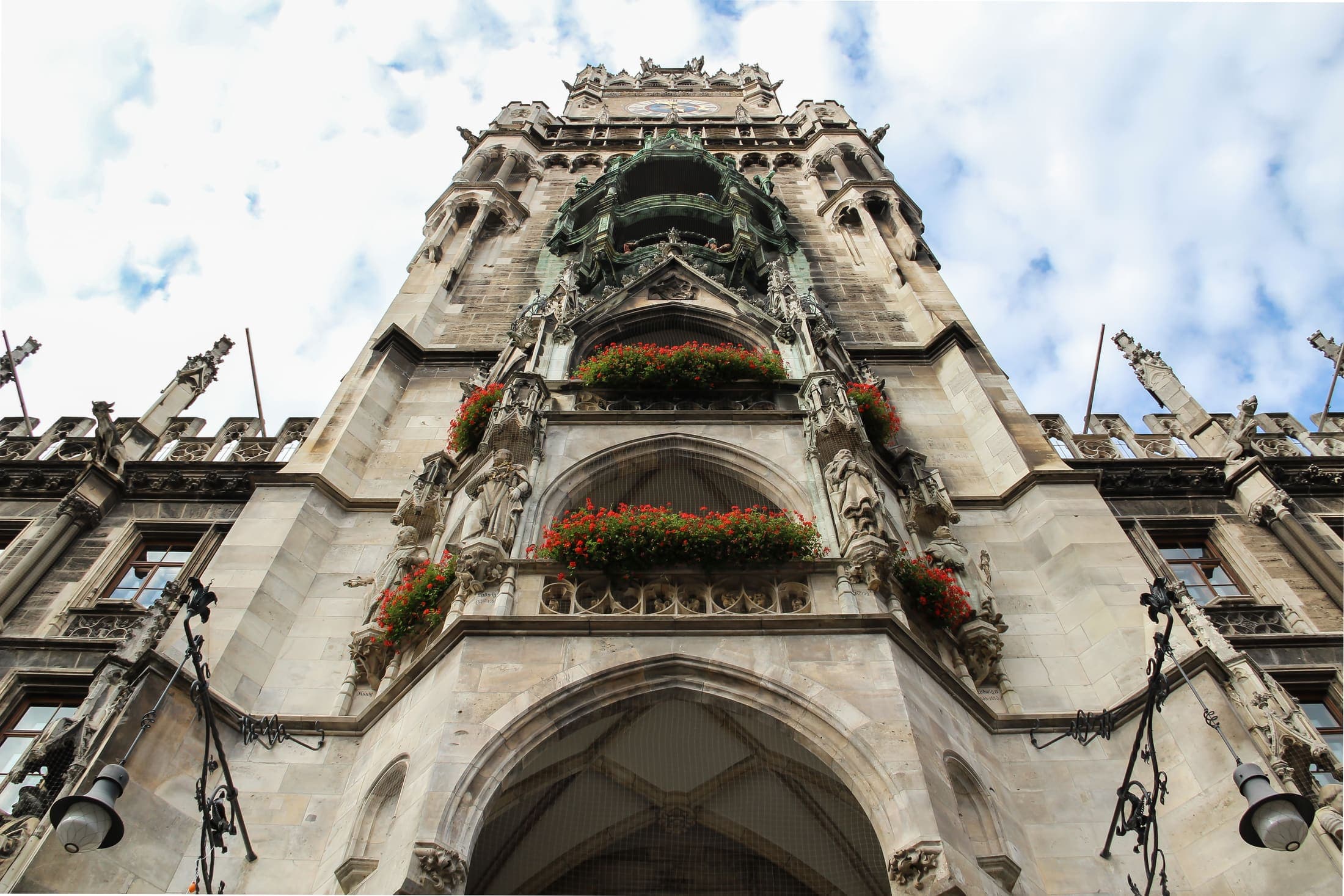
Photo credits: Leibniz Supercomputing Centre, Garching by Michael Brenner, CC BY-SA 3.0; Munich New Town Hall, Marienplatz by Dietmar Rabich, CC BY-SA 4.0. Via Wikimedia Commons. All image credits
