
Technische Universität Berlin (TU Berlin)
Quick Snapshot & Key Statistics
| Official Name | Technische Universität Berlin (TU Berlin / Technical University of Berlin) |
| Institution Type | Public Research University / TU9 Alliance Member |
| Established | 1879 |
| Motto | Wir haben die Ideen für die Zukunft ("We have the ideas for the future") |
| Total Enrollment | ~34,000–35,000+ Students (~30% International Students from 130+ nations) |
| Academic Faculties | 7 Faculties | Over 150 Degree Programs |
| Institutional Affiliations | TU9 Alliance, CESAER, ENHANCE Alliance, Berlin University Alliance (BUA) |
| Main Campus Location | Charlottenburg-Wilmersdorf, Berlin, Germany |
| Global Rankings | Ranked Top 150 Worldwide (QS/THE) | Top Technical University in Capital City |
| Tuition Fees (Regular Degrees) | €0 / year (100% Tuition-Free for all EU & non-EU international students) |
| Semester Contribution | ~€310 to €360 per semester (Includes nationwide Deutschlandticket transit pass) |
About Technische Universität Berlin
Founded in 1879, Technische Universität Berlin (TU Berlin) is one of Germany's largest, most prestigious technical institutions and an international cornerstone of engineering, technology, and applied research. As a prominent member of the elite TU9 Alliance (Germany's coalition of leading institutes of technology) and the Berlin University Alliance (BUA), TU Berlin seamlessly integrates engineering excellence with urban development, digital innovation, and environmental sustainability.
Located in the centre of Berlin, Europe's premier tech startup ecosystem, TU Berlin maintains strong research partnerships with corporate powerhouses (such as Siemens, Deutsche Telekom, BMW, and BASF) and non-university research giants, including the Fraunhofer Society, Max Planck Society, and Helmholtz Association.
Why Choose TU Berlin?
- One of Germany's top technical universities
- Member of the prestigious TU9 Alliance
- Strong reputation in engineering and technology
- Excellent research facilities
- Wide range of English-taught Master's programmes
- Strong partnerships with industry and research institutions
- International campus with students from over 140 countries
- Affordable public university education
- Excellent graduate employability
- Located in Germany's innovation and startup capital
Location & Campus Structure of TU Berlin
TU Berlin is situated in Berlin, the capital city of Germany. The university operates as an urban campus integrated into the heart of the city, primarily located in the western district of Charlottenburg-Wilmersdorf:
- Main Campus (Charlottenburg): Centred around Ernst-Reuter-Platz and Straße des 17. Juni. Houses the historic Main Building (Hauptgebäude), Central Library (shared with UdK Berlin), Architecture Building, Electrical Engineering, and Computer Science complexes.
- Campus Wedding: Located in northern Berlin, housing specialised facilities for Process Sciences, Biotechnology, and High-Voltage Technology.
- Campus EUREF (Schöneberg): A modern zero-emission innovation campus focusing on smart energy grids, energy efficiency, and sustainable urban mobility.
- International Satellite Campuses: TU Berlin also operates an international branch campus in El Gouna, Egypt, offering specialised Master's degrees in engineering.
Popular Courses at TU Berlin
TU Berlin offers over 150 study programs across 7 academic faculties:
Top English-Taught Master's Programs (International Favourites)
- M.Sc. Computer Science (Informatik): Advanced machine learning, distributed systems, cybersecurity, and software engineering.
- M.Sc. Information Systems Management (Business Informatics): Bridges advanced IT architecture, data analytics, and digital business strategies.
- M.Sc. Innovation Management, Entrepreneurship, and Sustainability (IMES): Focuses on business building, sustainable innovation, and technology venture design.
- M.Sc. Architecture Typology: Advanced urban architecture, structural research, and computational design.
- M.Sc. Environmental Science and Technology: Focuses on circular economy, air/water quality management, and eco-systems engineering.
- M.Sc. Global Production Engineering (GPE): Specialised industrial production engineering and supply chain management track.
Top German-Taught Degree Programs
- B.Sc. / M.Sc. Mechanical Engineering (Maschinenbau): TU Berlin's flagship engineering program.
- B.Sc. / M.Sc. Electrical Engineering (Elektrotechnik): Microelectronics, power systems, and telecommunications.
- B.Sc. / M.Sc. Industrial Engineering and Management (Wirtschaftsingenieurwesen): Combines core engineering fields with economics.
- B.Sc. / M.Sc. Civil Systems Engineering (Bauingenieurwesen): Focuses on smart infrastructure, structural mechanics, and transport logistics.
Language Requirements (English & German)
Language requirements depend on the primary medium of instruction for your degree program.
German Language Requirements (German-Taught Programs)
For programs taught in German (including all undergraduate Bachelor's degrees and many Master's tracks), non-native applicants must prove C1 CEFR German proficiency:
- TestDaF: Minimum level of 4x4 (TDN 4 in all 4 examination sections).
- DSH: DSH-2 or DSH-3.
- telc: telc Deutsch C1 Hochschule.
- Goethe-Zertifikat: Goethe-Zertifikat C2: GDS.
English Language Requirements (English-Taught Programs)
TU Berlin offers an expanding range of international Master's degree programs taught 100% in English. Applicants must submit proof of B2 or C1 CEFR English proficiency:
| IELTS Academic | Overall 6.5 or higher |
| TOEFL iBT | 87 to 92 points or higher |
| Cambridge English | C1 Advanced (CAE) or C2 Proficiency (CPE) |
| PTE Academic | 62 points or higher |
Fee Structure at TU Berlin
As a public research university in the state of Berlin, TU Berlin does NOT charge tuition fees for standard Bachelor's and consecutive Master's degree programs for any student, regardless of citizenship.
Bachelor's Programmes
- Tuition Fee: No tuition fees
- Semester Contribution: Approximately €310–€360 per semester
Master's Programmes
- Tuition Fee: No tuition fees
- Semester Contribution: Approximately €310–€360 per semester
Mandatory Administrative & Living Costs in Berlin
- Semester Fee: ~€310–€360 per semester (paid twice annually).
- Blocked Account (Sperrkonto) for Visa: Non-EU international students must deposit €11,904 per year into an official Blocked Account to draw €992 per month for living costs.
- Monthly Living Costs in Berlin: On average, students spend between €950 and €1,250 per month (covering student dorm/WG rent: €400–€650, statutory health insurance: ~€140/month, food, and utilities).
Research & Industry Partnerships
Technische Universität Berlin (TU Berlin) collaborates with numerous global companies and research organisations, including:
- Siemens
- Deutsche Telekom
- SAP
- BMW
- Bosch
- Airbus
- Fraunhofer Society
- Helmholtz Association
- Microsoft
These collaborations provide students with internships, research opportunities, startup support, and strong career prospects.
Let's plan your path to studying at TU Berlin
From matching your profile to the right faculty to preparing a compelling application, our counsellors guide every step of your journey.
Frequently Asked Questions (FAQs)
No. TU Berlin is a public university in the state of Berlin, where standard Bachelor's and consecutive Master's degrees are 100% tuition-free for both EU and non-EU international students. Enrolled students pay only a mandatory semester contribution of approximately €310-€360 per semester.
TU Berlin is world-renowned as a premier technical university and TU9 Alliance member, excelling in Computer Science, Mechanical Engineering, Electrical Engineering, Architecture, and Sustainable Urban Planning.
Popular English-taught M.Sc. programs include M.Sc. Computer Science, M.Sc. Information Systems Management, M.Sc. Innovation Management, Entrepreneurship, and Sustainability (IMES), M.Sc. Architecture Typology, and M.Sc. Environmental Science and Technology.
Yes. TU Berlin, the German Academic Exchange Service (DAAD), and various foundations offer scholarships and financial support for eligible students.
Yes. TU Berlin collaborates with leading companies such as Siemens, Deutsche Telekom, SAP, BMW, Bosch, Airbus, Google, Microsoft, and numerous research organisations, offering valuable internships and research projects.
Yes. International applicants holding foreign secondary school leaving certificates or undergraduate degrees must submit their application through uni-assist for credential evaluation before their file is processed by TU Berlin.
TU Berlin offers specialised executive/continuing education programs such as M.Sc. Space Engineering, MBA Energy Management, and M.Sc. Global Production Engineering that charge tuition fees ranging from €7,500 to €24,000 for the full program.
TU Berlin is located in Berlin, Germany, primarily centred around Ernst-Reuter-Platz in Charlottenburg-Wilmersdorf. It also features satellite campuses in Wedding and the EUREF Campus in Schöneberg.
On average, students spend between €950 and €1,250 per month, primarily covering accommodation (€400–€650), statutory health insurance (~€140), food, and personal expenses.
Yes. Non-EU international students enrolled at TU Berlin can legally work up to 140 full days or 280 half days per calendar year. Working as a student worker (Werkstudent) or research assistant (HiWi) in Berlin's tech startups or research labs pays between €14 and €22 per hour.
Housing is not managed directly by TU Berlin. Student dormitories are administered independently by the Studierendenwerk Berlin. Because dorm waiting lists are long, students are encouraged to apply early or look for private shared flats (WGs).
For the Winter Semester (October start), international applications for Master's programs generally close on June 15 or July 15 (depending on uni-assist requirements). For the Summer Semester (April start), applications close on January 15.
TU Berlin is internationally recognised for research in Artificial Intelligence, Sustainable Energy, Mobility, Digital Technologies, Smart Cities, Climate Protection, Robotics, and Materials Science.
Its membership in the TU9 Alliance, strong research output, industry collaborations, international outlook, and excellent engineering education make TU Berlin one of Germany's leading technical universities.
Technische Universität Berlin (TU Berlin) is an excellent choice for students seeking a globally recognised degree, affordable public education, cutting-edge research opportunities, strong industry connections, and outstanding career prospects in engineering, technology, business, and innovation. Its location in Berlin also provides access to one of Europe's largest startup ecosystems and a vibrant international community.
Explore Other Universities in Germany
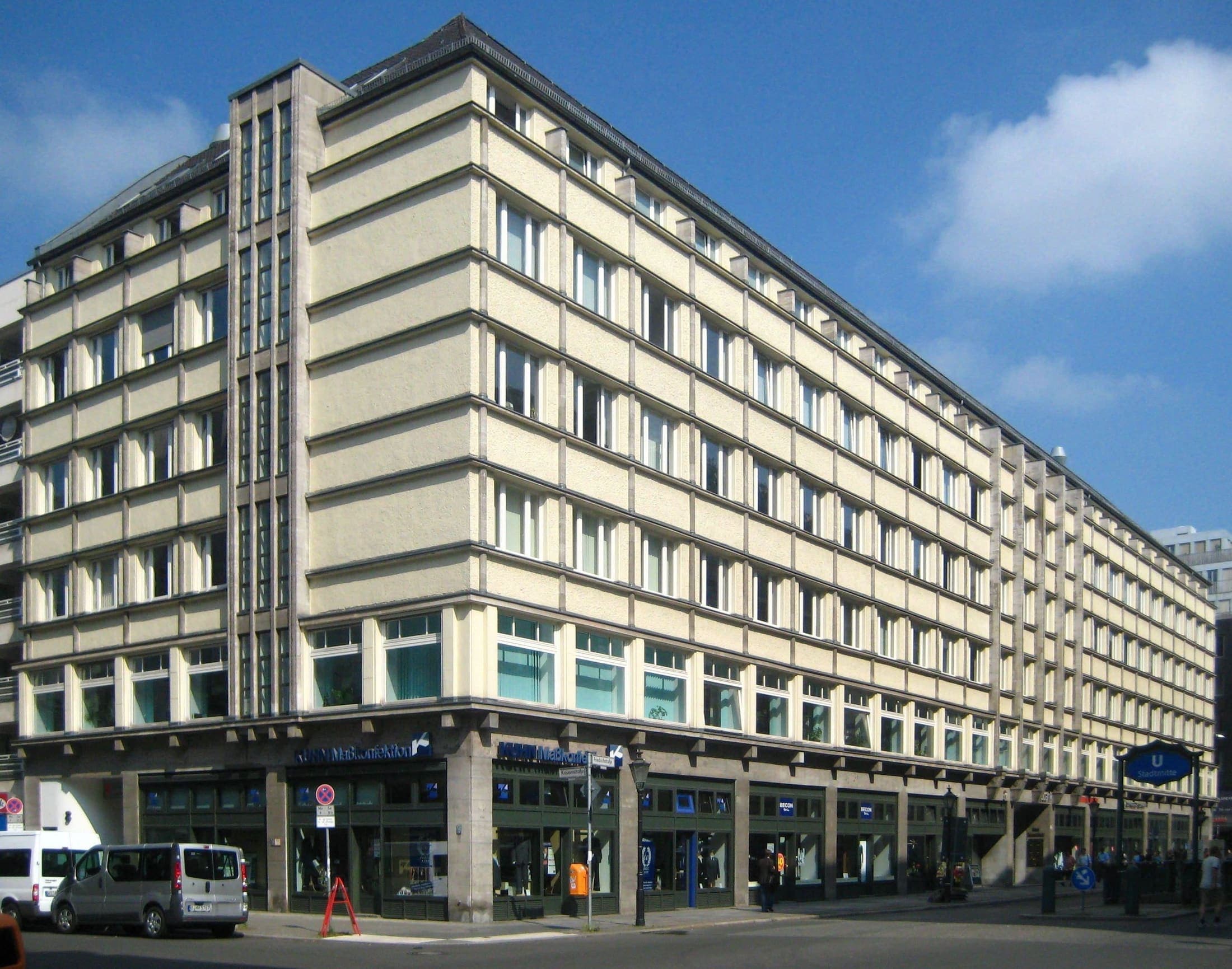
Photo credits: Friedrichstrasse business district, Berlin by Jörg Zägel, CC BY-SA 3.0. Via Wikimedia Commons. All image credits
