
Physics & Quantum Science in Germany
Why Study Physics & Quantum Science in Germany?
Germany is a global powerhouse in fundamental physics, photonics, condensed matter, and quantum technology (Quantentechnologie). Supported by federal initiatives like the German Quantum Agenda and massive regional research clusters such as the Munich Centre for Quantum Science and Technology - MCQST and QuantumValley Lower Saxony, Germany offers an unmatched ecosystem for quantum computing, quantum sensing, and experimental physics.
World-Famous Research Institutes:
Conduct research alongside premier scientific organizations, including the Max Planck Institutes, e.g., Quantum Optics in Garching, Physics of Complex Systems in Dresden, the Fraunhofer Society, Helmholtz Association, and Leibniz Institutes.
World-Class Public Universities:
Study at top-ranked institutions such as TU Munich, LMU Munich, Heidelberg University, KIT, RWTH Aachen, Friedrich Schiller University Jena, and Ulm University offering 100% English-taught Master's tracks.
Next-Generation Tech Integration:
Programs bridge quantum mechanics with superconducting qubits, ion traps, integrated photonics, quantum cryptography, quantum materials, and topological insulators.
High Career Demand & Mobility:
Physics and quantum engineering graduates are heavily recruited across semiconductor fabrication, quantum computing startups, aerospace, medical imaging, and quantitative finance, enjoying fast-tracked EU Blue Card pathways and starting salaries ranging from €45,000 to €70,000+ per year.
In-Demand Specializations
Degrees in Physics & Quantum Science in Germany allow you to focus on specialised theoretical, experimental, and engineering tracks:
Quantum Information & Quantum Computing:
Superconducting qubits, trapped-ion architectures, quantum algorithm development, error correction, and quantum software engineering.
Quantum Optics, Photonics & Lasers:
Ultrafast laser physics, integrated photonic circuits, single-photon sources, non-linear optics, and optical quantum sensing.
Condensed Matter & Quantum Materials:
Topological insulators, 2D materials (graphene), superconductivity, spintronics, and quantum nanostructures.
Particle, Nuclear & Astrophysics:
High-energy particle physics (CERN collaborations), dark matter detection, quantum field theory, and gravitational wave astronomy.
Quantum Engineering & Devices:
Cryogenic electronics, nanofabrication, quantum sensors for medical/geospatial imaging, and atomic clocks.
Key Admission Prerequisites
For Bachelor's Programs (3–3.5 Years):
School leaving credentials equivalent to the German Abitur (or completion of a 1-year Studienkolleg T-Kurs engineering/science foundation track).
For Master's Programs (1.5–2 Years):
A recognised 3-year or 4-year Bachelor's degree in Physics, Applied Physics, Quantum Engineering, Electrical Engineering, or Mathematics.
ECTS Module Alignment:
Admission committees strictly verify undergraduate credits in higher mathematics (multivariable calculus, linear algebra, differential equations), classical mechanics, electrodynamics, quantum mechanics I & II, thermodynamics, and experimental physics laboratories.
Language Proficiency:
English-Taught Programs:
IELTS Academic (6.5 to 7.0+) or TOEFL iBT (88 to 100+).
German-Taught Programs:
TestDaF (TDN 4 in all sections) or Goethe C1.
Fees Structure for Physics & Quantum Science
Let's plan your path to studying Physics & Quantum Science in Germany
From shortlisting the right physics-focused university to preparing a compelling application, our counsellors guide every step of your journey.
Frequently Asked Questions (FAQs)
Yes. Leading public universities offer fully English-taught M.Sc. programs, including TUM & LMU Munich (joint M.Sc. Quantum Science & Technology), Friedrich Schiller University Jena (M.Sc. Quantum Science & Technology), Ulm University (M.Sc. Quantum Engineering), RWTH Aachen, and University of Bonn.
Entry-level quantum software developers, optical engineers, semiconductor physicists, and quantum hardware designers in Germany earn starting salaries ranging from €45,000 to €70,000 per year. Candidates completing a PhD (Dr. rer. nat.) entering industrial quantum research or chip manufacturing such as ASML, Infineon, or IBM Research command starting packages of €80,000 – €95,000+ per year.
MCQST is a world-renowned Cluster of Excellence linking TU Munich, LMU Munich, the Max Planck Institute of Quantum Optics, and the Walther Meißner Institute. It provides Master's students with direct access to multimillion-euro quantum laboratories, research stipends, and international networking opportunities.
Yes. Specialised Quantum Engineering (M.Sc.) programs such as at Ulm University or TU Munich are specifically designed to bridge Electrical Engineering, Computer Science, and Physics graduates into quantum tech. However, applicants may be required to take 1 or 2 adaptation modules in quantum theory or solid-state physics.
Curricula emphasise industry-standard computational tools, including Python / Qiskit / Cirq / Pennylane (quantum circuit design and algorithms), C++ (high-performance physics simulations), COMSOL Multiphysics (nanophotonics and microwave cavities), MATLAB, Mathematica, and QuTiP (Quantum Toolbox in Python).
Top employers include:
• Semiconductor & Tech Multinationals: Infineon Technologies, ASML, IBM Research Europe, Bosch, Carl Zeiss, TRUMPF.
• Quantum Startups & Scale-ups: IQM Quantum Computers (Munich), planqc, Alpine Quantum Technologies, Terra Quantum.
• National Research Centres: Max Planck Society, Fraunhofer IAF/IOF, Deutsches Zentrum für Luft- und Raumfahrt (DLR Quantum Computing Initiative), Forschungszentrum Jülich.
While an M.Sc. in Quantum Engineering or Physics qualifies you for software engineering, chip fabrication process roles, laser assembly, and quantum optics engineering, holding a PhD is strongly preferred for lead experimental physicist positions, principal quantum architecture roles, and group leader positions in industrial R&D labs.
Yes. Non-EU international students can legally work up to 140 full days or 280 half days per calendar year. Working 10 to 20 hours per week as an academic research assistant (HiWi) in university quantum labs or Fraunhofer institutes lets you earn €16 to €25/hour while gaining direct experimental experience.
Quantum Physics (M.Sc.) focuses heavily on fundamental theoretical physics, quantum field theory, mathematical proofs, and basic physical research. Quantum Engineering (M.Sc.) focuses on practical implementation—building scalable qubit hardware, cryogenic systems, microwave control electronics, photonic chips, and software stacks.
Yes. Most German physics Master's programs consist of a 1-year taught course phase followed by a 1-year dedicated research phase. Students frequently conduct their 12-month Master's thesis research inside a Max Planck Institute (e.g., MPQ Garching) or Forschungszentrum Jülich, working directly alongside world-leading physicists.
Quantum photonics is a major pillar of German quantum technology. Universities integrate specialised modules in quantum optics, fibre optics, laser physics, and quantum key distribution (QKD) for secure communication systems.
Explore Other Fields of Study in Germany
Beyond Physics & Quantum Science, EduOptions Germany also guides students
into these high-growth fields.
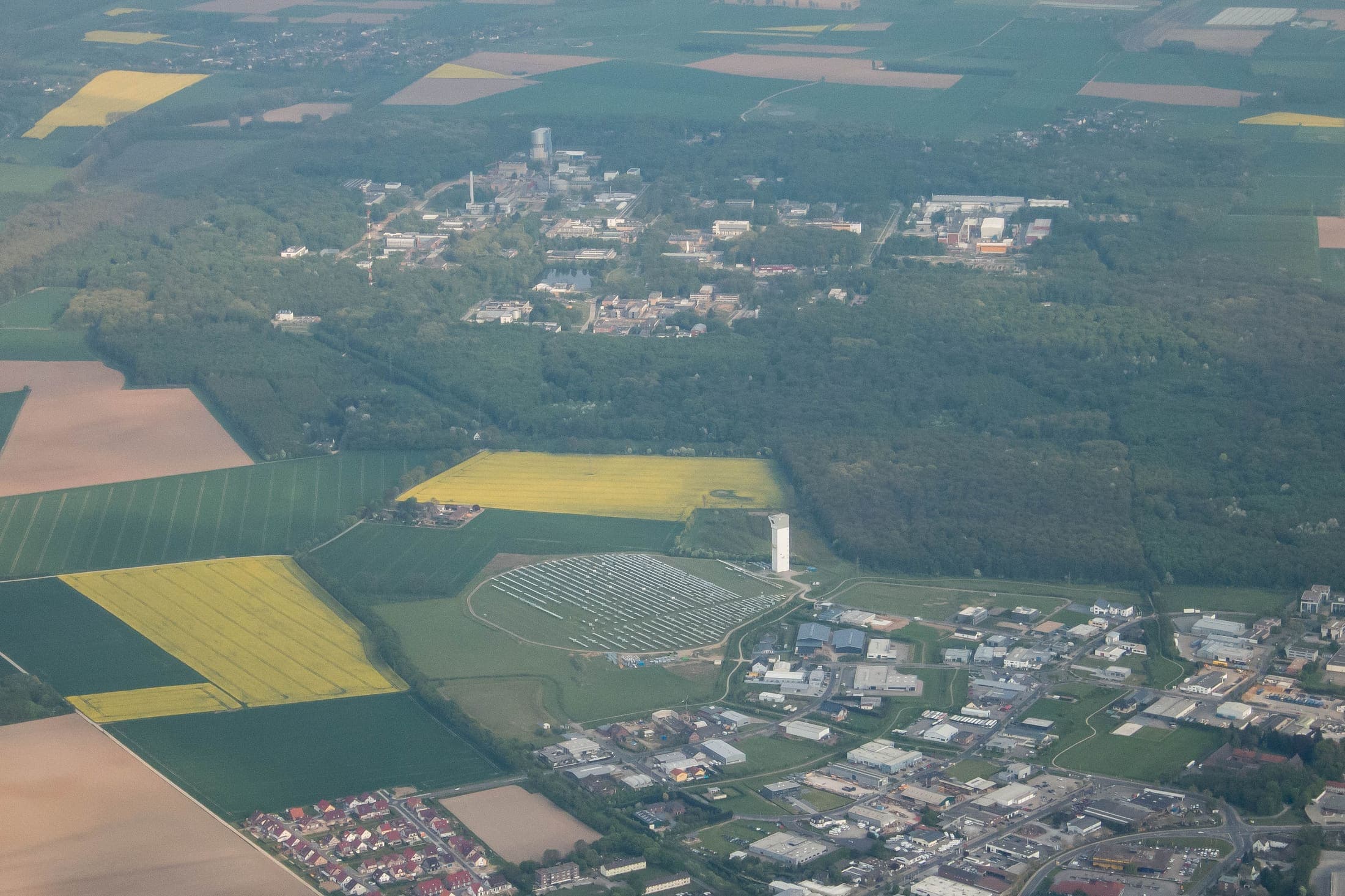
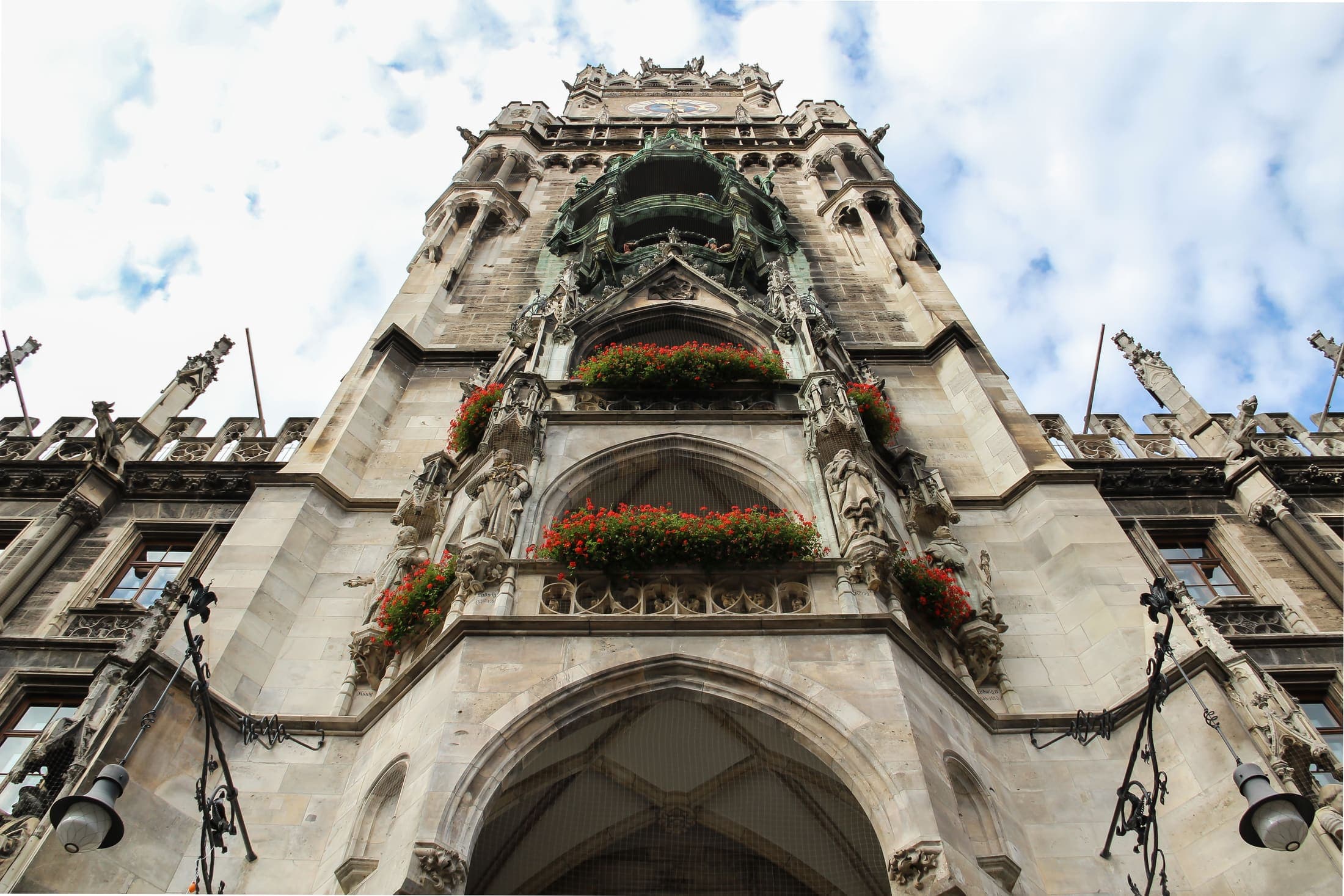
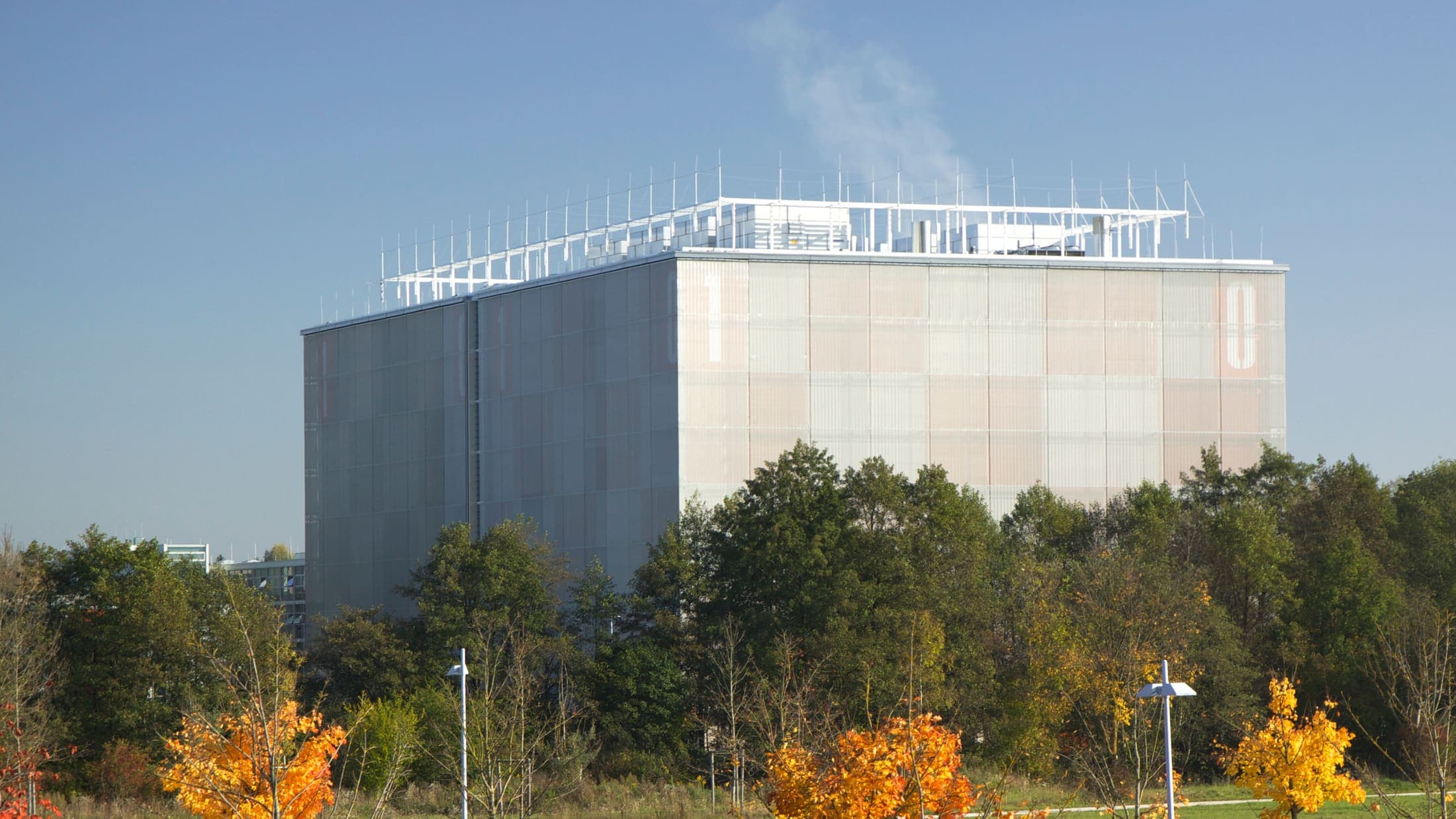
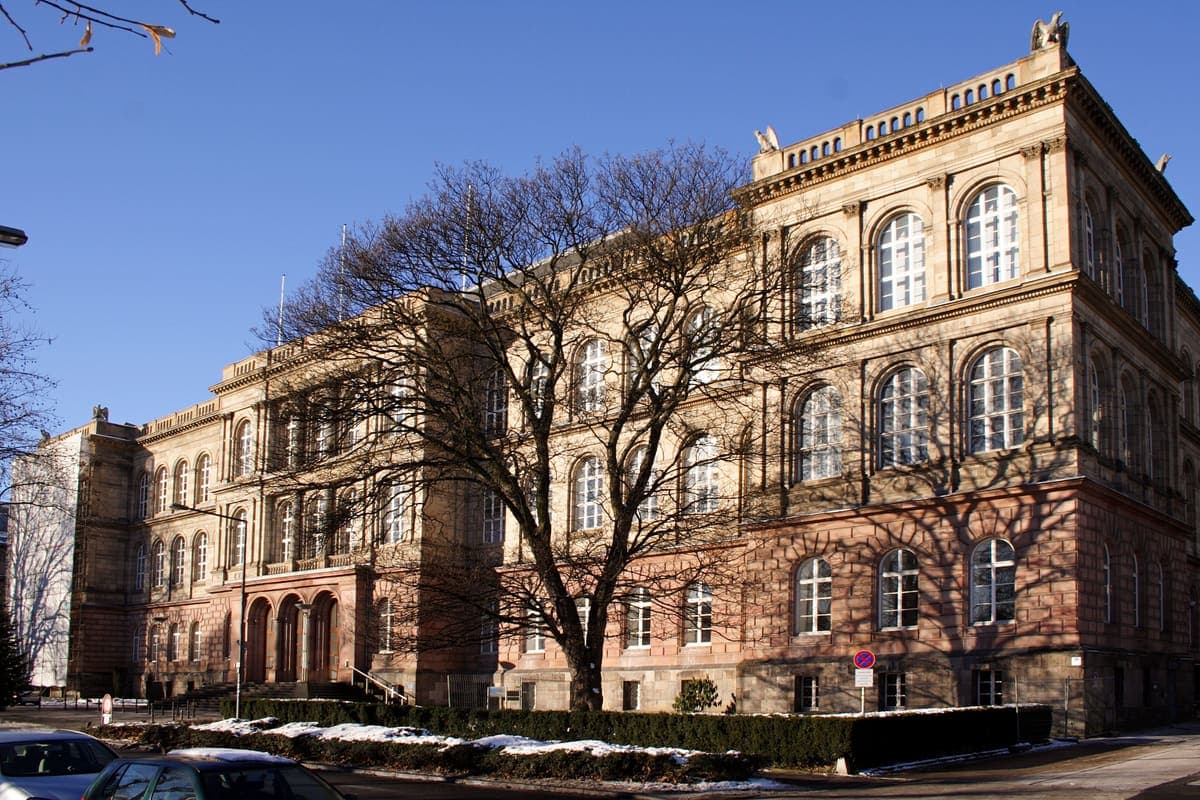
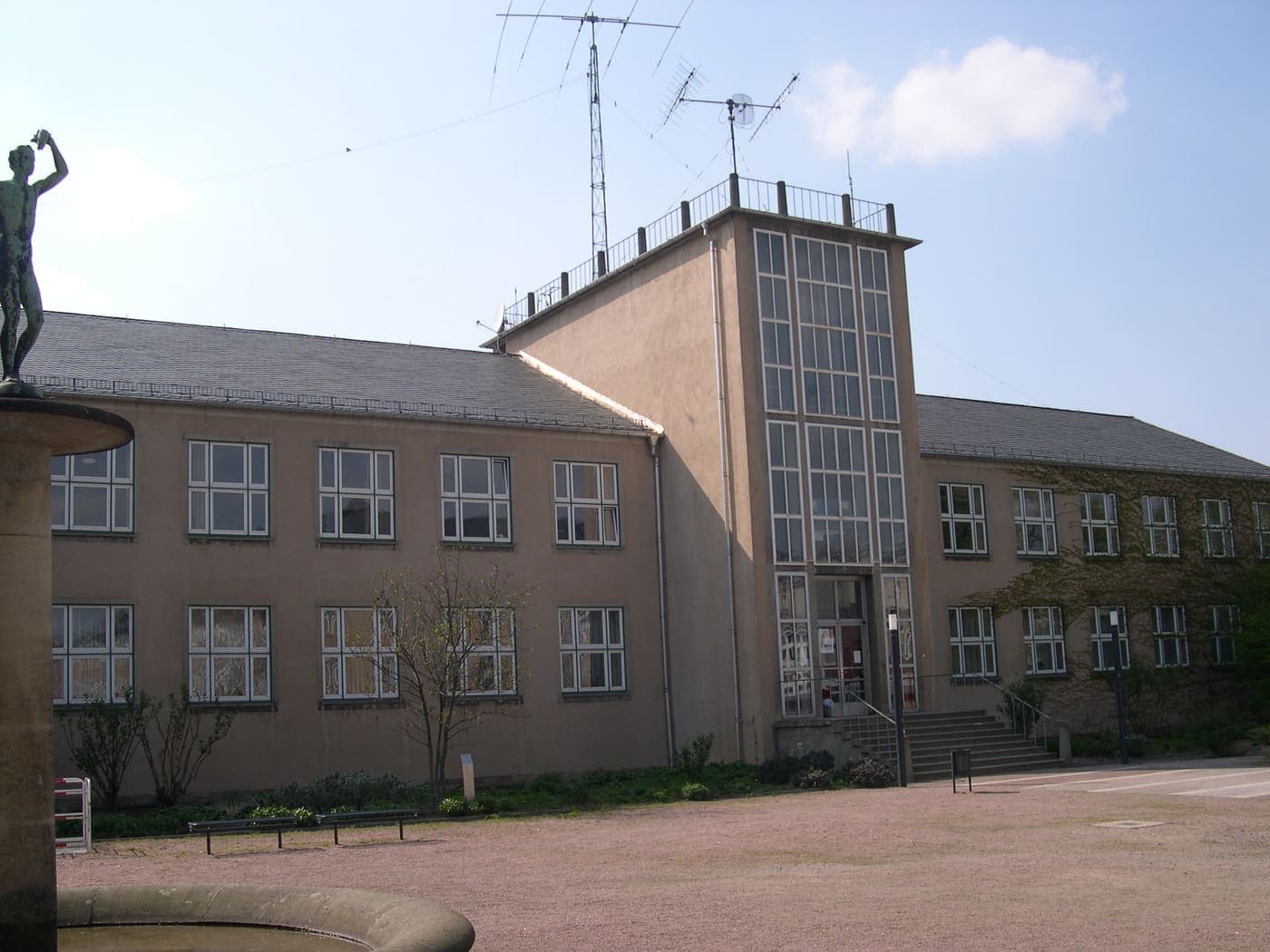
Photo credits: Forschungszentrum Jülich and solar tower by Achim Christoph, CC BY 3.0; Munich New Town Hall, Marienplatz by Dietmar Rabich, CC BY-SA 4.0; Leibniz Supercomputing Centre, Garching by Michael Brenner, CC BY-SA 3.0; RWTH Aachen main building by א (Aleph), CC BY-SA 2.5; TU Dresden, Barkhausen-Bau by Hutschi, CC BY-SA 3.0. Via Wikimedia Commons. All image credits
