
IU International University of Applied Sciences
Quick Snapshot & Key Statistics
| Official Name | IU International University of Applied Sciences (IU Internationale Hochschule) |
| Institution Type | State-Recognized Private University of Applied Sciences |
| Established | 1998 (Formerly IUBH School of Business and Management) |
| Legal Seat / HQ | Erfurt, Thuringia, Germany |
| Total Enrolment | 130,000+ Students (Germany's largest university) |
| International Student Body | Students from 170+ nations (~20%+ international) |
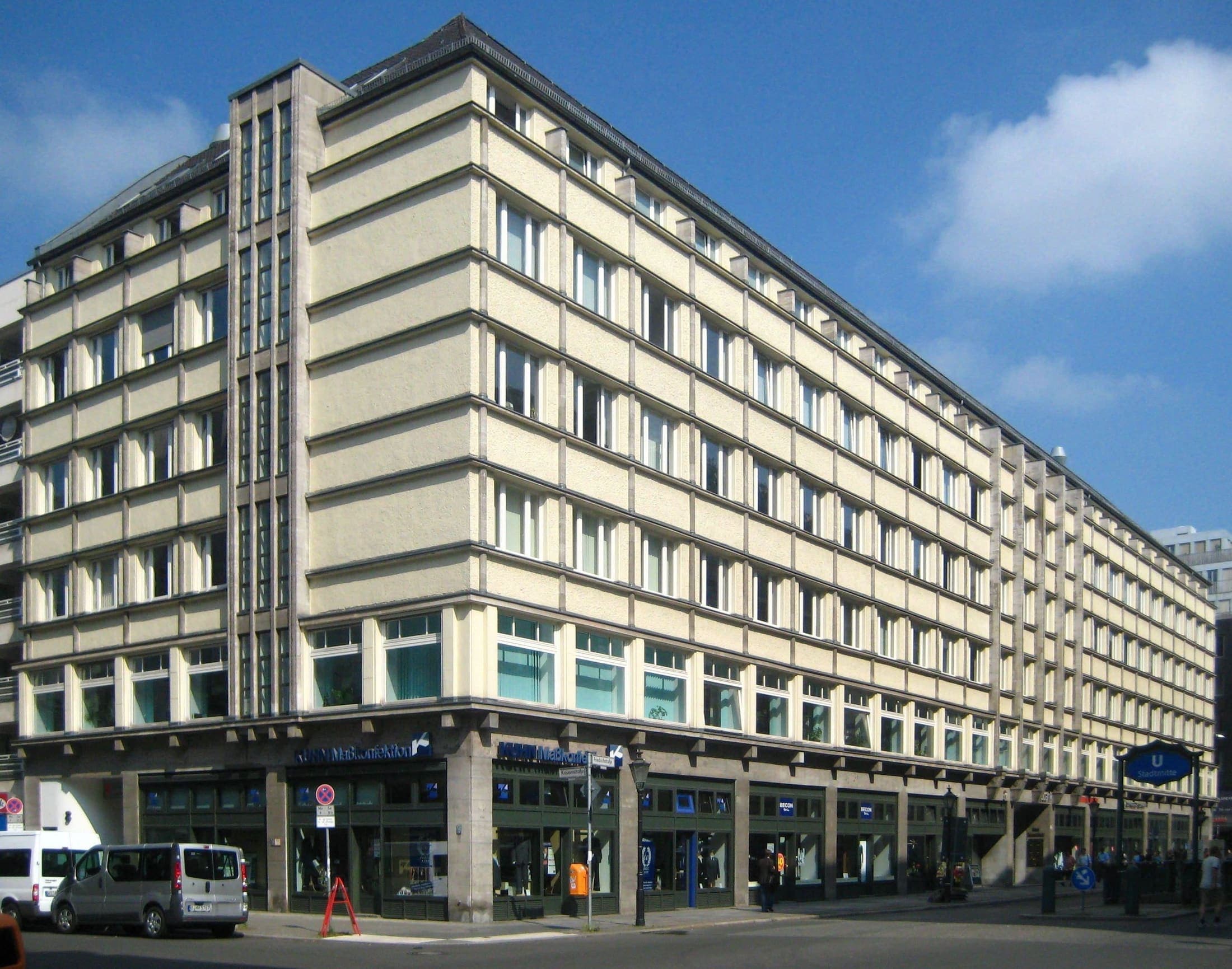
| Main On-Campus Hubs | Berlin Campus (Plaza Frankfurter Allee) & Bad Honnef / Cologne Hubs |
| Dual Study / Regional Network | 30+ campus centres across Germany (Munich, Hamburg, Frankfurt, Düsseldorf, etc.) |
| Accreditation | FIBAA, German Accreditation Council, Council of Sciences and Humanities (Wissenschaftsrat), WES Canada |
| Medium of Instruction | 100% English (International programs) & German (Dual Study / regional programs) |
| Tuition Fees (Distance/Online) | ~€259 to €450 / month (Depending on model, degree, and speed option) |
| Tuition Fees (On-Campus) | ~€6,000 to €13,000 / year (Varies by degree level and payment plan) |
| Post-Study Work Visa | Fully eligible for Germany's 18-Month Post-Study Work Permit (for on-campus graduates) |
About IU International University of Applied Sciences
Founded in 1998, IU International University of Applied Sciences (IU) is Germany's largest state-recognised private university. IU has pioneered a flexible higher education ecosystem in Europe, combining on-campus study, 100% online distance learning, and hybrid dual-study models.
IU degrees are fully accredited under German federal standards (FIBAA, Wissenschaftsrat, and the German Accreditation Council), ensuring global equivalence and seamless qualification for Germany's 18-month post-study work visa. IU maintains corporate training partnerships with over 15,000 companies, including Microsoft, Lufthansa, KPMG, Salesforce, and BMW, embedding industry-driven certifications and practical career preparation directly into its curricula.
- Maximum Flexibility: Switch seamlessly between 100% online study, hybrid lectures, and traditional on-campus semesters.
- No Admission Cutoffs (NC-Free): Open admission criteria based on academic prerequisites rather than restrictive grade quotas.
- Rolling Intakes Year-Round: Online programs allow students to start at any time of the year; on-campus programs offer multiple annual intakes.
- Generous Recognition of Prior Learning: Up to 50% of tuition can be saved by converting relevant prior university credits, work experience, or vocational training into ECTS points.
Study Formats & Campus Infrastructure
IU offers three distinct study tracks depending on lifestyle and career goals:
- Berlin Campus (Plaza Frankfurter Allee): Located in central Berlin. Serves as a hub for international undergraduate and postgraduate students in Computer Science, Data Science, AI, Business, and Engineering.
- Bad Honnef / Cologne Hub: A historic university setting near Bonn/Cologne featuring state-of-the-art seminar rooms, housing options, and hospitality/management study facilities.
- Distance Learning Virtual Campus: Powered by IU's proprietary learning app and AI learning assistant (Syntea), enabling students worldwide to access lectures and take proctored exams 24/7.
Academic Programs & Degree Options
IU offers over 200 state-accredited Bachelor's, Master's, and MBA degree programs across various disciplines:
Popular Undergraduate Degrees (B.Sc. / B.A. — 3 Years / 180 ECTS)
- B.Sc. Computer Science
- B.Sc. Data Science / Artificial Intelligence
- B.A. Business Administration
- B.Sc. Industrial Engineering & Management
- B.A. Digital Business
Popular Postgraduate Degrees (M.Sc. / M.A. / MBA — 1 to 2 Years)
- M.Sc. Computer Science / AI
- M.Sc. Data Science
- M.A. International Management
- M.Sc. Engineering Management
- MBA (Master of Business Administration): Available with specialised tracks in Supply Chain Management, Artificial Intelligence, IT Management, Finance, and Healthcare.
Language Requirements
Language prerequisites vary depending on the chosen study track and language of instruction:
German-Taught Programs (Dual Study Tracks)
- For programs taught in German, applicants must demonstrate B2 to C1 CEFR German proficiency (e.g., TestDaF 4x4, telc C1 Hochschule, Goethe C1, or DSH-2).
English-Taught Programs (International Campus & Online)
Applicants must provide certified proof of English proficiency at the B2 CEFR level:
| Exam / Certificate | Minimum Requirement |
|---|---|
| IELTS Academic | Overall score 6.0 |
| TOEFL iBT | Minimum 80 points |
| Duolingo English Test | 105 points or higher |
| Cambridge English | B2 First (FCE) or score of 169+ |
| Prior Medium of Instruction (MOI) | Exempt if secondary school or a Bachelor's degree was taught 100% in English in an English-speaking country. |
Fee Structure & Living Expenses
1. Tuition Fees by Study Format
| Study Format | Degree Level | Payment Model | Estimated Cost |
|---|---|---|---|
| Distance Learning (100% Online) | Bachelor's / Master's / MBA | Monthly Plan | ~€259 to €450 / month (Depending on model: Full-time vs. Part-time) |
| On-Campus (Berlin / Bad Honnef) | Bachelor's (3 Years) | Semester / Annual | ~€18,000 – €20,900 (Total course fee) |
| On-Campus (Berlin / Bad Honnef) | Master's / MBA (1–2 Years) | Semester / Annual | ~€11,000 – €16,600 (Total course fee) |
| Dual Study (Duales Studium) | Bachelor's | Partner-Funded | €0 Tuition (Fully paid by partner company) |
2. Estimated Living Costs (On-Campus Students in Berlin)
International students studying on-campus in Germany must account for living expenses backed by the official Blocked Account (Sperrkonto):
- German Blocked Account Requirement: €11,904 per year (~€992 per month).
- Average Monthly Student Budget in Berlin: €1,100 – €1,400 per month.
Let's plan your path to studying at IU International University of Applied Sciences
From matching your profile to the right study format to preparing a compelling application, our counsellors guide every step of your journey.
Frequently Asked Questions (FAQs)
Yes. IU is a fully state-recognised (Staatlich anerkannt) private university accredited by the German Council of Sciences and Humanities (Wissenschaftsrat) and FIBAA. Its degrees adhere to the European Higher Education Area (EHEA) standards, granting full international equivalence, eligibility for public-sector roles, and qualifying graduates for PhD admission.
No. Under German immigration law, the 18-month Post-Study Work Permit requires physical residence in Germany under a student visa. To qualify, international students must study on-campus at IU (e.g., in Berlin or Bad Honnef) for at least their final semester/year.
IU utilises an on-demand, online proctoring system. Distance learning students can take their written examinations at any time of day or night, 365 days a year, from home. The exam is supervised live via webcam and screen monitoring by certified proctors.
Syntea is IU's proprietary AI-powered learning assistant integrated into the online campus. Syntea provides instant 24/7 answers to curriculum questions, creates personalized exam prep quizzes, tests concept recall, and adapts study materials to individual learning speeds.
IU offers a formal prior learning assessment process. Applicants can submit previous university transcripts, vocational training certificates, or documented professional work experience to earn ECTS credits. Recognising prior achievements reduces the number of modules required to graduate, saving both time and tuition fees up to €30 per recognised ECTS point.
Yes. IU offers a flexible hybrid transition model. International students can start their degree online from their home country and later transfer to an on-campus format in Germany (e.g., Berlin or Bad Honnef) to experience campus life and qualify for the German post-study work visa.
In the Dual Study model, students alternate between university lectures (2 days/week) and paid practical work inside a partner firm (3 days/week). The partner company covers 100% of the student's tuition fees and pays a monthly stipend. Because Dual Study tracks are taught in German and require working directly inside German companies, applicants must possess B2/C1 German proficiency.
100% Online Distance Learning: No deadlines; students can apply and start on any day of the year. On-Campus Programs: Multiple intakes per year (e.g., April and October). Applicants needing a German student visa should apply at least 2–3 months before start dates.
60 ECTS Master's (1 Year): Requires a 240 ECTS Bachelor's degree (4-year degree) plus relevant work experience. 90 ECTS Master's / MBA (1.5 Years): Requires a 210 ECTS Bachelor's degree or a 180 ECTS degree plus documented work experience. 120 ECTS Master's (2 Years): Requires a standard 180 ECTS Bachelor's degree (3-year degree) from a recognised university.
No. GMAT or GRE scores are not mandatory for admission to IU's MBA or Master's programs. Admission is evaluated based on academic transcripts, English proficiency, and relevant professional work experience.
Yes. Non-EU international students holding a German student visa are legally permitted to work up to 140 full days (or 280 half days) per calendar year. In major cities like Berlin, students frequently secure Werkstudent (working student) roles in IT, business analytics, marketing, or logistics, earning €15 to €22+ per hour.
IU provides an internal career portal (IU JobTeaser), virtual job fairs, personalised resume reviews, and direct networking access to over 15,000 corporate partner companies. Over 90% of IU graduates secure full-time employment within three months of completing their studies.
If a student fails an exam, IU allows up to two retake attempts per module. Distance learning students can reschedule their retake on-demand at any time, whereas on-campus students register for the next available examination block.
IU offers three flexible time models for distance learning: Full-Time (standard pace, e.g., 36 months for Bachelor's / 12–24 months for Master's, with standard monthly tuition), Part-Time I (extended duration with lower monthly payments), and Part-Time II (maximum extended duration with the lowest monthly payment structure).
No. German proficiency is not required for admission or graduation in English-taught programs. However, IU provides free introductory German language courses to help international students navigate daily life in Germany and improve their post-graduation employability in the local market.
Explore Other Universities in Germany
Photo credits: Friedrichstrasse business district, Berlin by Jörg Zägel, CC BY-SA 3.0; Cologne high-rise skyline by G. Friedrich, CC BY 3.0. Via Wikimedia Commons. All image credits
