
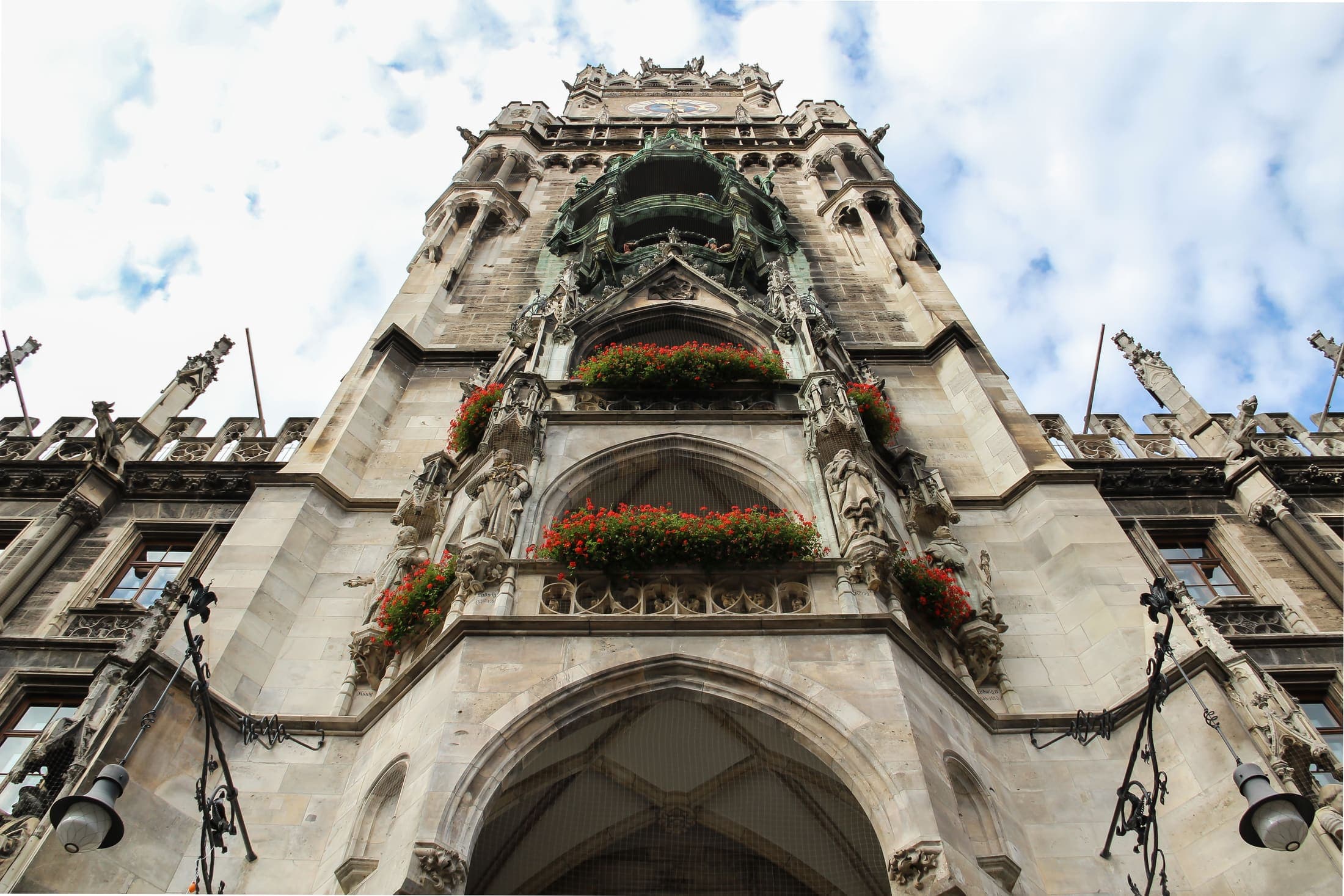
New European College (NEC), Munich
Quick Snapshot & Key Statistics
| Official Name | New European College (NEC) |
| Institution Type | Private International Business School |
| Established | 2014 (Munich, Bavaria, Germany) |
| Degree Awarding Partner | Wittenborg University of Applied Sciences (Netherlands) |
| Accreditation & State Recognition | NVAO (Dutch-Flemish Accreditation Organization) & FIBAA accredited; state-recognized EU degrees |
| Medium of Instruction | 100% English across all degree levels |
| Location | Wolfratshauser Straße 84, Munich, Bavaria, Germany |
| Class Size | Small interactive cohorts (Capped at 25–30 students per class) |
| Academic Intakes | 6 Intakes per year (Block-based academic model) |
| Tuition Fees | ~€9,800 / year (BBA) | ~€12,200 / year (MBM & MBA) |
| Post-Study Work Visa | Fully eligible for Germany's 18-Month Post-Study Work Permit |
About New European College (NEC)
Located in Munich—Germany's economic locomotive and home to global DAX corporations like BMW, Siemens, Allianz, and tech hubs for Google and Apple—New European College (NEC) is an international business school.
NEC operates in direct academic partnership with Wittenborg University of Applied Sciences (WUAS), a state-recognised Dutch institution. Through this partnership, all academic degrees (Bachelor, Master of Business Management, and MBA) awarded to NEC graduates carry double European recognition: FIBAA accreditation and NVAO accreditation.
- Personalised Interactive Learning: Classes are capped at 25 students, ensuring direct project mentoring, interactive case studies, and faculty engagement.
- 6 Academic Intakes Per Year: A flexible block-system model allows students to commence their studies at six distinct entry points throughout the academic year.
- Applied & Project-Based: Curricula incorporate mandatory industry project weeks, real-world corporate consulting briefs, and guest lectures from Munich executives.
- Munich Employment Advantage: Positioned in one of Europe's top markets for Werkstudent (working student) roles, corporate internships, and post-graduation recruitment.
Location & Campus Environment
NEC's campus is located in southern Munich along Wolfratshauser Straße in the Isar River area.
- Address: Wolfratshauser Straße 84, 81379 Munich, Germany.
- Campus Infrastructure: Modern lecture halls with interactive digital media, quiet study rooms, high-speed 24/7 digital library access, an outdoor campus garden, and student lounge spaces.
Conditional Admission & Preparation Pathways
If an applicant meets all academic criteria but falls short of the direct English entry scores, NEC offers conditional acceptance paired with preparatory programs:
Undergraduate Applicants (IELTS 5.0 – 5.5)
- Enrols in NEC's Business & English Preparation Program (1 Semester).
- Focuses on academic business writing, reading, and IELTS exam preparation. Upon achieving an IELTS 6.0 standard, the student transitions into the BBA degree track.
Postgraduate Applicants (IELTS 6.0 / Non-Business Bachelor's)
- Enrols in the 1-Semester Pre-Master Program.
- Provides necessary modules in economics, finance, and marketing for non-business degree holders or students upgrading their English proficiency to IELTS 6.5.
Academic Programs & Degree Options
All programs are taught in English and lead to officially accredited degrees conferred by Wittenborg University of Applied Sciences.
1. Foundation & Pathway Programs
- Business & English Preparation Program (1 Semester): Designed for students needing to upgrade their academic English from IELTS 5.0/5.5 to the 6.0 entry standard.
- Pre-Master's Program (1 Semester): Designed for applicants holding a Bachelor's degree in a non-business discipline (e.g., engineering, computer science, humanities) or those upgrading English proficiency from 6.0 to 6.5.
2. Bachelor of Business Administration (BBA) — 3 Years (6 Semesters / 240 ECTS)
- BBA in Financial Services Management
- BBA in Marketing & Communication
- BBA in Economics & Management
- BBA in Entrepreneurship & Innovation
3. Master of Business Management (MBM) — 1.5 Years (3 Semesters / 90 ECTS)
- MBM in Digital Marketing & Communication
- MBM in Entrepreneurship & Innovation
- MBM in Finance
4. Master of Business Administration (MBA) — 1.5 Years (3 Semesters / 90 ECTS)
- MBA in International Management
- MBA in Entrepreneurship & Innovation
- MBA in Finance
Language Requirements
All academic degree programs at NEC are delivered 100% in English. German language proficiency is not required for admission or program completion.
German Language Policy
- Admission Requirement: None / Not Required.
- On-Campus Offerings: NEC provides optional introductory German language modules to help international students navigate daily life in Munich, build network connections, and secure local Werkstudent positions.
English Language Proficiency Cutoffs
| Exam / Qualification | Undergraduate (BBA) | Postgraduate (MBM & MBA) |
|---|---|---|
| IELTS Academic | Minimum 6.0 overall (no band below 5.5) | Minimum 6.5 overall |
| TOEFL iBT | Minimum 80 points (Wittenborg Code: 4889) | Minimum 90 points (Wittenborg Code: 4889) |
| Cambridge English | B2 First (FCE) / C1 Advanced (CAE) | C1 Advanced (CAE) / C2 Proficiency (CPE) |
| PTE Academic | Minimum 58–60 points | Minimum 65 points |
Fee Structure & Estimated Living Expenses
1. Program Tuition & Administrative Fees
| Program Level | Duration | Annual Tuition Fee | Total Tuition Cost |
|---|---|---|---|
| Business & English Preparation Program | 1 Semester | N/A | ~€5,600 / semester |
| Pre-Master's Program | 1 Semester | N/A | ~€6,100 / semester |
| Bachelor of Business Administration (BBA) | 3 Years (6 Semesters) | ~€9,800 / year (€6,750 / semester) | ~€29,400 total |
| Master of Business Management (MBM) | 1.5 Years (3 Semesters) | ~€12,200 / year | ~€18,300 total |
| Master of Business Administration (MBA) | 1.5 Years (3 Semesters) | ~€12,200 / year (€7,300 / semester) | ~€18,300 total |
Mandatory One-Time Administrative Charges
- Application Fee: €200 (non-refundable)
- Enrolment Fee: €650 (one-time, non-refundable)
- Advanced Tuition Payment: €3,000 (credited toward the first two semesters of tuition).
2. Estimated Monthly Living Expenses (Munich)
International non-EU students must account for living expenses backed by Germany's official Blocked Account requirement (Sperrkonto):
- German Blocked Account Requirement: €11,904 per year (~€992 per month).
- Average Monthly Student Budget in Munich: €1,100 – €1,400 per month.
Let's plan your path to studying at New European College (NEC)
From matching your profile to the right programme to preparing a compelling application, our counsellors guide every step of your journey.
Frequently Asked Questions (FAQs)
NEC operates as an international delivery campus in partnership with Wittenborg University of Applied Sciences, a state-recognised public university of applied sciences in the Netherlands. Degrees are accredited under NVAO (Dutch-Flemish Accreditation Organisation) and FIBAA, providing graduates with legally valid European degrees recognised across Germany and globally.
Yes. Because degrees awarded at NEC carry state recognition within the EU higher education framework, non-EU international graduates are legally eligible to apply for Germany's 18-month Post-Study Work Permit (Residence Permit for Job-Seeking Graduates) upon completion.
Instead of rigid 6-month semesters, NEC structures its academic year into 6 concentrated block periods. Students focus on targeted modules in 6-week blocks, allowing international students to enrol and start classes at six distinct start dates per year.
The MBM requires a Bachelor's degree (in any field or via Pre-Master) but does not require prior professional work experience. The MBA mandates a completed Bachelor's degree plus professional work experience (typically 2–3 years).
Yes. Applicants with a non-business Bachelor's degree qualify for admission by completing NEC's 1-semester Pre-Master program. This foundation semester provides fundamental credits in accounting, economics, marketing, and business strategy.
Yes. Under German regulations, non-EU international students can work up to 140 full days (or 280 half days) per calendar year. In Munich, students secure Werkstudent positions in tech, marketing, finance, or operations, earning competitive hourly wages between €15 and €22+ per hour.
Bachelor (BBA): Minimum IELTS Academic 6.0 (no sub-skill below 5.5). Master (MBM & MBA): Minimum IELTS Academic 6.5. (Applicants with lower scores enter via the Business Preparation or Pre-Master pathway).
GMAT/GRE scores are not mandatory for standard applicants with a solid academic record. GMAT scores are only requested if an applicant's foreign academic GPA falls significantly below German equivalency standards.
NEC caps all lectures and seminar groups at 25 to 30 students per class. Unlike massive public lecture halls, NEC utilises a seminar model where students participate directly in discussions, group presentations, and case analysis.
NEC provides Early Bird Discounts alongside merit-based partial scholarships, typically 10% to 30% off tuition awarded based on academic performance, motivation, and interview performance during the assessment process.
Online Application: Submit transcripts, CV, motivation statement, recommendations, and pay the €200 application fee online. Document Verification: Admissions verifies foreign credential equivalency. Assessment Interview: A 30-minute online interview with an Admissions Officer evaluating language skills, career goals, and program fit. Admissions Decision: Official offer letter issued within 1–2 weeks.
Upon receiving admission and securing their place, NEC's Student Services team provides admitted students with housing guides, referral codes for private student residences such as Campus Viva and Student One, and access to internal student housing boards.
If an international student receives an official visa refusal from the German Embassy/Consulate after an appeal, the advanced tuition payment and enrolment fee may be refunded (excluding a €650 processing fee) upon submission of the official refusal letter.
Project Weeks are practical study blocks integrated into each academic year. Regular lectures pause, and student teams work intensively on corporate briefs from Munich companies, developing business strategies that are presented directly to industry representatives.
Explore Other Universities in Germany
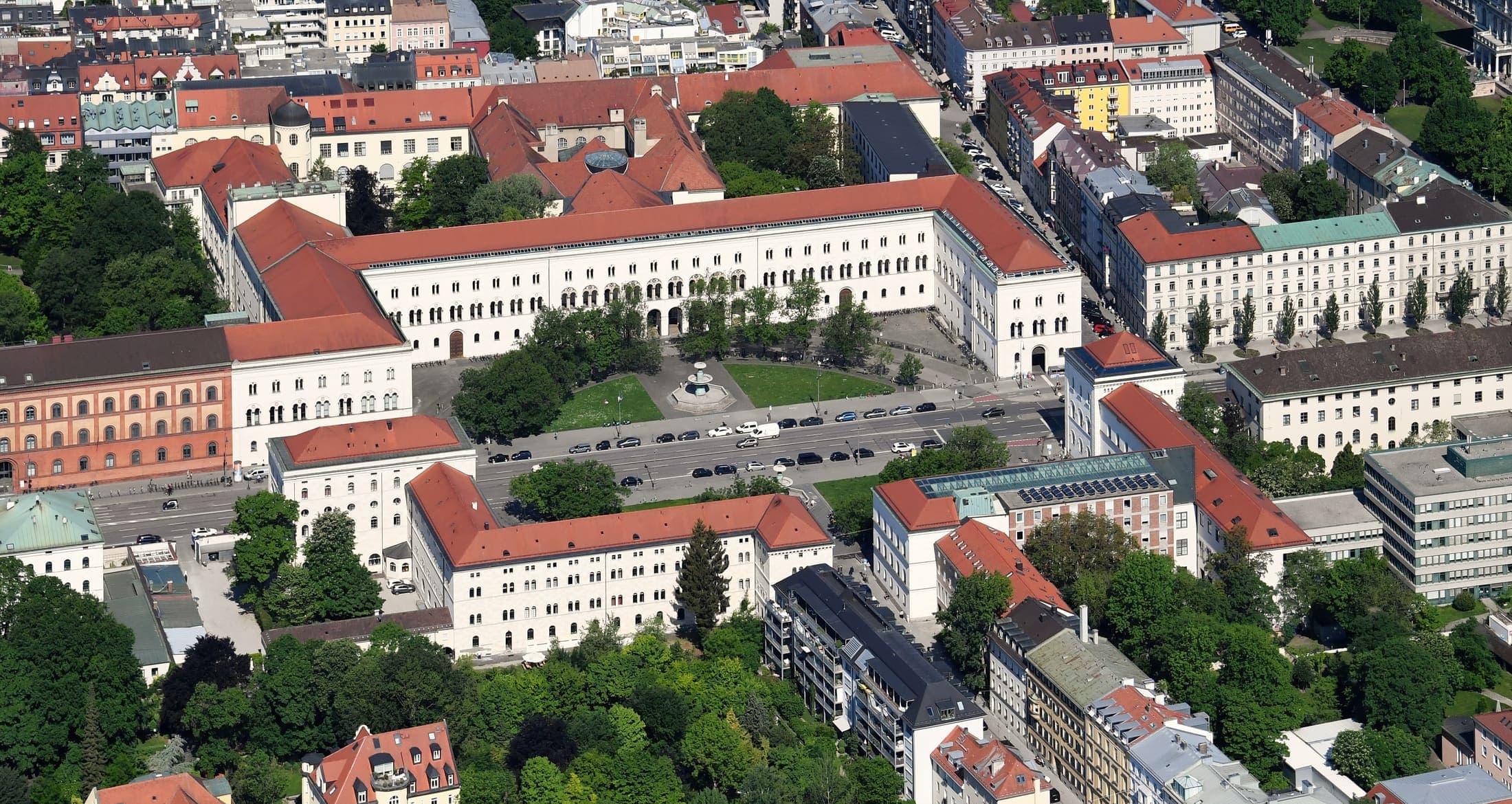
Photo credits: Munich New Town Hall, Marienplatz by Dietmar Rabich, CC BY-SA 4.0; LMU Munich (aerial) by Carsten Steger, CC BY-SA 4.0. Via Wikimedia Commons. All image credits
