
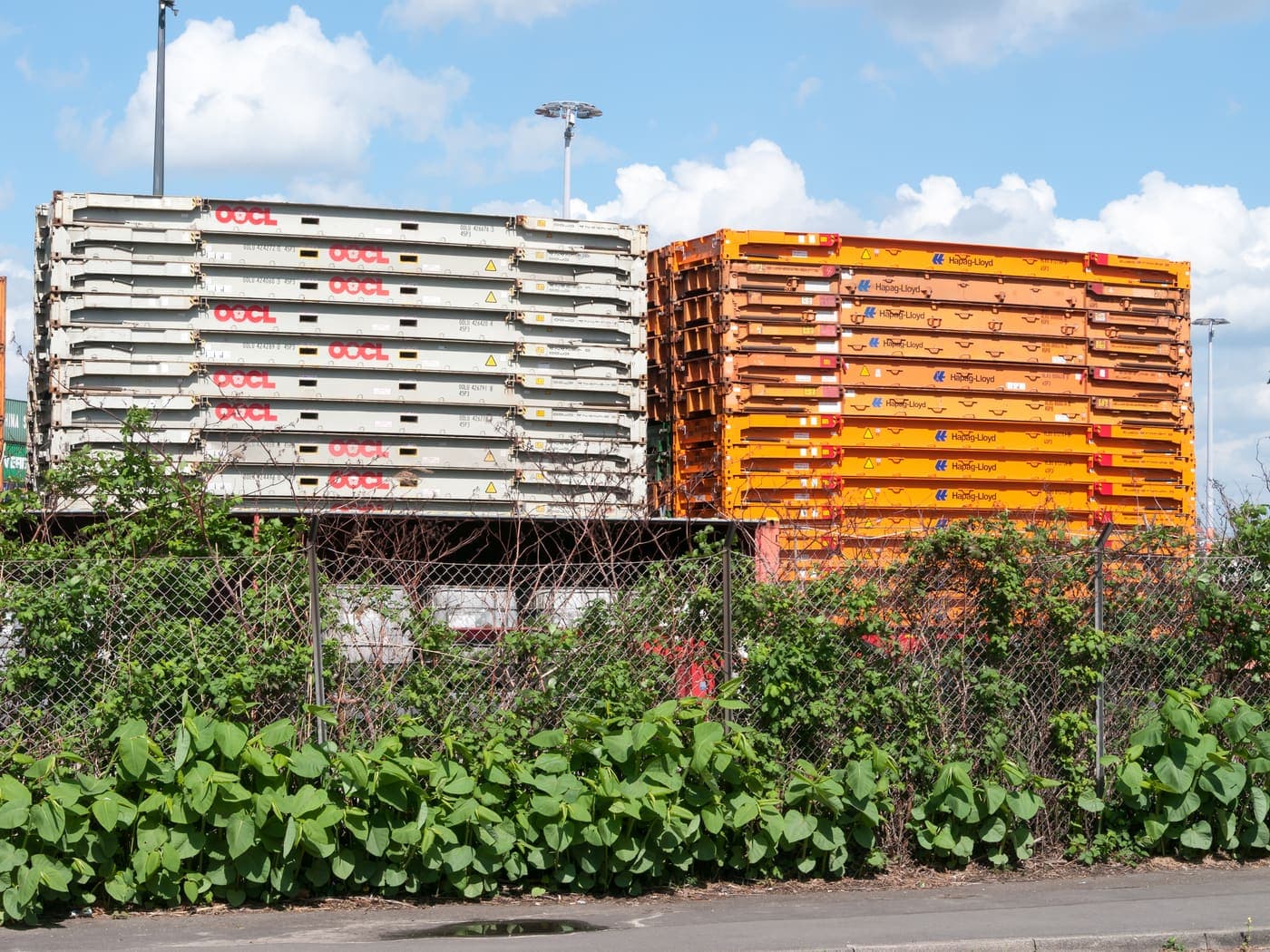
SRH University – Campus Hamburg
Quick Snapshot & Key Statistics
| Official Campus Name | SRH University — Campus Hamburg |
| Campus Address | Domstraße 21, 20095 Hamburg, Germany (Central Hamburg / Altstadt District) |
| Location Context | Situated in Germany's major maritime, logistics, and digital trade capital |
| Institutional Affiliation | Part of the state-recognised SRH University System (SRH Higher Education network) |
| Core Specializations | Supply Chain & Logistics, Applied Data Science & Analytics, International Business, and Computer Science Engineering |
| Teaching Pedagogy | The CORE Principle (5-week project-based block system with continuous assessment) |
| Medium of Instruction | 100% English across international degree tracks (with optional German modules) |
| Transit Access | Minutes from Jungfernstieg and Mönckebergstraße U/S-Bahn stations and Hamburg Central Station (Hamburg Hbf) |
| Tuition Fees (Undergrad) | ~€500 – €650 / month (~€3,000 – €3,900 / semester; ~€6,000 – €7,800 / year) |
| Tuition Fees (Postgrad) | ~€650 – €780 / month (~€3,900 – €4,680 / semester; ~€10,800 – €14,000 / year) |
About the Hamburg Campus
The SRH Hamburg Campus serves as the northern German regional hub of SRH University. Located in the heart of Hamburg—Europe's second-largest port city and a global trade, logistics, and tech centre—the campus specialises in supply chain management, data analytics, software engineering, and international business administration.
Operating under the non-profit SRH Educational Foundation (Stiftung), tuition fees are directly reinvested into modern teaching facilities, analytics suites, logistics software, and dedicated student career services. The Hamburg campus operates entirely on The CORE Principle, replacing traditional lectures and massive end-of-term exam periods with interactive 5-week learning blocks focused on practical real-world projects.
On-Campus Specialisations & Infrastructure
Located at Domstraße 21 in central Hamburg, the campus provides hands-on technical and management learning facilities:
- Supply Chain & Analytics Workspaces: ERP simulation suites (SAP), digital twin modelling software, data analytics platforms, and predictive supply chain modelling tools.
- Computer Science & Tech Labs: High-performance computing labs, cloud engineering setups, software development workshops, and collaborative project rooms.
- Co-Working & Study Commons: Flexible team-study spaces, digital research databases, presentation suites, and communal tech lounges.
- Student Services & Career Hub: On-site International Office, personal career advisory desks, visa guidance, and corporate networking platforms linking directly to Hamburg's maritime and tech industries.
Admission Requirements
Admissions at the Hamburg campus evaluate academic credentials, English language proficiency, analytical logic, and candidate motivation through a direct document review and selection interview.
1. Undergraduate Requirements (Bachelor's Degrees)
- Secondary School Certificate: High School Diploma, A-Levels, IB Diploma, German Abitur, or foreign 12th Grade Mark Sheets recognised as a German university entrance qualification (Hochschulzugangsberechtigung).
- Academic Threshold: Minimum aggregate passing grade equivalent to a German GPA cutoff (~3.0 / 4.0 or ~60%+ in core subjects).
- Application Documents: Certified high school mark sheets, updated CV, copy of valid passport, and a Statement of Purpose / Motivation Letter (300–500 words).
2. Postgraduate Requirements (Master's & MBA Degrees)
- Bachelor's Degree: Completed undergraduate degree (180 ECTS for 2-year tracks / 210 ECTS for 1.5-year tracks) in business, engineering, computer science, logistics, or data science from an accredited university.
- Work Experience (For MBA Programs Only): Minimum 1 to 2 years of post-graduation full-time professional work experience.
- Standardised Testing: GMAT or GRE scores are NOT required.
- APS Certificate: Mandatory for international applicants holding prior university credentials from India, China, or Vietnam.
- Application Documents: University transcripts, degree certificates, CV, Motivation Letter, and professional/academic recommendation letters.
Popular Academic Programs
Undergraduate Courses (Bachelor's Degrees — 3 to 3.5 Years)
1. Supply Chain & Business Management
- B.Sc. Supply Chain Management
- B.A. International Business Administration
2. Computer Science & Software
- B.Sc. Applied Computer Science
Postgraduate Courses (Master's & MBA — 1.5 to 2 Years)
1. Supply Chain, Logistics & Data Analytics
- M.Sc. Supply Chain Management
- M.Sc. Applied Data Science and Analytics
- M.Sc. Business Analytics
2. Tech Engineering & MBA Leadership
- M.Sc. Computer Science - Focus on Big Data & Software
- MBA in International Management / Supply Chain
Language Requirements
All international degree programs at SRH Hamburg are taught 100% in English. German language proficiency is not required for admission.
English Language Proficiency Cutoffs
| Exam / Qualification | Minimum Required Cutoff |
|---|---|
| IELTS Academic / Indicator | Overall 6.5 (min. 6.0 in sub-scores) |
| TOEFL iBT / Home Edition | Minimum 80 – 87 points |
| Duolingo Certificate | 110 points |
| Pearson English Test Academic (PTE-A) | 59 points |
| Cambridge English | B2 First (Grade A/B) / CAE (Grade A, B, or C) / CPE |
| TOEIC | 785 points |
Fee Structure & Estimated Living Expenses
1. Program Tuition Fees
| Degree Level | Standard Duration | Estimated Monthly Fee | Total Estimated Program Fee |
|---|---|---|---|
| Bachelor's Degrees (B.A. / B.Sc.) | 3 to 3.5 Years (180–210 ECTS) | ~€500 – €650 / month | ~€21,000 – €27,300 total |
| Master of Science (M.Sc. Tracks) | 1.5 to 2 Years (90–120 ECTS) | ~€650 – €780 / month | ~€15,600 – €18,720 total |
| MBA Programs | 1.5 Years (90 ECTS) | ~€780 – €880 / month | ~€14,000 – €16,000 total |
(One-time non-EU enrollment deposit: €750).
2. Estimated Monthly Living Expenses in Hamburg
Non-EU international students must meet Germany's official Blocked Account (Sperrkonto) requirement:
- Official Blocked Account Amount: €11,904 per year (~€992 per month).
- Average Monthly Budget in Hamburg: €950 – €1,250 per month.

Let's plan your path to studying at SRH Hamburg
From matching your profile to the right program to preparing a compelling application, our counsellors guide every step of your journey.
Frequently Asked Questions (FAQs)
Under the CORE Principle (Competence Oriented Research and Education), traditional semester-long lectures are replaced with 5-week project blocks. You focus on only 1 or 2 subjects per block, working in small team cohorts on real-world practical briefs. Every 5-week block finishes with a practical competency evaluation (e.g., supply chain simulation, data model defence, or software prototype) rather than high-stress end-of-semester exam periods.
The curriculum incorporates hands-on modules using SAP S/4HANA, supply chain digital twin simulation software, Python for data analytics, and warehouse management systems. Students analyse real-world maritime and industrial logistics bottlenecks using live datasets.
Students in the Applied Data Science track build models using Python, R, SQL, TensorFlow, PyTorch, Tableau, Docker, and cloud ML environments (AWS/Azure). The coursework emphasises predictive analytics, machine learning, data visualisation, and business intelligence applications.
The curriculum combines core supply chain principles with maritime economics, customs regulation, cold-chain logistics, risk management, and sustainable procurement. Students complete practical project blocks modelling international freight routing.
The interview is a 15 to 30-minute online video session with an academic program manager. It assesses four primary areas: your program motivation (why this degree and why SRH), academic alignment (connecting prior studies or technical projects to the curriculum), long-term career vision, and your readiness to thrive in a self-directed, 5-week block learning model.
Yes. International applicants whose prior Bachelor's degree lacks specific academic or quantitative credit requirements for direct Master's entry can enrol in a 1-semester Pre-Master's Track. It provides foundational credits in quantitative methods, business statistics, and computing fundamentals.
Master's students work on live corporate consulting briefs with regional enterprise partners in Hamburg (e.g., e-commerce platforms, logistics operators, and consultancies). Student teams solve real data architecture and customer analytics challenges.
Yes. Because all SRH University locations operate under a unified ECTS framework and the CORE Principle, enrolled students can apply to complete specific 5-week project blocks or spend an exchange term at the SRH Berlin Campus or SRH Heidelberg Campus without losing academic credits.
SRH Hamburg maintains bilateral exchange partnerships with over 100 partner universities worldwide. Participating students can spend an exchange semester abroad or complete double-degree programs with partner institutions across Europe, the Americas, or Asia.
The on-campus Career Service office pairs students with personal career coaches. Services include individual CV and LinkedIn profile audits tailored to European corporate standards, case interview preparation workshops, direct corporate job fairs, and access to SRH's regional employer database across Hamburg's trade and tech ecosystem.
Explore Other Universities in Germany
Photo credits: Container cranes, Port of Hamburg by Matti Blume, CC BY-SA 4.0; Container terminal, Port of Hamburg by Raimond Spekking, CC BY-SA 4.0. Via Wikimedia Commons. All image credits
